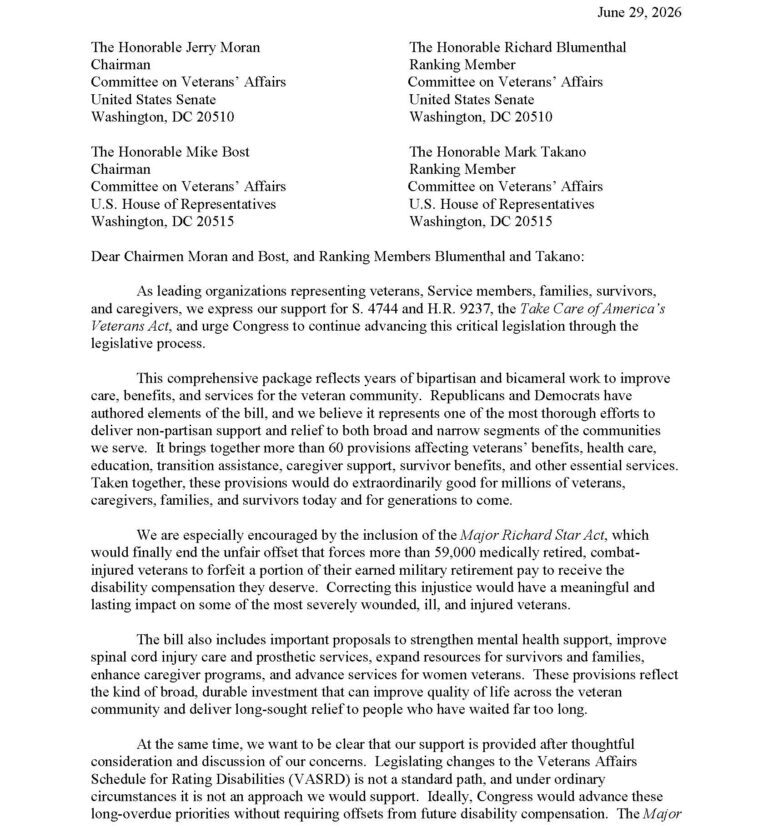
Mission Roll Call is proud to join a coalition of Veterans Service Organizations in supporting continued consideration of the Take Care of America’s Veterans Act, H.R. 9237.
This legislation represents one of the largest veterans’ legislative packages considered in recent years. It combines more than 60 individual legislative proposals, many of them bipartisan, addressing issues veterans have consistently identified through Mission Roll Call surveys and public engagement, including Community Care, suicide prevention, traumatic brain injury, caregiver support, service dogs, transition assistance, VA accountability, and the Major Richard Star Act. Taken together, these provisions have the potential to improve care, benefits, and support for millions of veterans, families, caregivers, and survivors.
Like every major legislative package, this bill reflects the realities of the congressional process. Under federal budget rules, expanding benefits often requires Congress to identify a funding source. The proposed offset has generated understandable debate, particularly regarding future disability ratings for sleep apnea and tinnitus. While reasonable people can disagree on that approach, it is important to recognize that the Department of Veterans Affairs has periodically updated the Veterans Affairs Schedule for Rating Disabilities to reflect advances in medical science, diagnostics, treatment, and technology. Throughout its history, the rating schedule has evolved alongside changes in medicine and the understanding of disability.
Updating the sleep apnea and tinnitus portions of the rating schedule through regulation has been under consideration since 2022. Under federal law, absent Congress acting to dedicate those resources to veterans’ priorities, the resulting savings would revert to the Treasury, and would no longer be available to fund veteran initiatives.
“Mission Roll Call believes veterans deserve an honest discussion about both the benefits contained in this legislation and the practical challenges involved in advancing it,” said Jim Whaley, CEO, Mission Roll Call. “We also believe veterans currently receiving earned benefits should be protected, that any future rating changes should be applied prospectively, and that Congress should continue working toward the strongest possible outcome for the veteran community.”
On balance, the Take Care of America’s Veterans Act presents a significant opportunity to advance a broad range of veteran priorities through a single legislative package. Mission Roll Call supports continued consideration of the legislation and encourages Congress to continue refining it to deliver meaningful results for those who served.
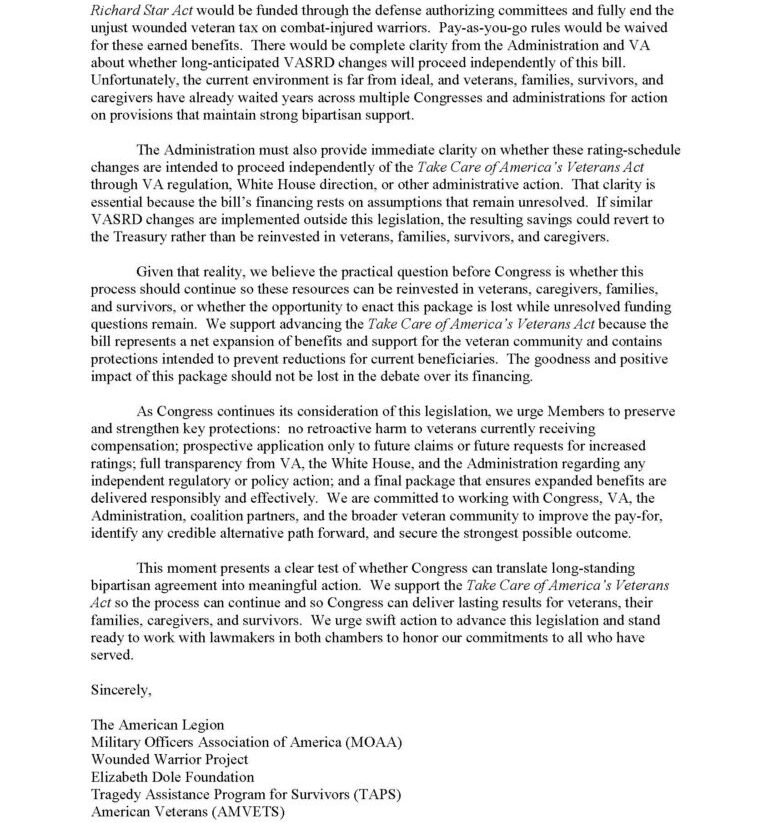
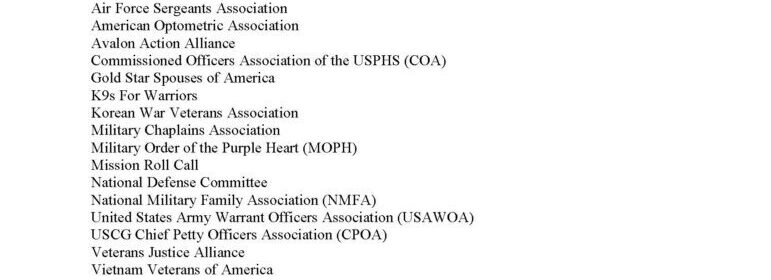
Read the coalition’s full letter to Congress here:
For many veterans, the hardest part of military service begins after the battlefield.
Long after deployments end and uniforms are folded away, thousands of combat-injured veterans continue fighting a quieter battle, one tied not to war, but to policy. Many discovered that the injuries which forced them out of military service also cost them a portion of the retirement pay they believed they had earned.
For years, medically retired veterans with combat-related injuries have faced a difficult financial reality. Under current federal law, many are required to forfeit a portion of their military retirement pay in order to receive Department of Veterans Affairs disability compensation.
To veterans and military families living through it, the issue feels deeply personal.
Many refer to it simply as the “wounded veteran tax.”
A recent Mission Roll Call survey of 1,416 veterans underscores just how strongly the veteran community feels about the issue. An overwhelming 95% of respondents said they support allowing medically retired combat-disabled veterans to receive both military retirement pay and VA disability compensation.
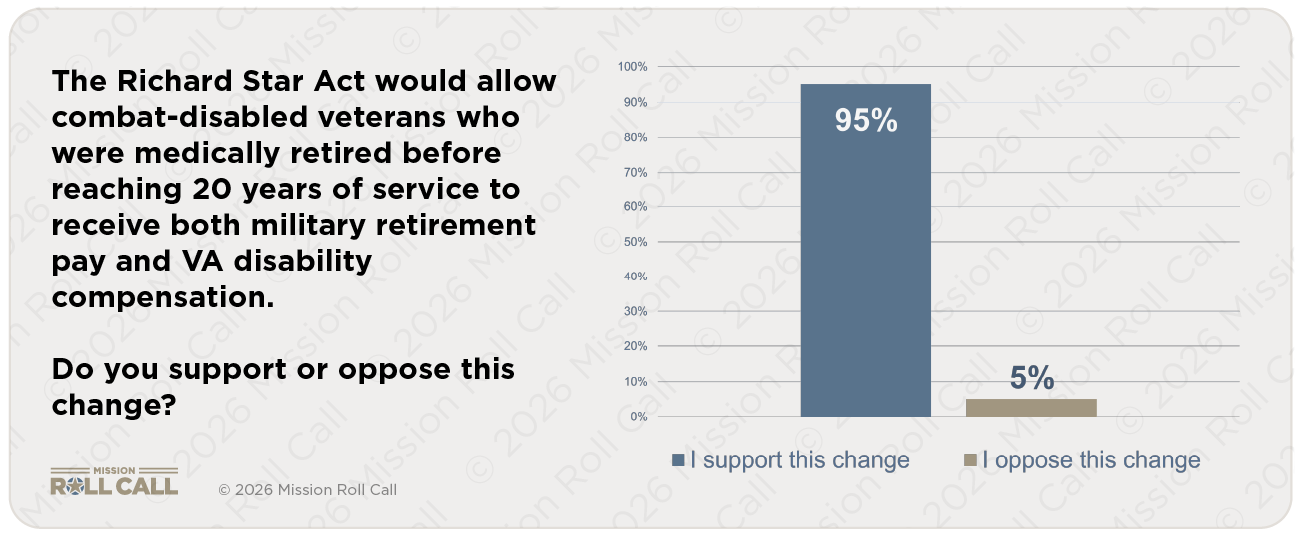
The policy primarily affects veterans who were medically retired before reaching 20 years of service. In many cases, these are service members whose careers ended unexpectedly because of combat injuries, illnesses connected to hazardous duty, or long-term medical conditions tied to service.
Here at Mission Roll Call, we believe those veterans are being unfairly penalized because their military careers were cut short by the very sacrifices they made while serving the country. “Veterans medically retired because of combat-related injuries should not be placed in a position where the benefits they earned through service are reduced because of the very injuries they sustained while serving this country,” said Jim Whaley, CEO of Mission Roll Call. “The Major Richard Star Act is about ensuring combat-injured veterans, and their families are treated with fairness, dignity and respect long after their military service ends.”
At the center of the issue are two separate forms of compensation that advocates say were never intended to cancel each other out.
Military retirement pay is earned through years of service.
VA disability compensation exists to compensate veterans for service-connected injuries or illnesses.
One should not reduce the other.
For some military retirees, concurrent receipt already exists, allowing them to receive both benefits in full. But many medically retired combat veterans do not qualify because they were unable to complete 20 years of service before injuries forced them out of the military.
That distinction has left many veterans frustrated for years.
Some families lose hundreds of dollars each month. Others lose significantly more over time. The long-term financial impact can ripple through nearly every part of life, including housing stability, access to care, retirement planning, and the ability to support a family after leaving the military.
For younger veterans medically retired as a result of combat injuries, the consequences can be especially difficult.
Many were forced to leave careers they expected to continue for another decade or longer. Some transitioned suddenly into civilian life while managing severe physical injuries, chronic pain, PTSD, or long-term medical treatment. Others faced the uncertainty of rebuilding careers while supporting spouses and children at home.
The offset only added to that strain.
The Major Richard Star Act is not about special treatment. It is about honoring commitments already made to wounded veterans.
The legislation would restore full military retirement pay to combat-injured veterans who were medically retired, allowing them to receive both their earned retirement and their VA disability compensation without offset.
For many veterans, that change represents recognition.
Recognition that combat injuries can permanently alter careers, finances, and futures. Recognition that wounded veterans should not lose any benefits because their service resulted in life-changing injuries.
And recognition that their sacrifice did not end the day they left the military.
A Mission Rooted in Remembrance and Community
As veterans, families and community members moved together along the route, the weight carried during the All Vets Memorial Ruck represented far more than physical endurance. Every step honored the lives of service members no longer with us, while also serving as a reminder that support for veterans must continue long after military service ends.
For All Vets, that connection between remembrance, wellness and community sits at the center of its mission.
All Vets is a 501(c)(3) nonprofit organization focused on honoring fallen service members while strengthening the lives of veterans, families and local communities through connection, physical fitness and wellness initiatives.
The organization’s mission is simple but meaningful: Honor the Fallen and Strengthen the Living.
More Than a Memorial Ruck
That mission comes to life through community events designed to bring veterans, families and supporters together through movement, remembrance and connection.
Among the organization’s signature efforts is the annual Memorial Ruck. This year’s 20-mile ruck will take place May 23, 2026, across Henry County and Martinsville, Virginia, honoring the lives and sacrifices of fallen service members. Participants will carry American, branch-of-service and POW/MIA flags throughout the route, creating a visible reminder that the sacrifices of the fallen are never forgotten.
More than a physical challenge, the event creates space for reflection, conversation and community support among veterans and local residents alike.
“The Memorial Ruck is about more than miles walked or weight carried. It’s about ensuring the lives and sacrifices of our fallen service members are never forgotten, while also reminding veterans and families that they are not alone. Through All Vets, we want to create connection, promote wellness and continue building a stronger community together,” said Patrick Rodgers, U.S. Marine Corps veteran and founder and president of All Vets.
But the impact of All Vets extends far beyond a single event. The organization continues supporting veteran wellness, remembrance and community engagement throughout the year through fitness initiatives, memorial activities and opportunities for veterans and supporters to connect outside of traditional institutional settings.

Strengthening the Living
At a time when many veterans continue navigating isolation, transition challenges and mental health struggles after service, organizations like All Vets help create spaces where connection can happen naturally.
Sometimes that support looks like a formal resource or program.
Other times, it begins with simply showing up, walking alongside someone and reminding them they are not carrying the weight alone.
That grassroots approach is part of what makes organizations like All Vets resonate within the veteran community.
“Organizations like All Vets remind us that supporting veterans often begins at the community level,” said Jim Whaley, CEO of Mission Roll Call. “Whether it’s honoring those we’ve lost, creating opportunities for connection, or simply encouraging veterans to gather and support one another, that kind of grassroots impact matters.”
Why Community Connection Matters
Mission Roll Call continues to highlight organizations and community partners working to strengthen veteran well-being through connection, awareness and support. Through the Veteran Resource Directory and Veteran Connection Network, Mission Roll Call helps veterans and military families discover organizations making a direct impact within their communities.
For many veterans, physical movement and community engagement play an important role in long-term wellness. Events like the Memorial Ruck provide more than exercise. They create opportunities for conversation, reflection and connection among veterans and supporters who may otherwise remain isolated.
The experience also helps bridge the gap between civilian communities and the military-connected population. Community members walking alongside veterans gain a deeper understanding of service, sacrifice and the ongoing challenges many veterans face after leaving the military.
That visibility matters.
It reinforces the idea that honoring military service should extend beyond symbolic moments and become part of how communities consistently support veterans and their families throughout the year.
Looking Ahead
For All Vets, remembrance and wellness are not separate ideas. They work together.
Honoring the fallen means ensuring the living remain connected, supported and seen.
And for many veterans, that support starts with community.
Learn more about All Vets and upcoming events by visiting All-Vets.com.
Fuel Veteran Voices
A small gift powers the research and advocacy that brings veterans to the decision-making table.
Donate $5+