
Introduction
The past year has brought several efforts in addressing veteran post-traumatic stress disorder (PTSD). Congress introduced new bills supporting veteran PTSD recovery and accelerating access to new therapies for veterans with treatment-resistant PTSD and other mental health conditions. Proposed VA budgets also placed a significant focus on veteran health and well-being.
But challenges remain, and veteran PTSD continues to place a heavy burden on millions of veterans every day. As we reach the latter half of 2026, it’s an important time to look at what’s changed, what progress has been made and what more needs to be done to reduce persistent PTSD rates across the veteran community.
In this updated report, Mission Roll Call examines the latest data on veteran PTSD, legislative wins, emerging initiatives and ongoing gaps in prevention, treatment, access to care and long-term support.
What is PTSD and How Does it Affect Veterans?
After witnessing or experiencing a traumatic or tragic event, individuals may develop a condition known as post-traumatic stress disorder. Due to the high demands of military service – especially during active wartime deployment – PTSD is more likely to develop in veterans than in nonveterans.
Service members are often exposed to prolonged periods of stress, life-threatening situations, combat environments and moral injury following war, all of which can increase the likelihood of developing PTSD. Unlike a one-time traumatic event, military trauma can be progressive, making recovery more complex and requiring long-term support.
What is PTSD, and what are its indicators? Recognizing these signs is often the first step in treatment and post-traumatic growth (PTG).
Symptoms of PTSD may include:
- Flashbacks — Recalling memories of the traumatic event, often suddenly and unexpectedly
- Trouble sleeping — Struggling with insomnia or sleep quality due to frequent nightmares about the traumatic event
- Avoidance — Avoiding places, activities, people or even conversations associated with the trauma
- Physical reactions — Exhibiting physical signs of stress, such as a racing heart, sweating or an exaggerated startle reflex
- Changes in behavior or personality — Irritability, anger outbursts, fatigue, depression, anxiety, nervousness, loss of appetite or sleep problems
- Persistent negative feelings — Guilt, shame, fear, detachment or negative thoughts about oneself or others
- Reckless and self-destructive behavior — Acting without thought for one’s own safety
PTSD can affect anyone who has experienced a traumatic event; however, veterans are at a much higher risk than the general public due to the unique and often intense stressors of military service. It’s important for veterans to know that they are not alone, their experiences are valid, and there is help available.
Veterans are also looking for more options when traditional treatments aren’t enough. In a May 2026 Mission Roll Call survey of 1,128 members of the military and veteran community, 63% of respondents said they would be very or somewhat willing to participate in a VA-supported clinical trial for a new PTSD or TBI treatment.
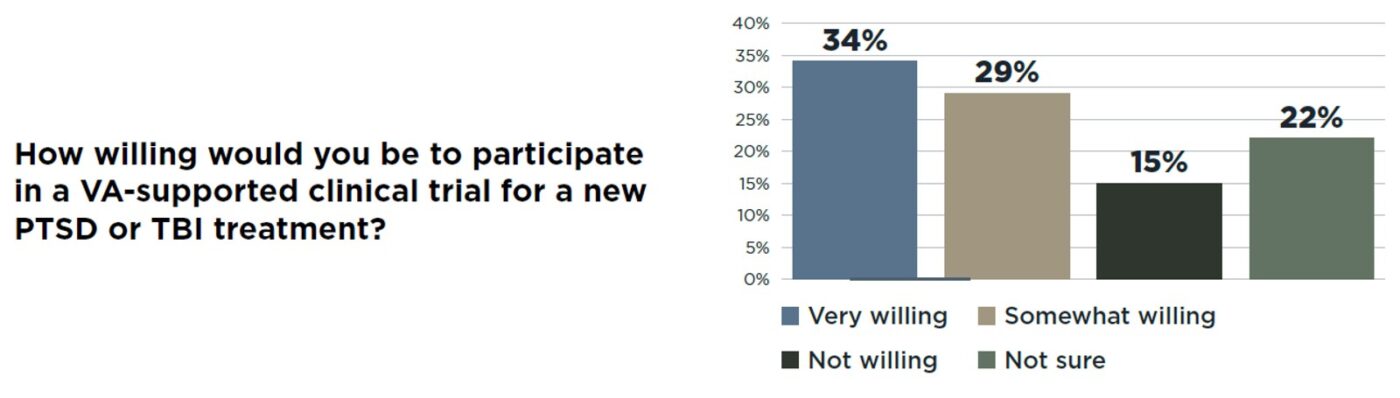
63% of respondents said they would be very or somewhat willing to participate in a VA-supported clinical trial for a new PTSD or TBI treatment.
Source: Mission Roll Call, Veterans’ Views on Emerging PTSD and TBI Treatments, May 2026; 1,128 responses.
PTSD By the Numbers
PTSD among U.S. veterans has increased in recent years. A 2025–2026 National Health and Resilience in Veterans Study found that 14.4% of veterans had experienced PTSD at some point in their lives, while 7.3% had PTSD within the previous month – substantially higher than estimates from earlier study periods, when lifetime PTSD ranged from 8.0% to 9.4%, and past-month PTSD ranged from 4.7% to 5.0%.
The most commonly reported traumatic experiences included sudden loss, life-threatening illness or injury and witnessing violence, while forced sexual experiences were associated with the highest likelihood of developing PTSD. The study also found that veterans exposed to a greater number of traumatic events and those with PTSD were more likely to experience significant difficulties in daily functioning.
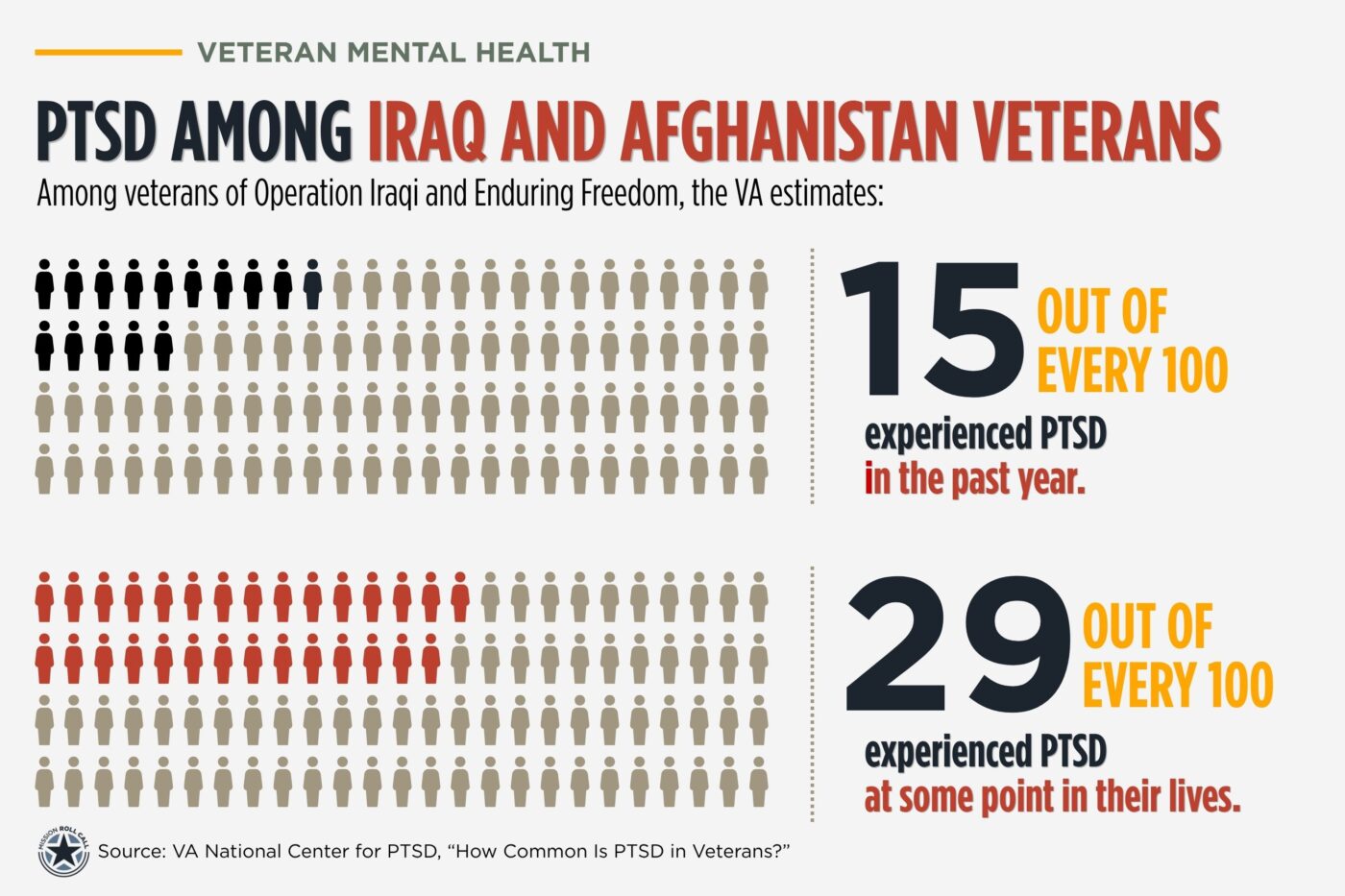
PTSD affects veterans across all demographics, but certain groups, particularly post-9/11 veterans and women, are disproportionately impacted. Among veterans who served in Iraq and Afghanistan, the VA estimates that approximately 15% currently live with PTSD, with lifetime rates approaching 29%. Meanwhile, women veterans experience PTSD at nearly twice the rate of male veterans.
PTSD also increases the risk of other serious health and behavioral challenges. Mental health and substance use disorders significantly elevate the risk of suicide. Veterans diagnosed with PTSD face a suicide rate of 51.3 per 100,000, nearly double that of those without the condition. Compared to civilians, women veterans experience a suicide rate 92% higher than civilian women, while male veterans face a rate 44% higher than civilian men.
What’s Changed?
Despite troubling trends in veteran PTSD, federal action in several areas shows progress and a growing focus on veteran health and well-being.
The VA’s FY 2027 budget proposal has reached $488.2 billion, a 7.7% increase above the enacted 2026 spending levels. The proposal includes $121 billion for veteran medical care, including $1.4 billion for women’s care, $710 million for opioid prevention and treatment programs and $344 million for rural health. Mental health and suicide prevention also receive substantial funding, with $3.7 billion dedicated to suicide prevention and treatment programs and $700 million allocated for suicide prevention outreach.
These investments come as other measures of veteran well-being show signs of improvement. Veteran homelessness, for example, has fallen significantly in recent years. The U.S. Department of Housing and Urban Development’s latest report recorded the lowest number of unhoused veterans since reporting began in 2009, with veteran homelessness declining by 56.1% since 2010.
These investments are promising, but funding and declining homelessness rates do not diminish the urgent need to address PTSD and suicide. Federal resources must translate into accessible, consistent and trauma-informed care, while support systems must continue to evolve to meet veterans’ needs long after they leave the military.
Legislative Wins
Building on 2025 momentum, when Congress passed the Elizabeth Dole 21st Century Veterans Healthcare and Benefits Improvement Act and introduced bills including the Veterans Mental Health Crisis Referral Enhancement Act, Building Resources and Access for Veterans’ Mental Health Engagement (BRAVE) Act and the TBI and PTSD Treatment Act, lawmakers have continued introducing legislation focused on veteran mental health and PTSD.
Several bills introduced in 2026 focus specifically on improving PTSD screening, expanding access to emerging therapies and addressing treatment-resistant PTSD.
H.R. 3886 – Veterans PTSD Screening Act:
- Introduced in June of last year, H.R. 3886 would direct the Department of Veterans Affairs to study whether RNA sequencing could be used as a tool to help identify PTSD among veterans, and establish a study across five VA medical networks to evaluate the potential use of RNA sequencing in PTSD screening and diagnosis.
E.O. 14401 – Accelerating Medical Treatments for Serious Mental Illness
- Issued in April 2026, the executive order aims to fast-track research, clinical testing and regulatory pathways for psychedelic-based treatment, such as psilocybin and ibogaine, for mental illnesses, including PTSD, suicidal ideation and depression. This treatment option could meaningfully help veterans who don’t often respond to conventional treatments.
H.R. 8763 – TREAT PTSD VA Act
- H.R. 8763, introduced in May 2026, would require the VA to provide stellate ganglion block (SGB) treatment – an injection intended to temporarily block certain nerve signals and has been studied as a potential treatment for PTSD symptoms – to eligible veterans diagnosed with PTSD. The bill would establish a pathway for veterans to receive the treatment through the VA and directs the department to establish standards for its use.
H.R. 9547 – Veterans and Servicemembers PTSD Emerging Treatment Review Act of 2026
- Introduced in June 2026, H.R. 9547 would direct the Secretary of Defense to report to Congress on emerging investigational treatment options for treatment-resistant PTSD among veterans, servicemembers and those transitioning from military to civilian life, helping lawmakers better understand where promising therapies may fit into future PTSD care.
H.R. 9237 – Take Care of America’s Veterans Act
- The Take Care of America’s Veterans Act is a veterans’ policy package introduced in June 2026 that addresses health care, benefits, mental health, disability compensation, and caregiver support, including measures that improve mental health care and access to treatment.
What Treatments and Resources are Available to Veterans Experiencing PTSD?
Veterans experiencing PTSD have access to a range of evidence-based treatments and resources through the VA and affiliated programs.
The VA offers therapies such as Cognitive Processing Therapy (CPT), Prolonged Exposure (PE) and Eye Movement Desensitization and Reprocessing (EMDR), which are proven to reduce PTSD symptoms. Veterans can receive care in person at VA medical centers or remotely through VA Telehealth and the VA Video Connect app. For those not ready for traditional therapy, the VA also provides peer support groups, mindfulness programs and mobile apps like PTSD Coach.
Additionally, the Veterans Crisis Line (dial 988, then press 1) provides 24/7 confidential support.
Veterans and their families can also explore local and national support options through Mission Roll Call’s Veteran Resource Directory, which includes more than 100 vetted programs that address mental health, transition services and more.
Are we missing a resource you or someone you know has used? Share it with us here.
What Work Still Needs to be Done?
Multiple aspects of a veteran’s life can be made more difficult with PTSD, and there needs to be broader support systems that help veterans navigate life after service. The transition from military to civilian life can be incredibly challenging, especially if a veteran is experiencing emotional or mental strain. Veterans may also face hurdles such as housing, food security or employment after service. These challenges, paired with PTSD, can quickly become too much for anyone to bear.
While there is continued legislative progress in support of PTSD recovery, and programs and organizations available to help with reintegration into civilian life, there is still important work to be done. New or continued support for veterans is critical as they navigate civilian life after their deployment, and ensuring veterans have access to resources that eliminate these burdens is essential for long-term well-being and post-service success.
Connection and Belonging After Service
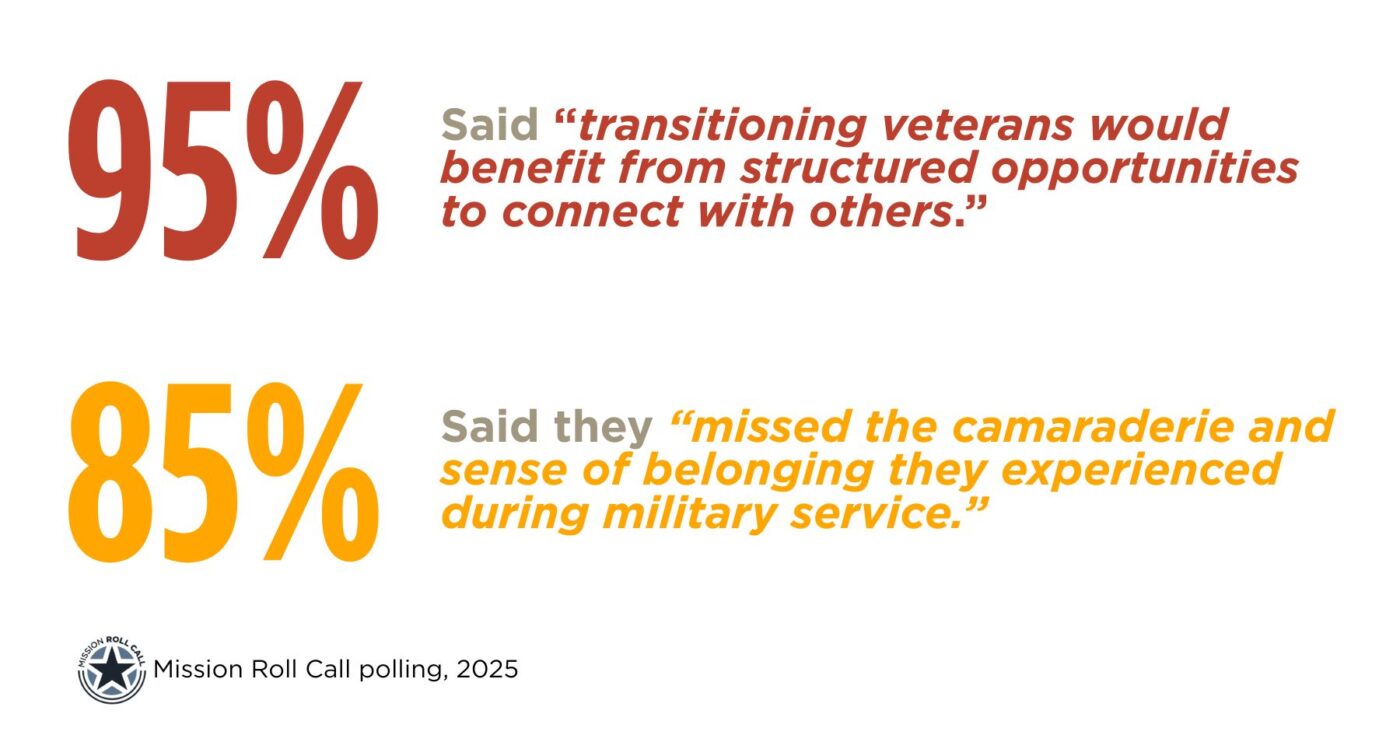
The transition from military to civilian life can also mean losing the camaraderie, structure and sense of belonging that came with military service. MRC polling underscores how significant that loss can be: 85% of respondents said they missed the camaraderie and sense of belonging they experienced during service, while nearly half reported difficulty building a social network after leaving the military.
Veterans also see connection as part of the solution. Nearly 95% of MRC respondents said transitioning veterans would benefit from structured opportunities, such as meetings or groups, to interact with others. Peer networks, veteran-serving organizations and community programs can help veterans rebuild the relationships, purpose and support systems that may be lost after leaving the military.
How Can I Help?
For nonveterans looking to support those suffering from PTSD, there are a number of ways you can contribute.
For those with a veteran in their life:
- Educate yourself on PTSD — Being able to recognize symptoms can be a powerful tool for helping when things get tough.
- Provide support — Let veterans in your life know that you’re there for them if they want to speak about their experiences.
- Know your toolkit — Sometimes people need more than a listening ear. Be aware of available mental health services and encourage them to speak to a professional when needed.
- Connect them with others — Community is necessary for all of us. Encourage them to establish relationships with other veterans and veteran organizations.
If you don’t have a veteran in your life and still want to serve, you can:
- Connect with your local VFW or American Legion to see if you could provide a home-cooked meal or provide transportation to medical appointments for a veteran.
- Volunteer or donate to USO lounges, which are at more than 50 airports in the U.S. and often need support.
- Consider donating financial or social media support to Mission Roll Call as we advocate for changes to help care for and support veterans. Donating or volunteering with nonprofits that we’ve vetted and approved could help change a veteran’s life.
What’s Next?
The progress made over the past year is encouraging. Increased federal investment and new legislation aimed at expanding mental health care and veteran support are creating real momentum toward improving PTSD outcomes. But policy alone is not enough. Too many veterans continue to experience PTSD, and the data shows that the need for accessible, effective care is urgent.
PTSD affects millions of veterans in different ways every day, but it is both recognizable and treatable. Identifying the emotional, behavioral and physical signs of PTSD is often the first step toward recovery, and with timely treatment, strong peer support and veteran-focused resources, healing is possible.
Mission Roll Call will continue advocating for policies that expand treatment, improve access to care and ensure veterans and their families receive the support they deserve. No veteran should have to face PTSD alone.