
Introduction
For decades, the issue of veteran suicide has hovered just beneath the surface of national discourse—tragic, persistent, and alarmingly consistent. Each year, thousands of former service members die by suicide, and the message is tragically clear: we are losing too many of our nation’s heroes after they come home.
Those thousands of lives are not just numbers. They are the men and women who served our nation and who, too often, are left to struggle in silence. These statistics are not new. They echo the same refrain we’ve heard for years. For many in the veteran community, the crisis is deeply personal. In MRC’s national survey, nearly half of respondents — 48% — said they know a veteran who has died by suicide. Among veteran respondents, 32% said they personally have struggled with suicidal thoughts or mental health challenges after military service.
But even slight shifts in data and emerging trends remind us that this crisis is dynamic, and that every year brings fresh opportunities—and obligations—to act.
In 2025, Mission Roll Call surveyed more than 2,100 veterans, family members and caregivers across all 50 states to better understand their experiences and perspectives on veteran suicide prevention. The survey explored access to care, perceptions of existing prevention efforts, barriers facing veterans and potential approaches to improving support. The findings revealed deep concerns with the status quo, while also highlighting strong support for community-based and innovative approaches to prevention.
In this updated report, Mission Roll Call outlines what has changed, what progress has been made, and where we still fall short. With new legislation, shifting budget priorities, and a continued national conversation about mental health, there is hope. But hope alone will not solve the problem. It takes policy, persistence, and the collective will of communities across the nation.
What has changed?
While many suicide-related statistics remain troublingly static, new data and federal actions present important developments.
For instance, mental health disparities between veterans and civilians continue to widen. The suicide rate among women veterans in 2022 was 92% higher than that of non-veteran women. For male veterans, the rate was almost 60% higher. The overall rates for both veteran men and women grew in 2023, the year of our most recent data; so, too, did the gap between civilian and veteran suicides. These gaps demand continued focus.
On a positive note, the annual VA budget has dramatically increased. Over the past decade, the proposed VA budget has reached $488.2 billion. The VA budget is now more than six times its 2001 budget of $45 billion. This funding is critical and will go toward much-needed health care, benefits, housing and insurance for veterans.
In August 2026, the Trump administration affirmed its gratitude for veterans’ sacrifices. They pledged to new veteran health clinics, to exempt veterans from taxes on Social Security and to continue fighting to solve veteran homelessness.
This kind of momentum is crucial. But funding alone is not enough if it doesn’t translate into real, effective support on the ground.
Veteran suicide by the numbers
According to the VA’s most recent National Veteran Suicide Prevention Annual Report (2025), an average of 17.5 veterans die by suicide every single day. Although this figure is widely accepted, the real number may be even higher.
An Operation Deep Dive report by America’s Warrior Partnership (AWP) suggests that veteran suicides are significantly underreported. AWP suggests that as many as 24 veterans die by suicide per day, with an additional 20 dying by “self-injury mortality,” often overdoses. This totals to a staggering 44 veterans who die by suicide per day, about 2.4 times more than the VA’s estimate.
Mission Roll Call acknowledges the VA’s cautious approach in classifying overdoses as suicides. But the discrepancy between these two reports highlights a deeper issue: we need better data, better definitions, and more transparent reporting. Without accurate data, prevention strategies will always fall short.
That uncertainty is reflected in Mission Roll Call’s own polling. When respondents were asked which daily veteran suicide figure they had heard most often, 42% said they had seen multiple different numbers and were unsure which was accurate. Another 17% said they had not seen any statistics reported. The results reinforce the need for clearer, more consistent data on the scope of the crisis.
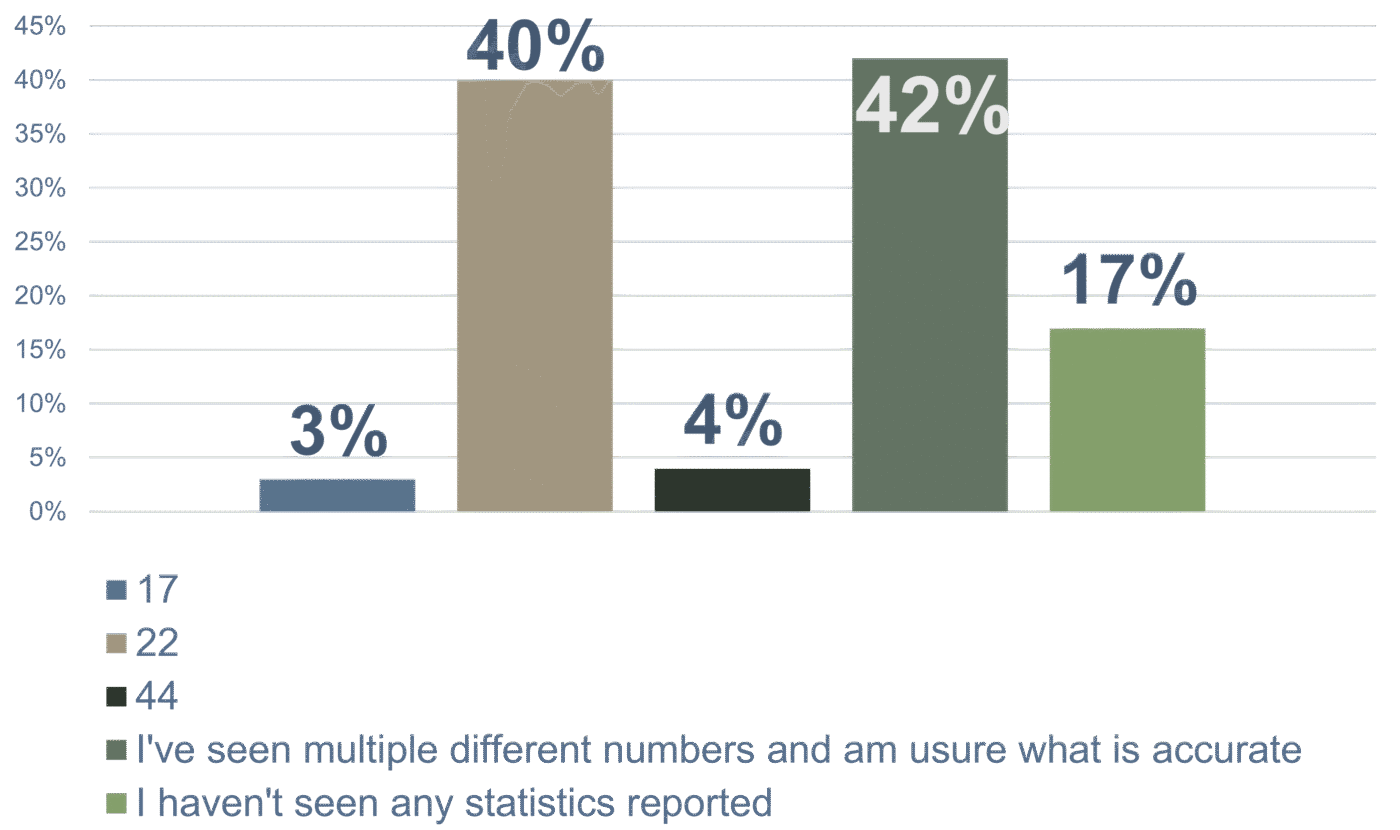
Figure 1. Awareness of reported daily veteran suicide estimates. Forty-two percent of respondents reported seeing multiple estimates and being unsure which was accurate, while 40% identified 22 deaths per day. Source: Mission Roll Call, Veteran Suicide Polling Results, 2025.
Even more urgently, the first two years after leaving active duty remain a high-risk period. Veterans early in their transition often face isolation, unemployment, housing instability, and confusion navigating care. Research from the American Enterprise Institute highlights that the most effective point of intervention is during these first two years, when veterans are actively transitioning, and that critical interventions such as mentoring and job preparation can significantly ease this process. The Departments of Defense and Veterans Affairs must work together more seamlessly to ensure no service member falls through the cracks during this vulnerable time.
Legislative wins
One major shift in the effort to end veteran suicide comes with the passage of the Elizabeth Dole 21st Century Veterans Healthcare and Benefits Improvement Act. Passed in late 2024, the act is a major legislative win and is the most significant expansion of VA services since the PACT Act. Building on the framework of the PACT Act, which addressed toxic exposure-related healthcare, the Elizabeth Dole Act takes a more holistic approach — expanding VA services to support not just veterans, but also their families and caregivers.
The Elizabeth Dole Act directly benefits veterans by streamlining the disability claims process and expanding job training and employment programs to help them transition to the civilian workforce. It will also increase access to mental health services and support homelessness prevention efforts by identifying at-risk veterans and providing them with funding for job training and substance abuse treatment. The act will also address homelessness by allowing the VA to supply veterans with necessities like food, bedding, hygiene products, and transportation to medical appointments.
On top of serving veterans, the act also serves the 7.8 million military and veteran caregivers – often spouses, parents and dependents – who sacrifice their time and even their personal lives to care for their loved ones. The legislation supports caregivers by expanding caregiver support programs and access to at-home and community-based services across VA medical centers. However, one of the most helpful changes for caregivers is the mental health care grant program, which will fully fund the cost of nursing home care for veterans seeking noninstitutional care alternatives. This could provide eligible veterans and their families thousands of additional dollars per month, easing burdens for aging and disabled veterans and their caregivers.
Other important — and more recent — legislative initiatives include the Veterans Suicide Care and Prevention Enhancement Act of 2026, aimed directly at equipping VA-network care providers to come alongside struggling veterans effectively, with sensitivity and research-backed intervention and care.
The Fostering TRUST Act tackles another critical issue: namely, the difficulty in discerning just how many of our veterans we are losing to suicide. The act would require the VA to notify a range of relevant authorities every time a suicide occurs, helping foster greater transparency, trust and insight at every level.
What work still needs to be done?
Despite this progress, there is more to do. For instance, post-traumatic stress disorder (PTSD) remains a leading factor in veteran suicide. Though different studies yield different specific rates, a persistent result is that veterans who served in Iraq or Afghanistan seem particularly likely to suffer from PTSD. An estimated 15% of deployed veterans experience PTSD symptoms in any given year. Due to its prevalence, PTSD is now known as the “signature wound” of the Global War on Terror.
Difficult-to-navigate health care only exacerbates this issue, and is unfortunately common: Nearly 45% of veterans reported experiencing delays or postponement related to health care services at VA facilities. That means that a veteran in need of rapid, attentive care could be stuck waiting weeks, or months.
In a 2022 national survey commissioned by Mission Roll Call, 53% of Americans said the federal government had not been very effective in addressing veteran suicide, while 86% said the government should provide veterans quality health care, including specialty care, within reasonable wait times. For many, accessing timely and culturally competent care is still a major challenge — especially for those who do not use VA services.
MRC’s polling also shows that veterans see the problem as broader than access to clinical care alone. Among veteran respondents, 35% identified social isolation or loss of purpose as the most significant barrier to preventing suicide, followed by stigma around mental health at 28%. Another 16% cited lack of access to care, while 14% pointed to difficulty transitioning to civilian life.
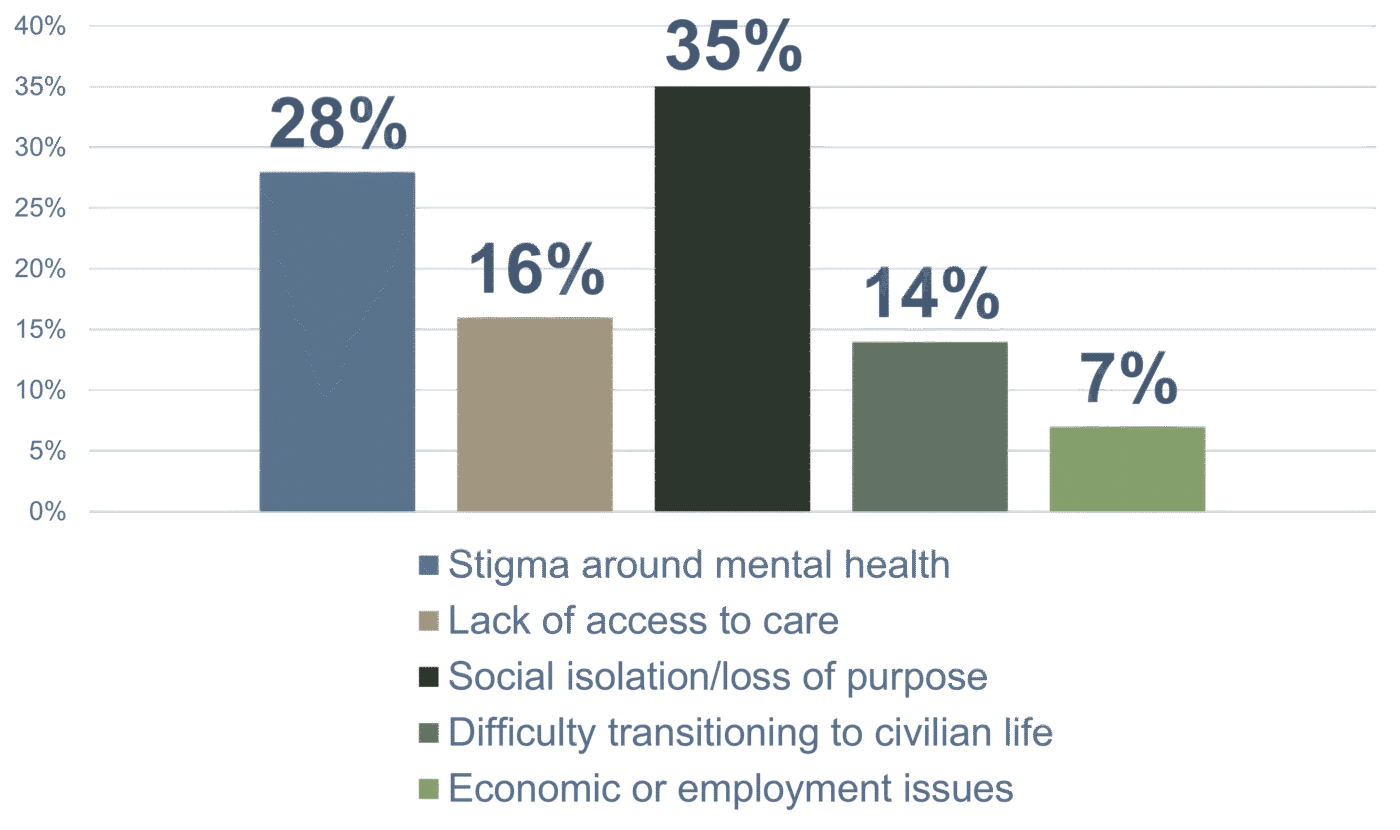
Figure 2. Barriers to veteran suicide prevention. Veteran respondents identified social isolation or loss of purpose (35%) and mental health stigma (28%) as the most significant barriers to suicide prevention.
Source: Mission Roll Call, Veteran Suicide Polling Results, 2025.
How can we help?
We lose more than 6,000 former servicemembers every year to suicide. Since 2001, the U.S. has lost more than 120,000 veterans to suicide — more than the total American combat deaths in every war since Vietnam combined. In fact, suicide is the second-leading cause of death for veterans between 18-34.
This is not a crisis we can address passively. It requires the full force of government, community, and individual action.
Veterans overwhelmingly agree that the solution should not be an either-or choice between clinical treatment and community support. In MRC’s survey, 80% of veteran respondents said suicide prevention efforts should prioritize both equally.
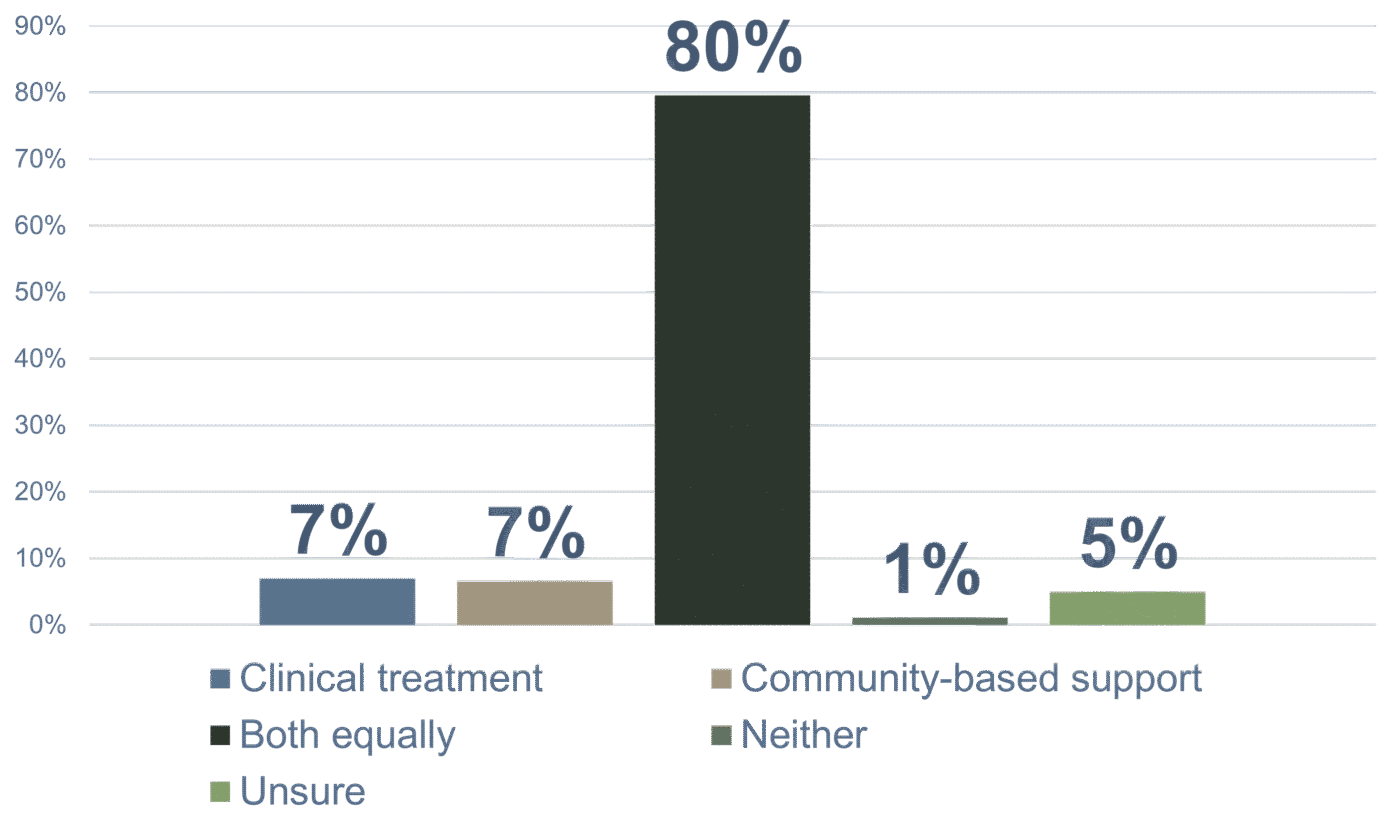
Figure 3. Preferred approach to veteran suicide prevention. Eighty percent of veteran respondents support prioritizing clinical treatment and community-based support equally. Source: Mission Roll Call, Veteran Suicide Polling Results, 2025.
Here are some of the ways we can all help:
Increase mental health access. This means more providers, shorter wait times, and non-pharmacological options like Boulder Crest’s posttraumatic growth program.
Combat stigma. Many veterans still view asking for help as a weakness. We must continue normalizing mental health conversations in the military community—and beyond.
Strengthen transition support. Leaving military service should not mean entering a void. Every veteran needs a roadmap—and a community—during their first years of civilian life.
Support local organizations. Nonprofits like Mission 22, Boulder Crest, and America’s Warrior Partnership are on the frontlines of suicide prevention.
That approach has strong support among veterans themselves. In MRC’s polling, 92% of veteran respondents said including community-based organizations such as nonprofits and veteran service organizations in suicide prevention efforts is either extremely or very important.
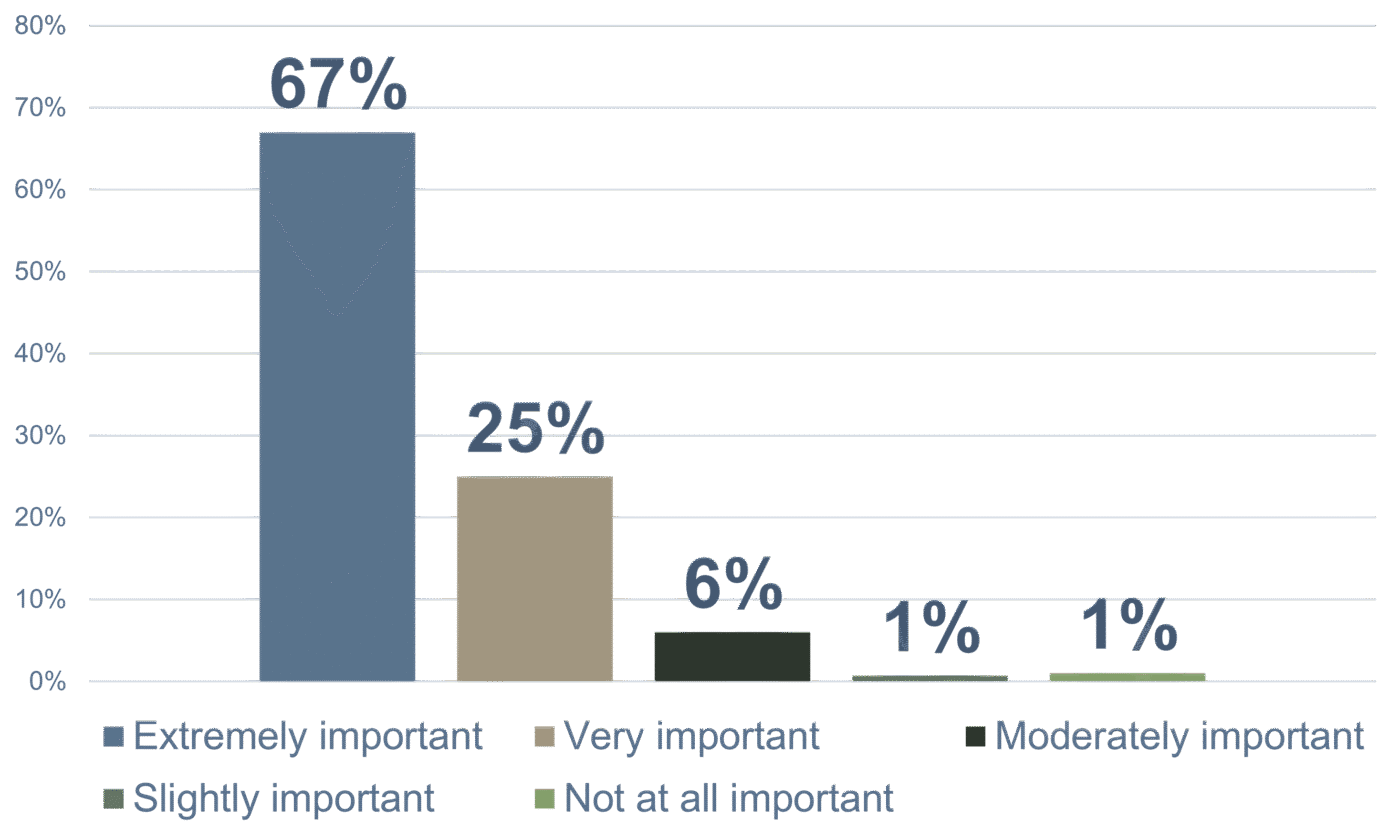
Figure 4. Importance of community-based organizations. Ninety-two percent of veteran respondents said including nonprofits and VSOs in suicide prevention is extremely or very important. Source: Mission Roll Call, Veteran Suicide Polling Results, 2025.
Re-think suicide prevention models. Suicide rates have remained unchanged after decades of war, and in many ways, mental health and suicide prevention methods have also stagnated. We must rethink this model and aggressively incorporate promising new treatment approaches, including emerging tools like AI-driven suicide risk identification, peer-to-peer mental health support, and preventative wellness activities like HBOT, Team RWB, and O2X.
MRC’s polling also found that 96% of respondents believe suicide risk identification training for veterans and their families is extremely or very important.
We must also empower family members and loved ones to recognize warning signs and encourage treatment. Community engagement — not just government programs — will be the true turning point in ending this crisis.
Conclusion
Veteran suicide is a national emergency. It demands urgency, transparency, and a unified response. While increased funding, new legislation, and executive commitments show promise, the core challenge remains unchanged: far too many of our nation’s veterans are dying by suicide, and we have yet to shift the trend meaningfully.
Mission Roll Call will continue to advocate for smarter policies, more effective programs, and a deeper national commitment to those who served. Together — with clarity, compassion, and sustained pressure — we can build a system that honors their service not just in word, but in action.