The Wounded Veteran Tax: Why Thousands of Combat-Injured Veterans Are Still Fighting for Earned Benefits
For many veterans, the hardest part of military service begins after the battlefield.
Long after deployments end and uniforms are folded away, thousands of combat-injured veterans continue fighting a quieter battle, one tied not to war, but to policy. Many discovered that the injuries which forced them out of military service also cost them a portion of the retirement pay they believed they had earned.
For years, medically retired veterans with combat-related injuries have faced a difficult financial reality. Under current federal law, many are required to forfeit a portion of their military retirement pay in order to receive Department of Veterans Affairs disability compensation.
To veterans and military families living through it, the issue feels deeply personal.
Many refer to it simply as the “wounded veteran tax.”
A recent Mission Roll Call survey of 1,416 veterans underscores just how strongly the veteran community feels about the issue. An overwhelming 95% of respondents said they support allowing medically retired combat-disabled veterans to receive both military retirement pay and VA disability compensation.
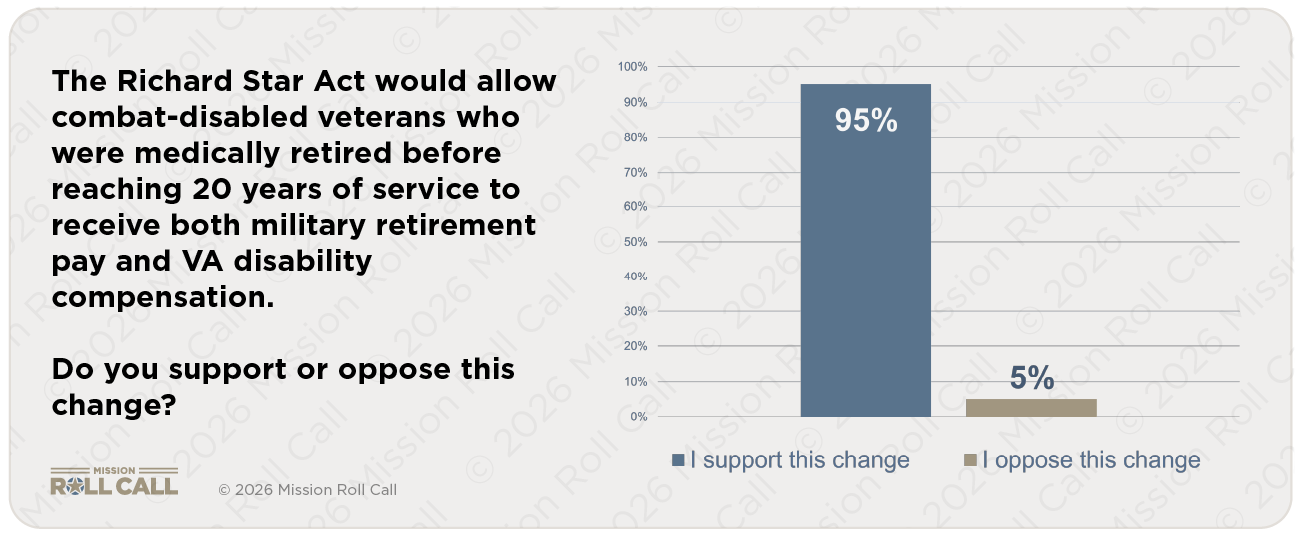
The policy primarily affects veterans who were medically retired before reaching 20 years of service. In many cases, these are service members whose careers ended unexpectedly because of combat injuries, illnesses connected to hazardous duty, or long-term medical conditions tied to service.
Here at Mission Roll Call, we believe those veterans are being unfairly penalized because their military careers were cut short by the very sacrifices they made while serving the country. “Veterans medically retired because of combat-related injuries should not be placed in a position where the benefits they earned through service are reduced because of the very injuries they sustained while serving this country,” said Jim Whaley, CEO of Mission Roll Call. “The Major Richard Star Act is about ensuring combat-injured veterans, and their families are treated with fairness, dignity and respect long after their military service ends.”
At the center of the issue are two separate forms of compensation that advocates say were never intended to cancel each other out.
Military retirement pay is earned through years of service.
VA disability compensation exists to compensate veterans for service-connected injuries or illnesses.
One should not reduce the other.
For some military retirees, concurrent receipt already exists, allowing them to receive both benefits in full. But many medically retired combat veterans do not qualify because they were unable to complete 20 years of service before injuries forced them out of the military.
That distinction has left many veterans frustrated for years.
Some families lose hundreds of dollars each month. Others lose significantly more over time. The long-term financial impact can ripple through nearly every part of life, including housing stability, access to care, retirement planning, and the ability to support a family after leaving the military.
For younger veterans medically retired as a result of combat injuries, the consequences can be especially difficult.
Many were forced to leave careers they expected to continue for another decade or longer. Some transitioned suddenly into civilian life while managing severe physical injuries, chronic pain, PTSD, or long-term medical treatment. Others faced the uncertainty of rebuilding careers while supporting spouses and children at home.
The offset only added to that strain.
The Major Richard Star Act is not about special treatment. It is about honoring commitments already made to wounded veterans.
The legislation would restore full military retirement pay to combat-injured veterans who were medically retired, allowing them to receive both their earned retirement and their VA disability compensation without offset.
For many veterans, that change represents recognition.
Recognition that combat injuries can permanently alter careers, finances, and futures. Recognition that wounded veterans should not lose any benefits because their service resulted in life-changing injuries.
And recognition that their sacrifice did not end the day they left the military.