Veterans Are Paying Attention but Not Feeling Heard
Veterans are not disengaged from the political process. If anything, they are among the most consistent participants in it. But political leadership is not building confidence within the veteran voting bloc.
Mission Roll Call’s March 2026 survey of more than 1,600 respondents shows a veteran community that is paying attention, showing up, and voting—but increasingly questioning whether their priorities are reflected in the decisions that follow.
A Highly Engaged Electorate
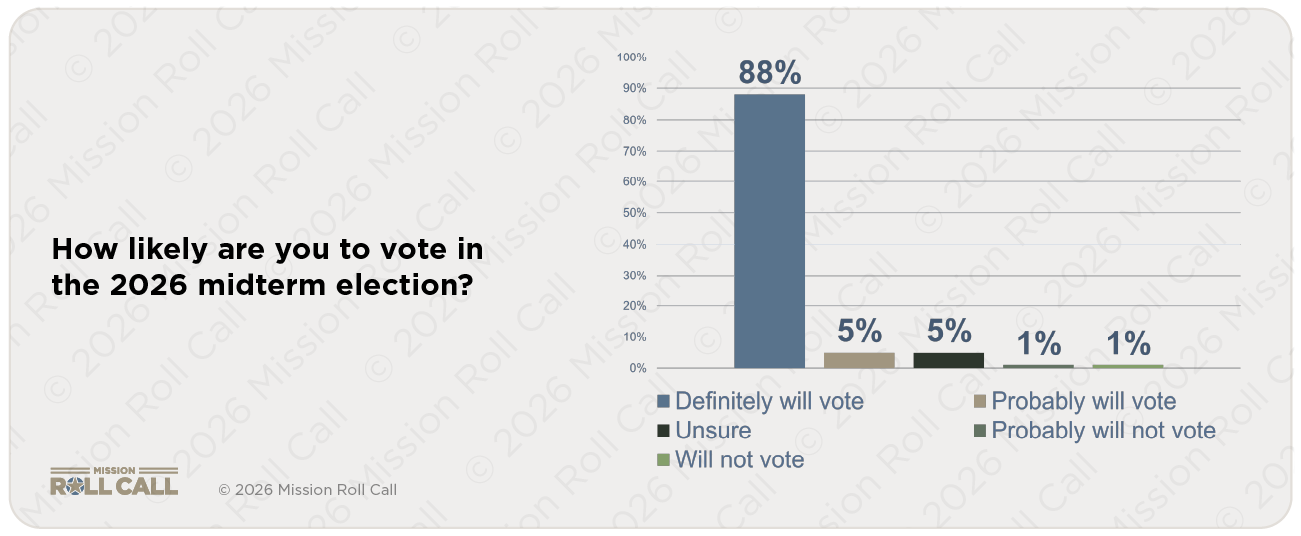
Veterans are not disengaged from the political process. In fact, they are among the most reliable and committed voting blocs in the country. According to the survey, nearly 90 percent of respondents say they will definitely vote in the 2026 midterm elections, with only a small percentage indicating uncertainty or a likelihood of sitting out. This level of participation is not incidental. It reflects a population that continues to see civic engagement as an extension of service and responsibility, even years after leaving the military.
At the same time, engagement does not equal satisfaction. What emerges clearly from the data is a growing frustration with how veteran issues are handled once the election cycle ends. As one respondent put it bluntly, “Communication, veterans’ rights are not being enforced.” That sentiment underscores a broader concern: veterans are participating, but they are not convinced they are being heard or taken seriously in the decisions that follow.
Top Issues: Personal Stakes, National Consequences
When asked what issues will most influence their vote, veterans pointed to a mix of deeply personal concerns and broader national priorities. Disability compensation and benefits ranked highest, followed closely by economic conditions and inflation, while national security and military readiness remain central. These priorities reflect the dual perspective veterans bring to public policy, balancing both personal stability and the broader direction of the country.
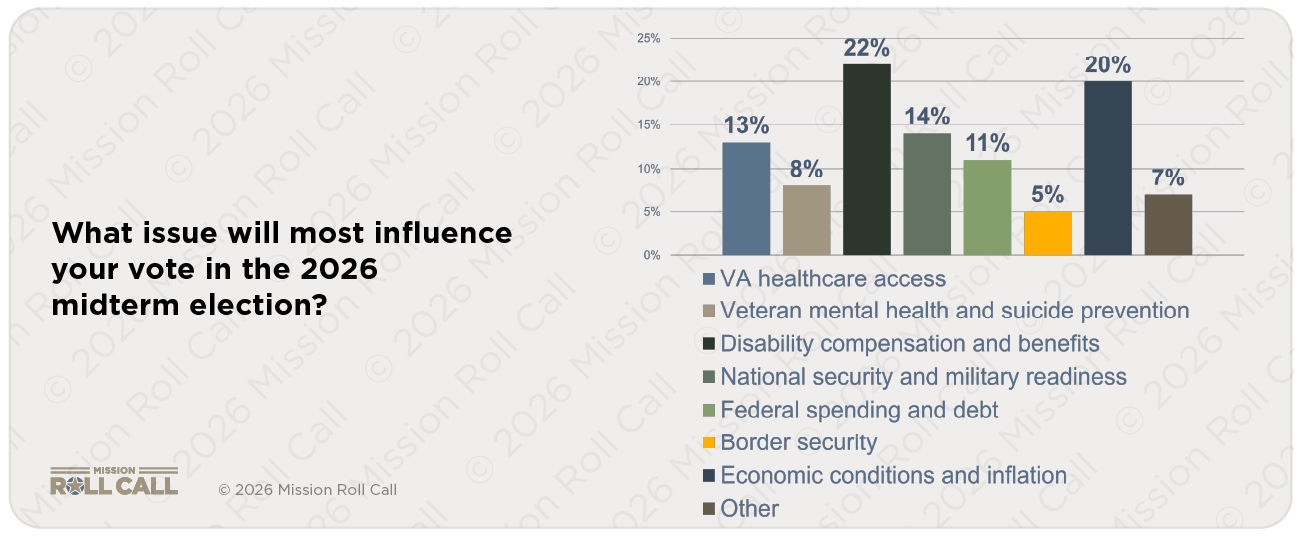
The connection between these issues is clear in the responses themselves. One veteran pointed to “inflation, decreased healthcare coverage for veterans, and the overall quality of care” as interconnected concerns, reinforcing how economic pressure and access to benefits often overlap in daily life. Healthcare access, particularly within the VA, continues to play a major role, though it falls slightly behind financial and compensation related issues, suggesting that immediate economic pressures are shaping how veterans prioritize their concerns.
At the same time, mental health remains a persistent and underlying issue. While it ranked lower as a direct voting driver, open ended responses tell a more urgent story, with veterans pointing to “PTSD issues” and warning that “mental health care will still fall short.” This gap between ranking and lived concern suggests that mental health is not secondary, but embedded within broader challenges of access, stability, and long term care.
Clear and Consistent Priorities for Congress
When asked what Congress should prioritize, protecting VA funding emerged as the top priority by a wide margin, followed by ending veteran homelessness and expanding access to community care.

Veterans reinforced these priorities in their own words, adding depth to the data. “Ending veteran homelessness,” one respondent wrote simply, while another emphasized the importance of “proper staffing of existing VA facilities,” highlighting operational gaps that directly impact access and quality. Others focused on how care is delivered, including the “need for more care options outside the VA healthcare system” and the importance of improving navigation and usability.
As one veteran explained, meaningful reform includes “streamlining and making it easier for technology-challenged veterans to get their care and benefits.” Taken together, these responses point to a need for execution, consistency, and follow through on commitments that already exist.
A Confidence Gap That Continues to Widen
Despite strong engagement and clearly defined priorities, confidence in Congress remains limited, revealing a widening gap between participation and trust. A majority of respondents reported low or no confidence that lawmakers will protect VA healthcare funding over the next two years. This lack of confidence extends beyond funding decisions and into the broader political environment, where more than two thirds of respondents believe veteran issues do not receive adequate attention from candidates during election cycles. Even more striking, an overwhelming majority agreed that veterans are often used as political talking points without meaningful follow through.
Veterans are not questioning whether they are mentioned in speeches. They are questioning whether those mentions lead to action. That concern becomes even more pronounced when looking at long term care needs, with one respondent emphasizing the importance of supporting “disabled veterans and those with PTSD when they are no longer able to advocate for themselves.” This reflects a deeper issue of responsibility and trust that cannot be addressed through messaging alone.
Strengthening the System, Not Replacing It
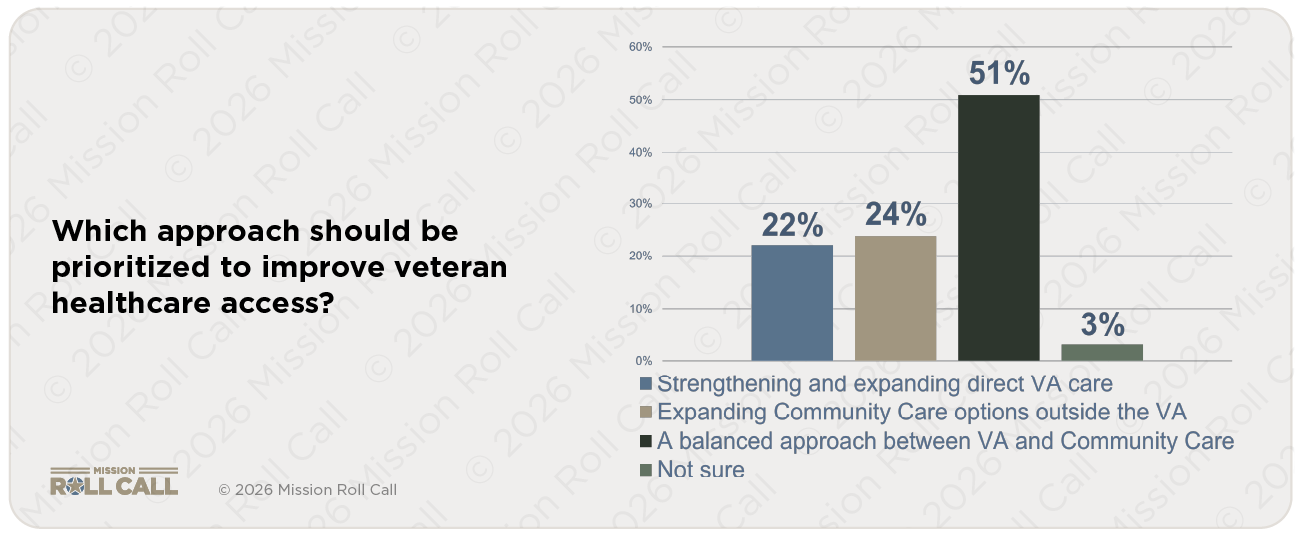
When it comes to healthcare delivery, veterans are asking for a system that works more reliably. The most widely supported approach is a balance between VA care and community care, rather than expanding one at the expense of the other. This reflects a pragmatic understanding of both the strengths and limitations of the current system.
Satisfaction levels reinforce this complexity. Many respondents report being somewhat satisfied, while a significant portion report dissatisfaction. This middle ground points to a system that is functional but inconsistent, capable of delivering care but not always in a way that veterans can depend on. The message here is that the system isn’t working reliably enough to meet expectations across the board.
What Veterans Want From Leadership
Veterans were also clear about what would increase their trust and engagement in political leadership moving forward. Their responses point to a desire for clarity and accountability rather than additional outreach or messaging. Clear positions from candidates on veteran issues ranked highest, followed closely by transparency in VA funding decisions.
Notably, a significant number of respondents indicated that nothing would increase their likelihood of voting, reinforcing that this is not a population that needs to be mobilized. Veterans are already engaged. The question is whether their engagement is being met with meaningful action and responsiveness from those in positions of leadership.
The Bottom Line
These survey results ultimately paint a picture of a population that remains committed to civic participation while growing increasingly frustrated with the outcomes that follow. Veterans are engaged, informed, and paying attention not just to what is said, but to what is done. They are asking for follow through, for accountability, and for systems that function consistently rather than intermittently. Above all, they are asking to be heard, not just during election cycles, but in the policies that shape their daily lives. For lawmakers, the message is straightforward: veterans are watching, and they are voting.