Beyond the Uniform: Lee Otto’s Mission to Make Sure No Veteran Fights Alone
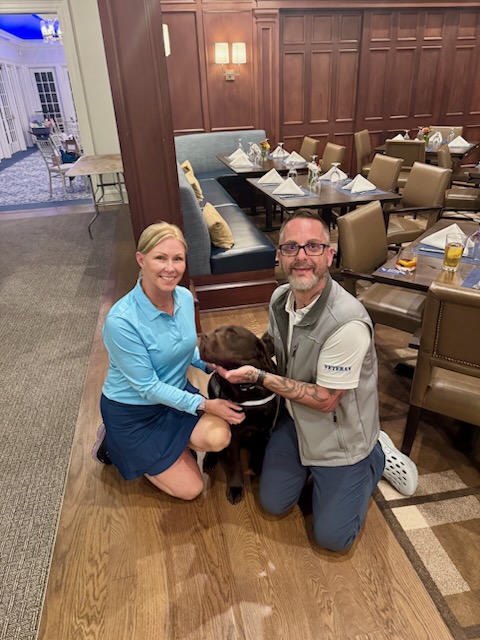
Lee Otto planned to make the Army his career. He did not plan on injuries ending it. He did not plan on coming home without a next mission. And he did not plan on losing his wife while he was still trying to find his footing.
Overseas, he knew who had his back. After retirement, he was living with post-traumatic stress disorder (PTSD), a traumatic brain injury, and medical complications from his wounds—without his battle buddies beside him. When his wife died unexpectedly in 2013, he lost the person who had been beside him at home, too.
Today, Lee serves as a pastor, speaker, and Sierra Delta ambassador. To understand why he is determined to walk alongside other veterans, start with the years when he needed someone to walk alongside him.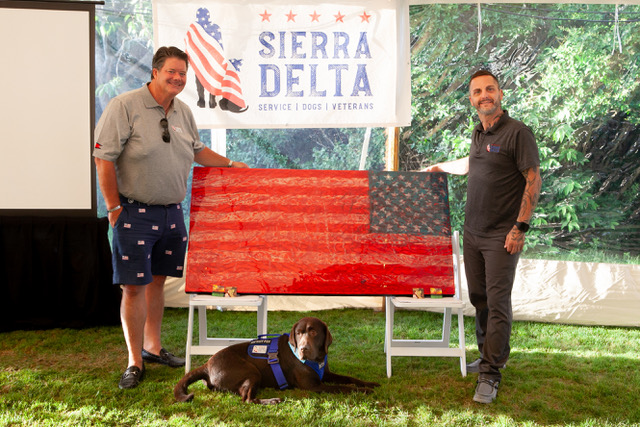
The Brotherhood that Never Leaves
Lee deployed to Iraq with the 1st Infantry Division, the Big Red One, serving in 4th Platoon, F Troop, 4th Cavalry, the Brigade Reconnaissance Team.
“Recon is out front, and we were never in one place for long,” he recalls. His unit fought through the insurgent uprisings in Baqubah in the spring and summer of 2004, in An Najaf during Operation Duke Fortitude, in Operation Smackdown, and in Operation Phantom Fury—the Second Battle of Fallujah—that November.
Those battles are part of his story. But when Lee talks about what shaped him most, he comes back to the people.
“That’s where I learned what a team really is,” he says. “I worked my way up through the ranks, and every step taught me the same lesson: your life is in their hands, and theirs is in yours.”
For 18 months, they slept under the same stars, missed the same families, and spent every holiday and almost every waking moment together. Brotherhood was not an idea. It was the person beside him, sharing the same distance from home and the same responsibility to bring one another back.
Some of those people never came home.
“We lost some amazing brothers and sisters over there, including close friends of mine,” Lee says. “I carry them with me every day.”
That bond did not end when his military service did. Neither did his sense of responsibility to the people who served.
“They’re a big part of why I refuse to let any veteran fight alone.”
When the Plan Falls Apart
Lee had expected to keep serving in uniform. Instead, after being shot and wounded on three separate occasions, his injuries forced his retirement.
“The Army had a different plan, and I wasn’t ready for it,” he says.
“I got out with no game plan.”
He was trying to navigate civilian life while living with PTSD, a traumatic brain injury, and the lasting effects of his wounds. Then, in 2013, his wife died unexpectedly.
“I was carrying everything from the military, grieving her, and dealing with major medical issues from my injuries that all came to a head at once,” he recalls.
The people he would once have turned to were no longer beside him each day. His battle buddies. His wife. He was facing overlapping losses without the everyday closeness he had relied on.
“From about 2009 to 2014 was the darkest stretch of my life.”
There was no single problem to solve and move past. Grief, physical injuries, and the wounds of war were unfolding together.
That is the part of coming home Lee wants other veterans to be able to talk about: not just where they served, but what they are carrying now.
His story would eventually become a way to begin that conversation. First, he needed support himself.
The Dog Who Helped Bring Him Back
For Lee, getting better happened slowly, with support that reached into the ordinary moments of his life. His service dog, Sayge, became part of that work.
Sayge was trained for specific tasks, including interrupting nightmares and helping Lee navigate crowded spaces.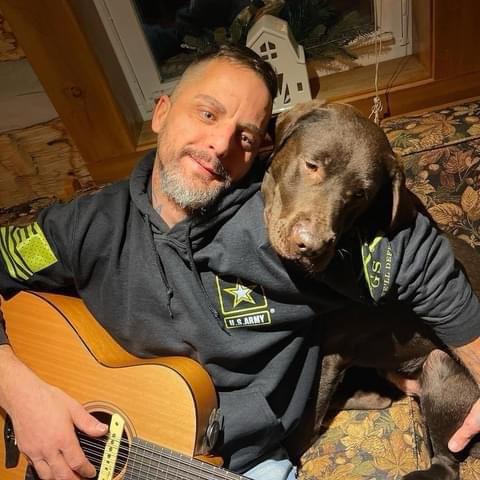 “When I had nightmares, he’d lick my face to wake me up,” Lee says. “When my legs were thrashing, he’d lie across them.”
In public, Sayge helped create a sense of safety.
“He would circle me to let me know someone was coming up behind me, or keep people at arm’s length in a crowded room.”
Those tasks mattered. So did what became possible because of them.
“What I didn’t expect was everything that came after.”
With Sayge, Lee started sleeping again. He credits both his dog and therapy with helping the nightmares eventually fade.
As sleep returned and he began feeling better, Lee wanted to get out more. The daily routine of caring for Sayge helped turn that desire into action.
“He needed to go outside, he needed exercise, and he needed regular training, so he got me back on my feet and kept me moving,” Lee says. “Slowly but steadily, I got better.”
Eventually, Lee wanted to give another veteran access to the kind of support he had received.
He set a fundraising goal: raise at least what it had cost Sierra Delta to train Sayge, so that money could help other veterans move toward a better place.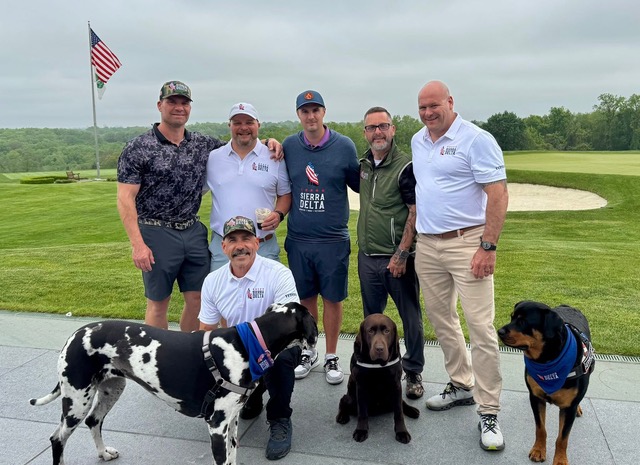 “That’s what I hope other veterans find: not just a dog, but a reason to get up, a reason to keep moving, and eventually a reason to help the next brother or sister.”
From Finding His Footing to Finding His Calling
As Lee worked through his own struggles, faith became central to how he understood his recovery—and what he wanted to do with his life. Through his work with Sierra Delta, he began sharing his story publicly, speaking about the battles overseas and the ones inside.
Then a question started following him: “Have you ever thought about being a pastor?”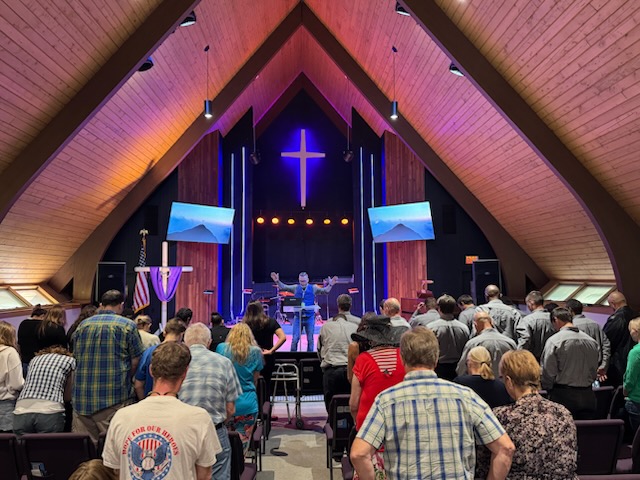 “Honestly, at first I laughed,” he says. “It had never crossed my mind.”
But people kept asking. Lee took the question seriously, spent time soul-searching, and came to understand it as a calling. In 2018, he stepped fully into pastoral ministry.
He points to 2 Corinthians 1:4, which describes receiving God’s comfort and then offering comfort to others in trouble. For Lee, ministry grew out of what he had lived through—and the people who had refused to give up on him.
He credits his Savior and his fellow brothers and sisters with helping bring him back. His calling is not separate from that history. It is one way he carries their care forward.
Why Sierra Delta’s Mission Matters
When Lee talks about why Sierra Delta’s mission matters to him, his answer is personal.
“Because I’ve been the veteran who needed it.”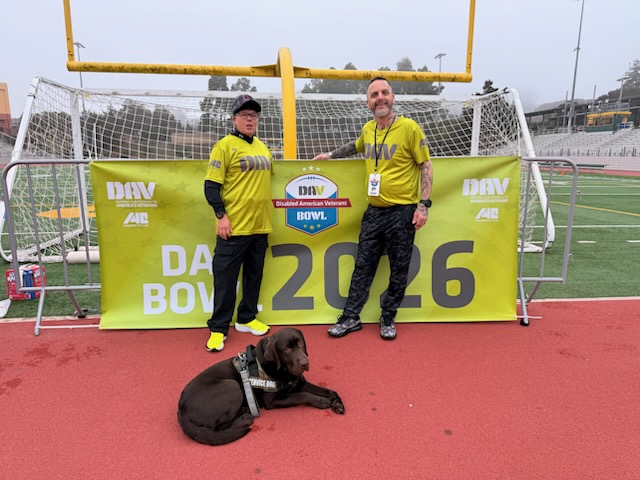
For him, dog training and veteran support are not abstract causes. They are connected to the everyday work of rebuilding a life.
Sierra Delta provides access to dog training grants, resources, service opportunities, and a community built around connection and purpose. Lee’s own experience gives that mission a personal meaning.
Showing up. Walking alongside someone. Refusing to let them suffer alone.
“So when I see a veteran who’s isolated and hurting, I know that place,” he says. “Sierra Delta goes into that place. It doesn’t just advocate for veterans; it walks with them.”
His faith gives him language for that kind of presence. He points to Psalm 34:18 and its assurance that God is near to the brokenhearted. In his own life, he says, that nearness has often come through people who refused to leave him alone.
The Greatest Need Facing Veterans
Ask Lee what veterans need most, and he names two things:
“Connection and purpose.”
They need someone who understands, someone who will listen and be honest with them—not simply thank them for their service and move on.
“In the service, people had our backs every minute,” he says. “Then we come home and that’s suddenly gone.”
For Lee, rebuilding that connection means showing up for one another. He points to Hebrews 10:24–25 and its call to gather together and encourage love and good works.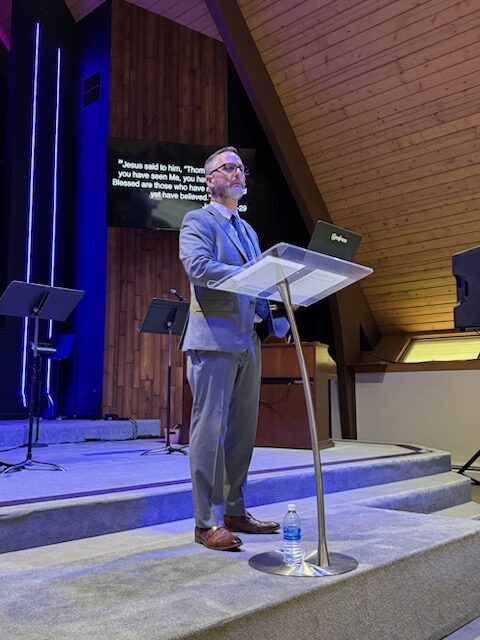
The other need is purpose: somewhere to put the instinct to serve when the uniform is no longer part of daily life.
“We don’t stop being servants when we take off the uniform.”
His faith shapes that conviction, too. He sees continued life as an opportunity to care for others, and he wants veterans to know they still have something to give. Receiving support and serving others can belong to the same life.
“As long as we’re still breathing, we have people to serve, the same people we fought for.”
Your Mission Isn’t Over
“Your mission isn’t over. It’s changing.”
That is the message Lee wants a veteran reading his story to hear—not from someone who has all the answers, but from someone who knows what it is to lose the future he had planned.
“I know what it feels like when the uniform comes off, the brothers are gone, and the plan you had falls apart,” he says. “I’ve been there.”
His hope is rooted in his faith. He points to Ephesians 2:10 and its description of being created for good works. He believes there is still meaningful work ahead, even when a veteran cannot yet see what it looks like.
“You didn’t survive what you survived just to sit on the sidelines.”
He turns that conviction into practical encouragement: find a community. Find a church body. Pick up the phone. Call a brother. Reach out to Sierra Delta. You do not have to have the next chapter figured out before you let someone walk with you. You don’t have to carry the burdens alone.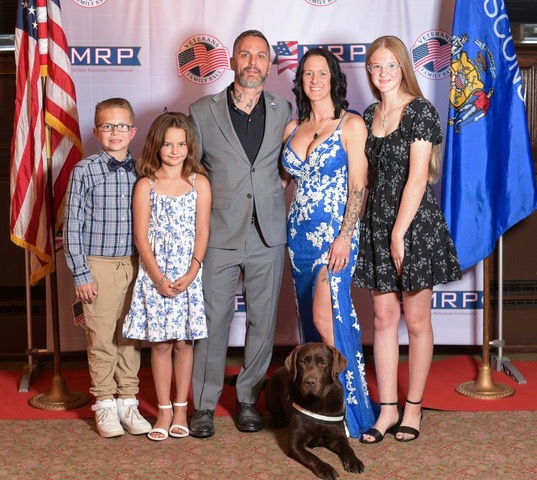
“Let somebody walk with you, and when you’re ready, turn around and walk with the next veteran.”
“The past is a place of reference, not a place of residence,” Lee says. “We don’t live there anymore.”
He points to Philippians 3:13–14 and its image of reaching toward what lies ahead. Then he puts that forward motion in his own blunt words:
“If you’re dying where you stand, move your ass!”
Beyond the Uniform
Once, Lee’s team depended on him out front. Later, he needed others to help him find his footing. Today, his service includes making sure another veteran has someone to call.
His story does not make recovery sound quick or simple. There was grief. There was therapy. There was faith, a dog who needed to go outside, and people who stayed. Slowly, there was room for a next mission.
For the veteran still trying to find that room, the invitation is not to have everything fixed. It is to make a connection. Let someone know what you are carrying. Let someone stay.
And when you are ready, turn around and walk with the next veteran. The uniform may be behind you. Looking out for one another does not have to be.
Mission Roll Call has resources available to veterans seeking support for mental health, traumatic brain injury, recovery, connection, and purpose after military service. Veterans can explore organizations like Sierra Delta and other trusted programs through Mission Roll Call’s Veteran Resource Directory.