When it comes to healing from the invisible wounds of war, many veterans find themselves searching for relief beyond traditional treatments. One increasingly talked-about option is Hyperbaric Oxygen Therapy (HBOT)—a treatment that’s been around for decades but is now gaining attention for its potential to help veterans, especially those dealing with traumatic brain injuries (TBI) and post-traumatic stress (PTS).
But what exactly is HBOT? How does it work? And why are more people, including members of Congress, urging the Department of Veterans Affairs (VA) to embrace it? Let’s break it down.
What Is Hyperbaric Oxygen Therapy?
Hyperbaric Oxygen Therapy involves breathing pure oxygen in a pressurized chamber. The pressure is typically about 1.5 to 3 times higher than normal atmospheric pressure. This environment allows your lungs to take in significantly more oxygen than they would at sea level.
Why does that matter? Because oxygen is essential for healing. In a hyperbaric chamber, the oxygen you breathe dissolves into your blood plasma and spreads more effectively throughout your body, even to areas with poor circulation or tissue damage. This super-oxygenation helps fight infection, reduce inflammation, promote the growth of new blood vessels, and stimulate the body’s natural healing processes.
HBOT is FDA-approved for several conditions, including carbon monoxide poisoning, diabetic foot ulcers, and decompression sickness (aka “the bends” in divers). But it’s the emerging applications—like treating brain injuries—that are drawing attention from the veteran community.
How Can HBOT Help Veterans?
Veterans returning from military service often face a unique set of health challenges. Chief among these are TBIs and PTS—both of which can have long-term effects on mental clarity, memory, sleep, and emotional well-being.
Several studies and anecdotal reports suggest that HBOT may offer relief. The theory is that by flooding the brain with oxygen, HBOT can reduce inflammation and promote the repair of damaged brain tissue. For veterans who’ve suffered from blast injuries or repeated concussions, this could be a game-changer.
In some cases, veterans undergoing HBOT have reported improvements in:
– Cognitive function and memory
– Mood and emotional regulation
– Sleep quality
– Headache frequency and severity
– Anxiety and depression levels
While HBOT is not a cure-all, it appears to offer promising results when used alongside other therapies. For many veterans, especially those who’ve tried traditional medications or counseling without success, HBOT can feel like a long-overdue breath of hope.
Which Veterans Are Most Likely to Use or Need It?
HBOT is most commonly considered for veterans who:
– Have suffered a TBI from explosions, falls, or combat incidents.
– Are diagnosed with PTS, particularly when accompanied by symptoms like brain fog or chronic fatigue.
– Experience chronic pain, such as from wounds that have healed poorly or nerve damage.
– Struggle with treatment-resistant conditions, where conventional treatments haven’t provided relief.
In particular, veterans of the Iraq and Afghanistan wars—where improvised explosive devices (IEDs) were a constant threat—are among the most likely candidates. However, HBOT may also benefit older veterans with lingering effects from service-connected injuries.
Who’s Funding the Research?
Research into HBOT for brain injuries and PTS has been a mix of private and public funding, though much of the recent momentum has come from private organizations and state-level pilot programs.
Nonprofits like HBOT4Heroes, The TreatNOW Coalition, and The Healing Arizona Veterans Foundation have stepped up to sponsor HBOT treatments and conduct studies outside of the traditional VA system. Meanwhile, some state governments—like those in Oklahoma, Texas, and Florida—have launched their own HBOT pilot programs for veterans.
On the public side, there has been limited but growing federal interest. Agencies like the Department of Defense (DoD) have funded some HBOT studies, but the VA has been slower to act, citing a need for more conclusive scientific evidence.
That said, many in the medical and veteran communities argue that the real-world results speak for themselves—and that further inaction may be costing lives.
What’s Happening in Congress?
The push to make HBOT more accessible to veterans isn’t just coming from doctors and advocacy groups—it’s also gaining traction in Washington.
Over the past few years, several bills and resolutions have been introduced in Congress urging the VA to recognize and adopt HBOT as a treatment option. These efforts are typically bipartisan, reflecting widespread concern for veterans’ mental health across the political spectrum.
Some of these legislative efforts have aimed to:
– Authorize funding for HBOT pilot programs within the VA.
– Allow veterans to seek HBOT treatment from approved private providers and have it covered by the VA.
– Mandate further research into HBOT’s effectiveness for TBI and PTS.
Though progress has been slow, the increasing pressure from veterans’ groups and state-level successes is pushing the issue forward. Advocates argue that if the VA won’t offer HBOT, it should at least allow veterans to access it through the Veterans Community Care Program, which enables treatment from non-VA providers.
The Bottom Line
Hyperbaric Oxygen Therapy isn’t new, but its application for veterans with TBI and PTS is. As more veterans share stories of healing and as research continues to show promise, the momentum behind HBOT is growing.
While it’s not yet widely adopted within the VA, there’s hope on the horizon. From state-funded pilot programs to bipartisan efforts in Congress, the push to give veterans access to this therapy is gaining steam.
For many veterans, especially those who feel like they’ve tried everything else, HBOT could offer not just treatment, but renewed hope for recovery.
If you or someone you know is a veteran struggling with TBI, PTS, or chronic pain, it may be worth exploring whether HBOT is available in your state and keeping an eye on future developments from the VA and Congress.
Because sometimes, the path to healing really is just a matter of taking a deep breath.
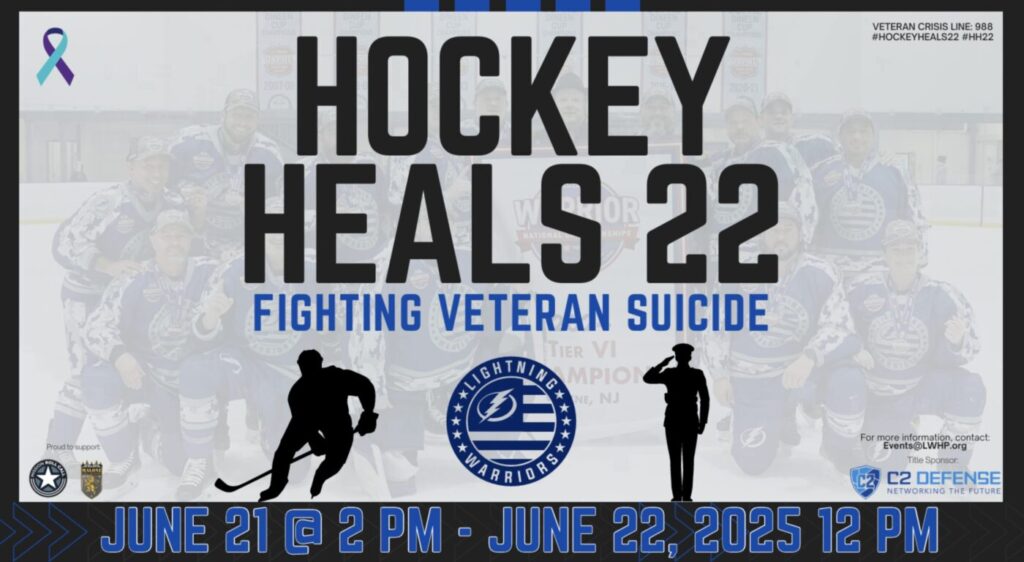
This June 21-22, Mission Roll Call is proud to join forces with the Lightning Warriors Hockey Program and the Malone Family Foundation for Hockey Heals 22, an inspiring event where 22 hours of continuous hockey are dedicated to one powerful mission: ending veteran suicide.
Veteran suicide is a national crisis. For years, the number “22” has served as a symbol, representing the estimated 22 veterans lost to suicide each day. While different studies and data sources have offered varied figures over time, the truth remains painfully clear: we are losing far too many heroes to invisible wounds.
Behind every number is a name, a family, and a story. And events like Hockey Heals 22 remind us that awareness alone isn’t enough—we need action, connection, and purpose to drive real change.
The Lightning Warriors
Founded in 2017 and formally incorporated in 2020, the Lightning Warriors Hockey Program is a Tampa-based 501(c)(3) nonprofit dedicated to serving the disabled veteran community through hockey. Their mission is to create a therapeutic and educational environment—both recreational and competitive—that fosters healing, camaraderie, and a renewed sense of purpose.
Hockey Heals 22 is an extension of that mission. It brings together athletes, veterans, and supporters to raise awareness, build community, and honor those we’ve lost by fighting for those still here.
MRC’s Role
As a national, 501(c)(3) nonprofit, Mission Roll Call gives a voice to veterans and their families through real-time polling, storytelling, and advocacy. Our mission is simple: to ensure every veteran is seen, heard, and supported.
In 2025, we’re focused on four critical priorities:
- Suicide prevention
- Homelessness
- Access to healthcare
- Food and financial insecurity
These challenges are deeply interconnected. That’s why we listen directly to veterans, share their experiences, and advocate for smart, effective policies—like the Senator Elizabeth Dole 21st Century Veterans Healthcare and Benefits Improvement Act, which expands mental health care access and support for underserved communities.
Events like Hockey Heals 22 help bring our work to life, uniting national advocacy with local action and community care.
MRC is proud to share this space with the Malone Family Foundation, a fellow co-beneficiary whose mission centers on mental wellness and recovery for veterans, first responders, and their families. Their work—especially through sport-based wellness programs—echoes the values at the heart of this event.
If you’re in the Tampa area, we invite you to join us in person for Hockey Heals 22, as we stand alongside the Lightning Warriors, the Malone Family Foundation, and all those who are committed to saving lives and building a stronger future for our nation’s veterans and their families. If you can’t make it, follow along on MRC’s social channels for photos, stories, and updates from the event.
Together, we can help ensure that every veteran knows: you are not alone, and your life matters.
Fuel Veteran Voices
A small gift powers the research and advocacy that brings veterans to the decision-making table.
Donate $5+