Warrior Foundation: Where Warriors Land When the Military Lets Go
Andrew Gasper uses the word “capture” a lot. Not in the way a recruiter does, not in the way a marketer does. In the way a Marine does, which is to say with precision and intention and without wasted motion.
“We try to capture them before they leave active duty,” he said.
Andrew is the CEO of Warrior Foundation Freedom Station, a San Diego-based nonprofit that has spent 22 years building a model around a problem most people don’t think about until it’s already a crisis: what happens to the nation’s most seriously wounded, ill, and injured service members in the critical window between military life and civilian life? Not after they’ve been homeless for years. Not after the substance abuse has set in. Before. Right there in that gap, when everything a Warrior has known for years is about to change and the system they’re being released into was not built for the speed or the severity of what they’re carrying.
That gap is exactly where the Warrior Foundation lives.
An Elevator. A Razor. A Foundation.
The organization began in 2004, and like many things that end up mattering, it started small. The founder was at Balboa Naval Hospital when she stepped into an elevator with a couple of wounded Warriors who were struggling to shave with their non-dominant hands. Their dominant arms were gone.
That year, Warrior Foundation raised $60,000 and bought Norelco electric razors for wounded Warriors who couldn’t manage with what they had. It was not a grand strategy. It was a response to a need that was right in front of them.
“The needs of the Warriors really shapes what we were then and what we are today,” Andrew said.
By 2006 and 2007, the wars in Iraq and Afghanistan were producing casualties at a pace the government was not prepared for. The phrase being used inside the system was blunt: “We’re rebuilding the airplane while we’re flying it.” Nonprofits like Warrior Foundation were the ones filling the gaps the plane couldn’t patch fast enough.
Freedom Station: 29 Cottages, One Mission
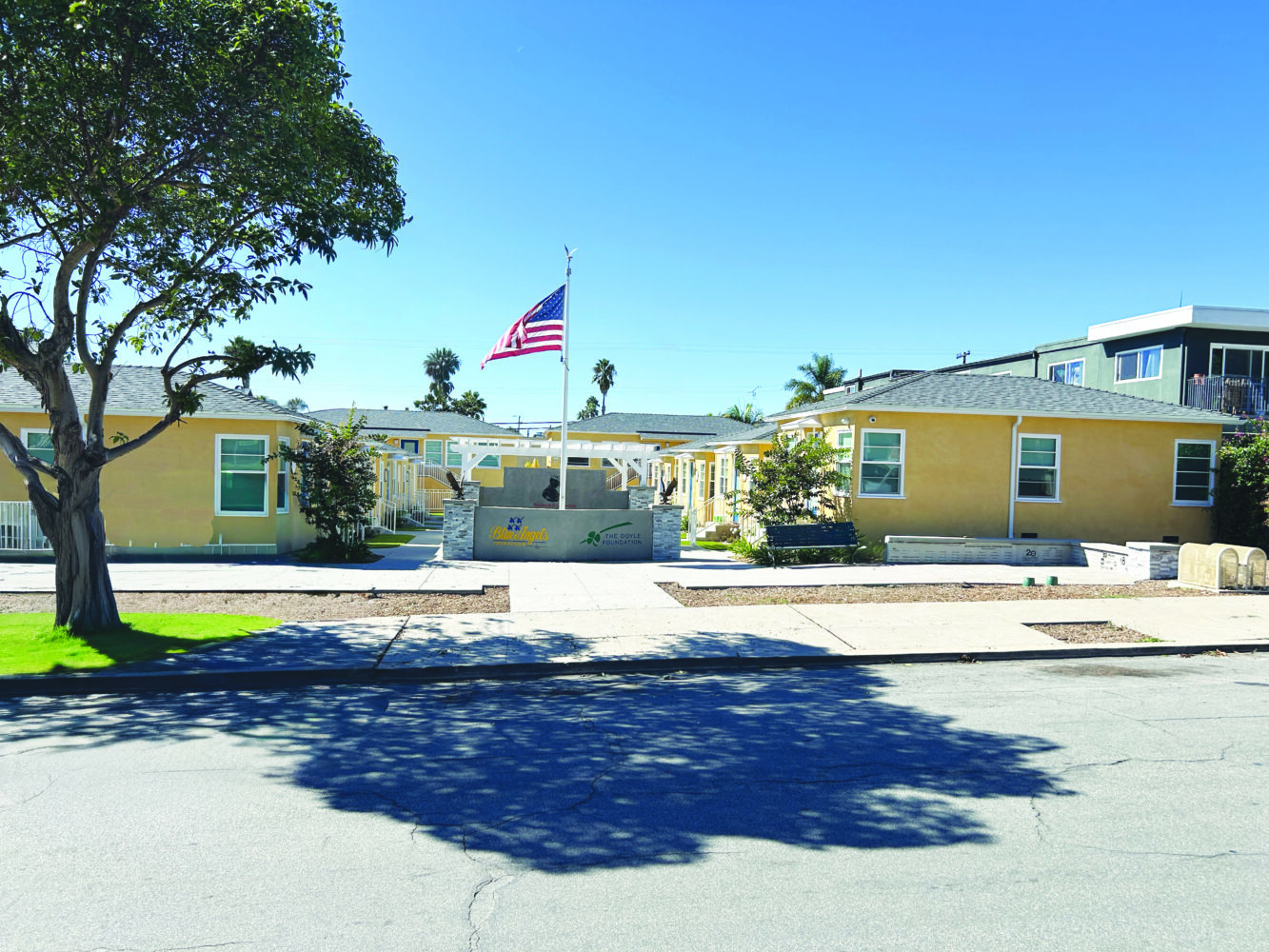
Today, Warrior Foundation’s flagship program is its Freedom Station transitional housing network. Three properties, all within a five-minute drive of Balboa Naval Hospital, all purpose-built to keep medically retiring service members close to their care while they figure out what life looks like next.
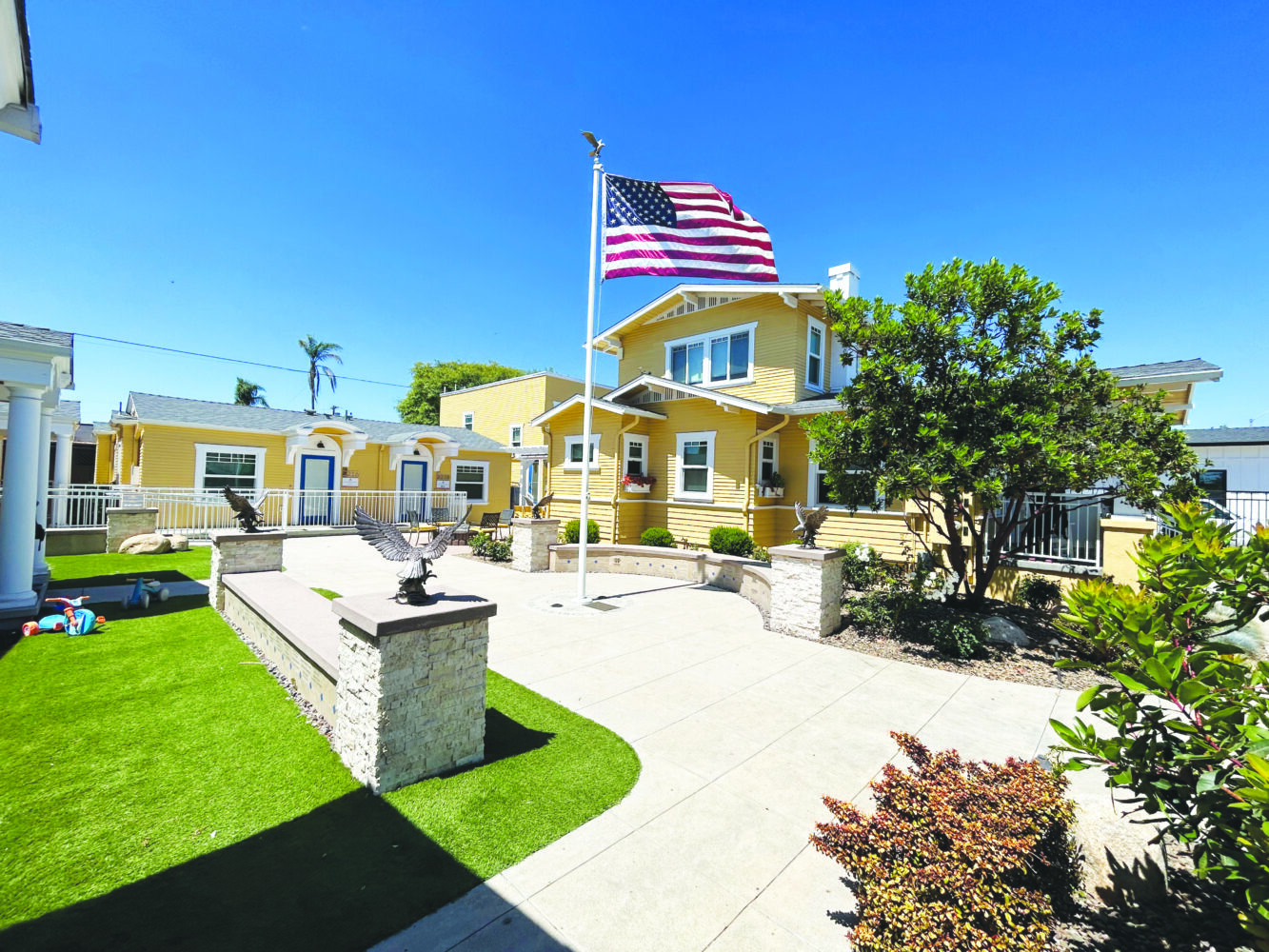
Twenty-nine one-bedroom, one-bath cottages, fully furnished. Not “furnished” in the sense of a bed frame and a lamp. Fully furnished: plates, silverware, linens, pillows, the kind of move-in-ready setup that matters when you’re coming out of the barracks and you own almost nothing.
“You’re often capturing that person coming from the barracks,” Andrew said.
The first Freedom Station opened in 2011, the second in 2020, and the third in January 2025. Each one took years of donor funding to build, and the need that drove each expansion was the same: there are more Warriors who need this than there are places to put them.
The program runs on an 18-month timeline, though Andrew is quick to clarify that the 18 months is a framework, not a deadline. Warriors who hit their transitional goals early leave early. Those who need more time work through it.
What makes it a program rather than just a roof is what happens inside the 18 months. Financial counseling, mentorship, career coaching, access to VA resources, and a voucher system designed to teach residents the basics of budgeting while building savings.
Fair market rent for a one-bedroom cottage in San Diego runs about $2,500 a month. Residents sign a lease for $2,500, but they earn back four vouchers a month, each worth $250, by completing their transitional goals. Show up for your appointments, work your plan, and the effective rent drops to $1,500, with the rest going into their pocket. For a 21-year-old who came in from the barracks and has never paid a utility bill, that structure is not incidental to the program. It is the program.
“Do you have a credit card?” Andrew will ask a resident. “No? Okay, let’s talk about the pros and cons of only using your debit card and building your credit.”
About 70 percent of Freedom Station residents are on the college track, using their GI Bill housing allowance, which pays out at $3,900 a month in San Diego, while their tuition is covered separately. Run the math on discounted rent against that allowance and a Warrior who works the program can leave Freedom Station in 18 to 24 months with savings, improved credit, and a degree in progress. That is not an accident.
The Wolfpack
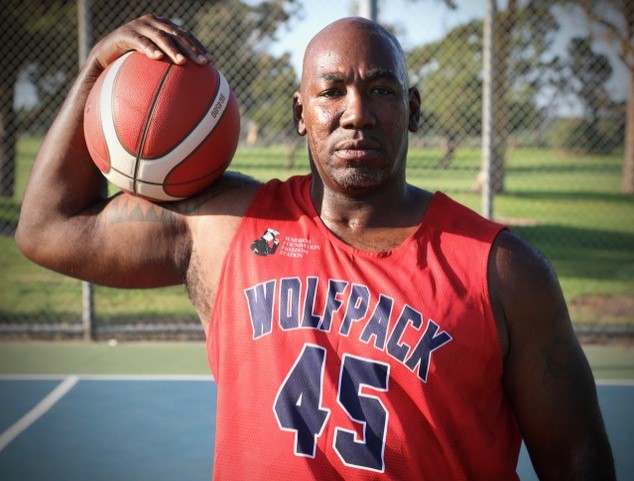
Warrior Foundation also sponsors the Wolfpack, a wheelchair basketball team that started at Balboa Hospital as an all-combat-injured team of Marines, Army and Navy veterans.
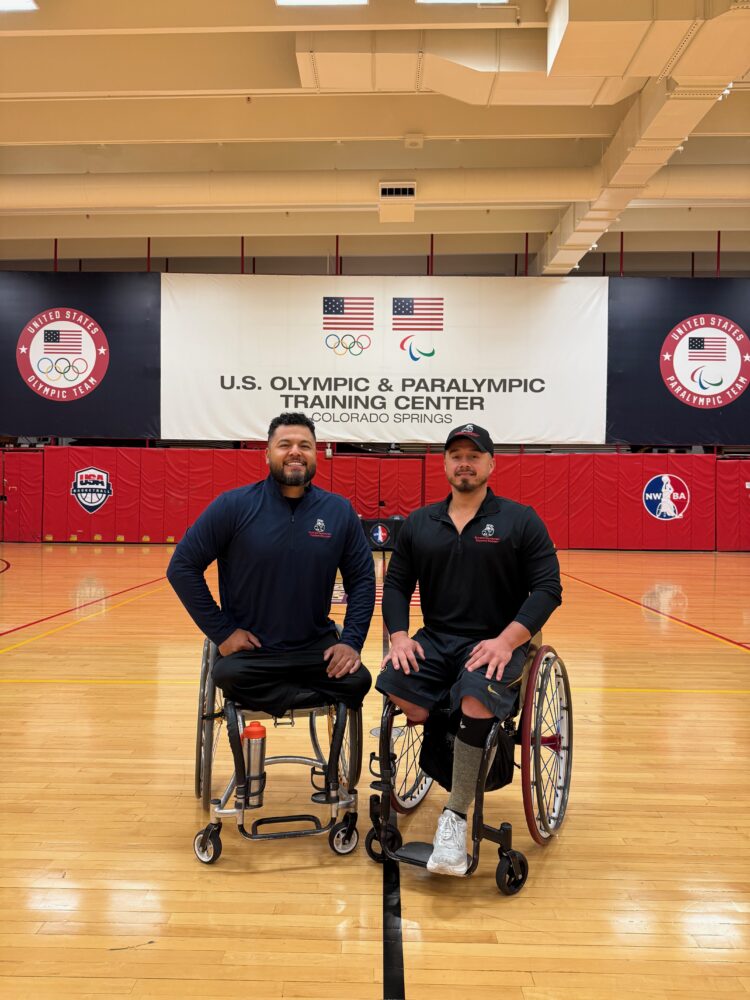
The logic behind it is simple and it works: Veterans are competitive. Give them something to compete at and they will compete. The camaraderie that comes with competition, the trash talk, the shared sweat, is not incidental to recovery. It is recovery.
In 10 years of the Wolfpack, several athletes have gone on to the Paralympic pipeline. One Warrior won gold at the 2024 Paris Paralympic Games in wheelchair basketball. Another recently won gold in shot put and discus. Another finished fourth in the world in hand cycling. Several Wolfpack former players are now coaching. One is the Navy Wheelchair basketball coach. Another coaches Marine Corps wheelchair basketball and Marine Corps rugby. The Brad Rich Invitational, named for Staff Sergeant Brad Rich who died of cancer and was a Wolfpack member, brings up to 14 teams to San Diego each year.
Warrior Foundation also funds athletes across the country who need help with equipment and travel to competitions, feeding into the pipeline that runs from local programs to DoD trials to branch-of-service competition to the Invictus Games.
“We’re bringing services to their doorstep to really get them plugged into the resources they need,” Andrew said. “To prevent the homelessness, to prevent the suicides, to prevent the substance abuse.”
The Warriors Behind the Work
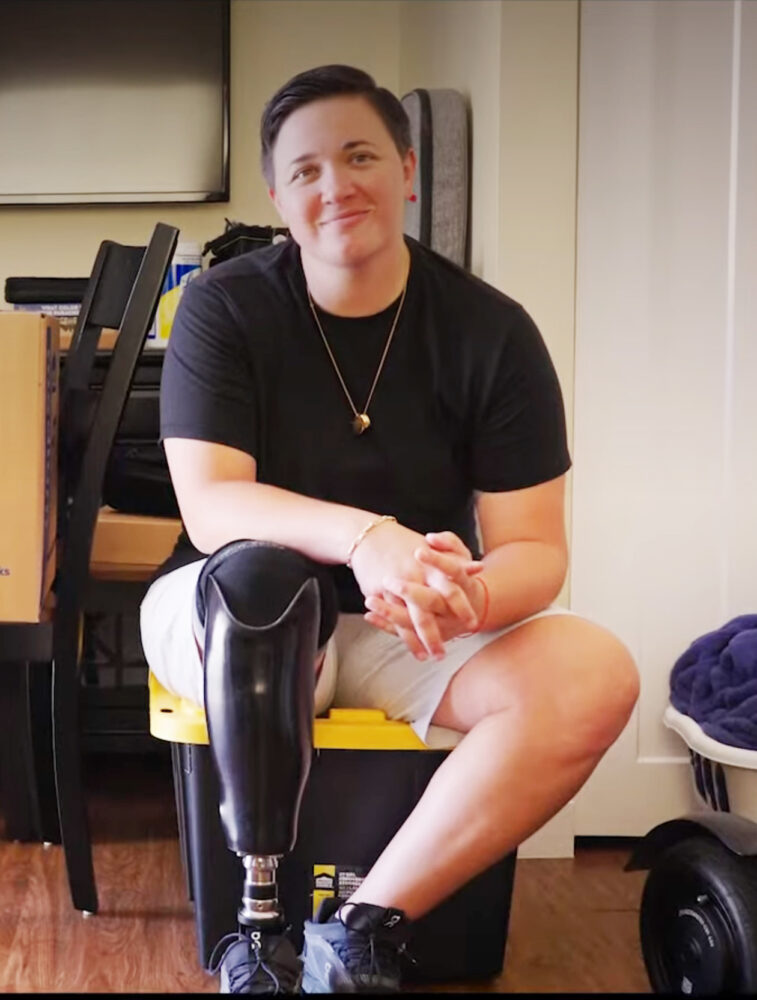
Dana Cisneros served as a Gunnery Sergeant in the U.S. Marines for nearly 18 years, including combat duty. When she underwent multiple surgeries for a leg amputation, Warrior Foundation flew her family to San Diego and placed them in the foundation’s Legacy House during her recovery. Once her immediate medical needs stabilized, she moved into a cottage at Freedom Station II to stay close to Balboa Naval Hospital.
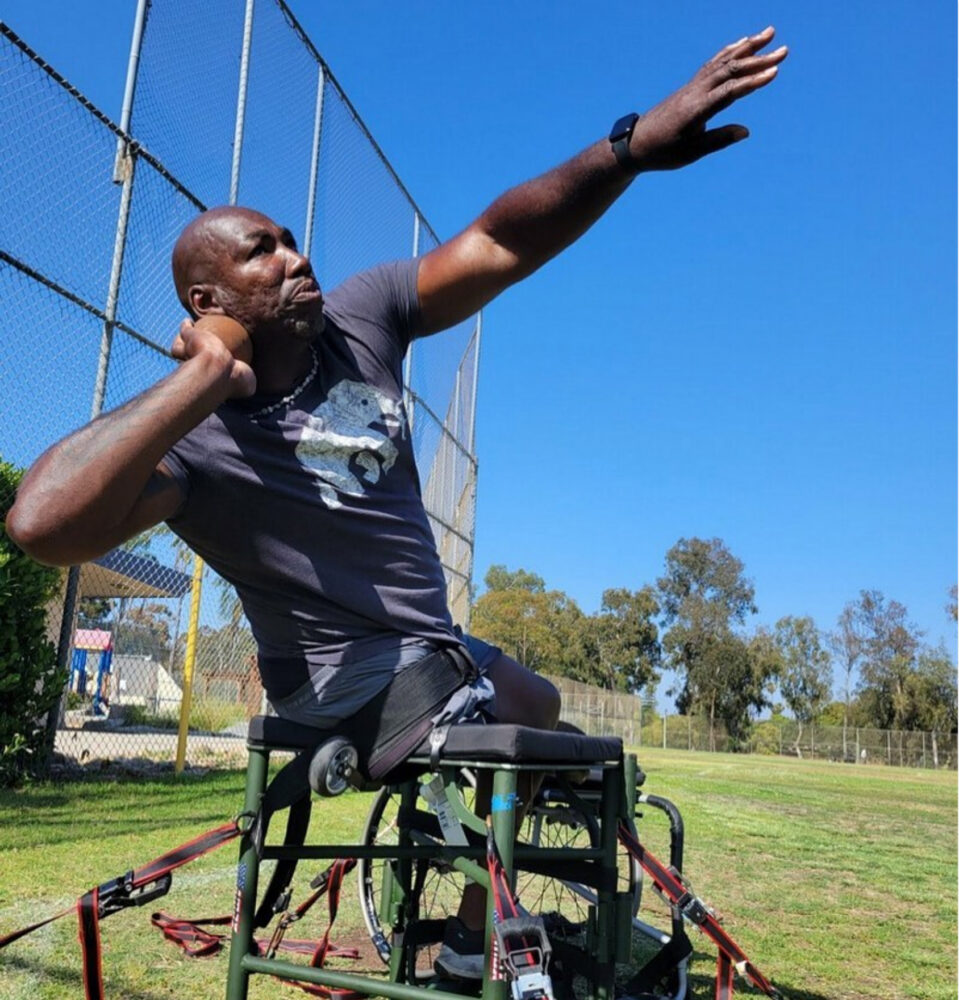
Anthony, a retired U.S. Army Veteran, came to Freedom Station as a former Division I college basketball player. Standing 6’9.5″, he was a natural fit for the Wolfpack and found in the team the kind of community and competition that had defined his life before his injury. He now competes in shot put for the USA National Paralympic Team, is ranked 15th in the world and first in the U.S., and is working toward a Master’s Degree in Sports Psychology. His stated goal is to help other Veterans accomplish theirs.
Josue, a retired Marine, moved into Freedom Station I with his wife Debbie during his recovery and while awaiting his medical discharge. Surrounded by other combat-wounded Warriors going through the same transition, he said he felt at home. He became the creator and founding member of the Wolfpack wheelchair basketball team while still recovering at Naval Medical Center San Diego and today pursues handcycling alongside spending time with his wife and sons.

Three different injuries. Three different paths into Freedom Station. Three lives that look substantially different because of what was waiting for them when the military let go.
But it is the daily work, the unglamorous parts of the program, that Andrew keeps coming back to when he talks about what makes Freedom Station different.
A few weeks before this conversation, Warrior Foundation was working with a sailor who fell and broke his back while serving in an active combat zone. The wars the public sees have changed. The injuries have not stopped.
Warrior Foundation also provides direct financial assistance to Veterans in hardship beyond its housing residents: utilities, grocery cards, gas cards, medical equipment the VA and TRICARE won’t cover, and sometimes flights. They verify every request, working through VA case managers and commands. The need is real and Andrew does not want a single donor dollar going to the wrong place.
“We want to make sure the folks we’re helping are deserving,” he said.
Filling the Gray Area
Andrew spent 15 years in the government system before coming to Warrior Foundation four years ago, first as president and then as CEO. He built standard operating procedures for transitional planning that were adopted Marine Corps-wide. He helped the Navy retool its own transition program. He has seen, from the inside, what the government can and cannot do.
“The DoD should be focused on warfighting,” he said. “Nonprofits are able to come alongside the government and really fill that gray area in.”
What he has built at Warrior Foundation is a program designed to prove a point: if you get to Warriors early enough, give them the right support at the right moment, and hold them accountable to a plan, the outcomes change. The suicides don’t happen, the homelessness doesn’t happen, and the substance abuse never gets the chance to take hold.
“We prevent it,” he said. “By capturing those folks coming off active duty.”
He quoted what he tells residents when their passion outruns their follow-through: “Don’t tell me. Show me.”
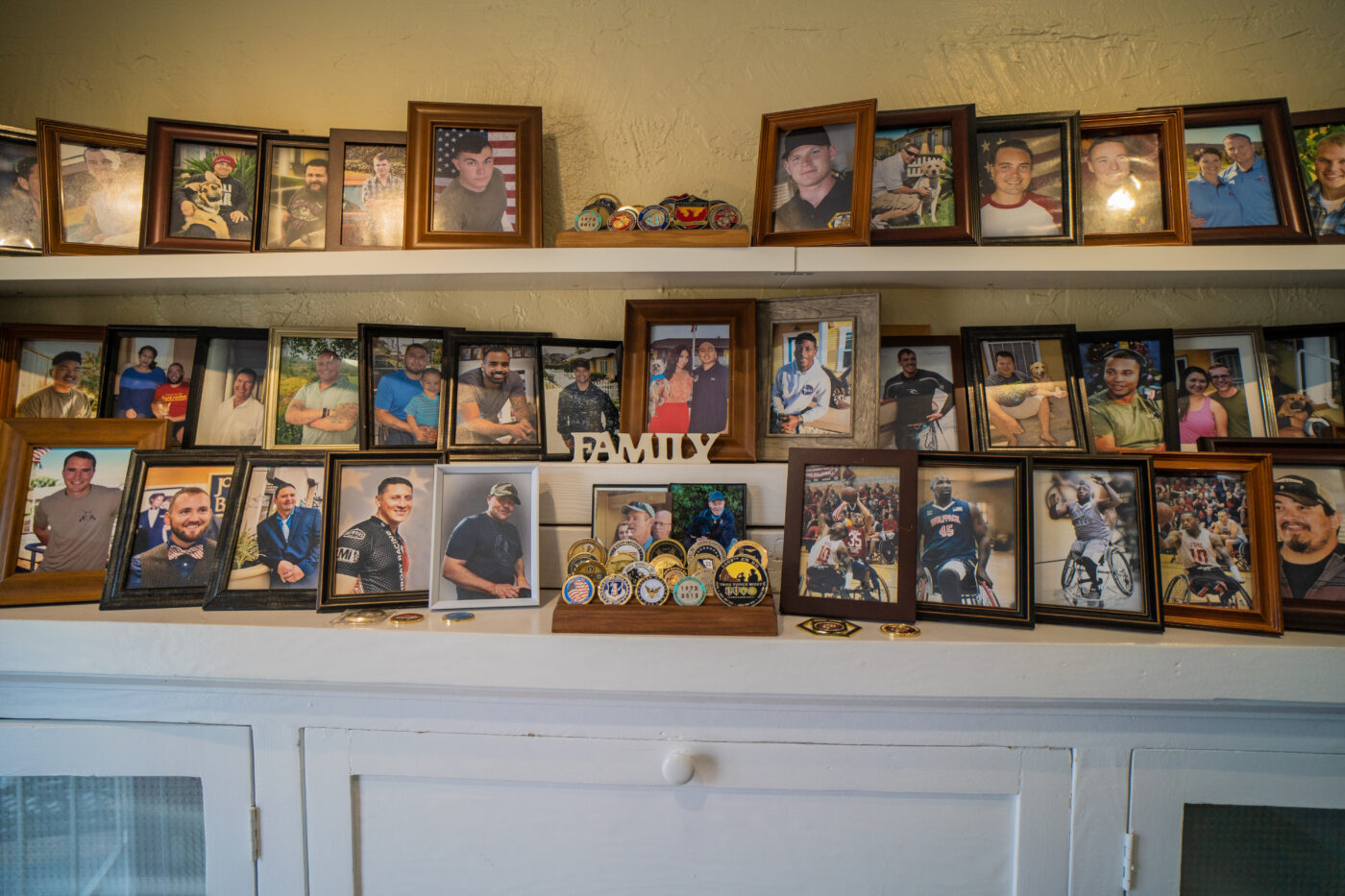
And when he talks about what he wants the Mission Roll Call audience to know, it comes back to the same thing it always does in this work: relationships. The Dress for Success partnership with Macy’s. The corporate partnership with Kasper clothing that brought their vice president out from New York to outfit women Warriors at no cost. The trips to D.C. to maintain relationships with Wounded Warrior Command leadership teams are critical to help fill the gaps in Warrior Care.
“If you see a problem,” Andrew said, “develop a course of action and try. You never know where those relationships will lead you.”
When you’re high on life, reach back and bring somebody else up. When you’re low, raise your hand and ask for help. He has been saying some version of that to Warriors for 22 years. He still means every word of it.
How to Help
Warrior Foundation Freedom Station is a donor-funded program that receives no city, state, or federal grant funding for its transitional housing. Every cottage, every voucher, every financial assist comes from individual and corporate donors. To learn more or support their work, visit warriorfoundation.org.
Find Warrior Foundation Freedom Station in the Mission Roll Call Veteran Resource Directory.