The Holidays Highlight Where Veterans Are Still Being Left Without Support
The holidays highlight where veterans are still left without support and while the season is often associated with connection and care, data from Mission Roll Call show that many veterans enter the holidays facing isolation, uncertainty, and unmet needs. These challenges are not created by the holidays. They reflect long standing gaps in community connection, transition support, and access to trusted help that become harder to ignore when stress is higher and support matters most. Many veterans report feeling only weakly connected or not connected at all to the broader veteran community. As one veteran shared, “The holidays don’t create the problems. They just make it harder to ignore how alone you already feel.”
This lack of connection is not a minor issue. Community plays a critical role in mental health, identity, and stability after military service. One veteran described it this way: “It feels like everyone else has a place to be, and you’re just trying to get through the day without being noticed.” When veterans do not feel connected to others who share their experiences, everyday stressors become harder to manage. During the holidays, when social connection is emphasized in families, workplaces, and public life, this distance becomes more visible and more painful.
Our data also shows that this disconnection is reinforced by limited participation in veteran related activities. Most veterans report that they rarely or never take part in events, groups, or programs that might strengthen peer relationships. This means many veterans enter the holiday season without established routines or networks that could provide support when stress increases. Holiday related stress is widely recognized within the veteran community. Many veterans report that they or someone they know struggle more during the holidays.

As one respondent noted, “You don’t have to be in crisis to struggle during the holidays. Sometimes it’s just the weight of everything you’ve lost or haven’t figured out yet.” This finding matters because it shows that holiday distress is not isolated or anecdotal. Veterans see it in themselves and in others. The season often brings reminders of loss, transition, or unmet expectations, especially for those who feel disconnected from community or family.
When veterans struggle during the holidays, most turn first to family or friends. Very few turn to institutional providers or formal systems, and a significant share say they turn to no one at all.

“If you don’t already have someone in your corner, the system doesn’t really feel like it’s built for moments when you’re overwhelmed.” This pattern reveals critical vulnerability. Veterans who lack strong family ties or close personal networks are more likely to face the holidays without support. It also shows that formal systems are not positioned as the first line of help during moments of emotional strain. One reason veterans do not reach out is discomfort with open conversation. Many report that stigma, fear of judgment, and not wanting to burden others prevent them from talking about mental or emotional struggles.

These pressures are present year-round, but they intensify during the holidays. Cultural expectations of strength, gratitude, and positivity can make it harder for veterans to acknowledge distress. Silence becomes a coping mechanism, even when it increases risk. “It’s simple…you don’t want to be the person who brings the mood down. “You just keep your struggles to yourself – there is nothing worse than being the human piece of coal in a stocking,” noted one of our respondents. Trust plays a major role in how veterans seek help. Veterans place the greatest trust in fellow veterans and Veteran Service Organizations when it comes to understanding benefits and navigating support.
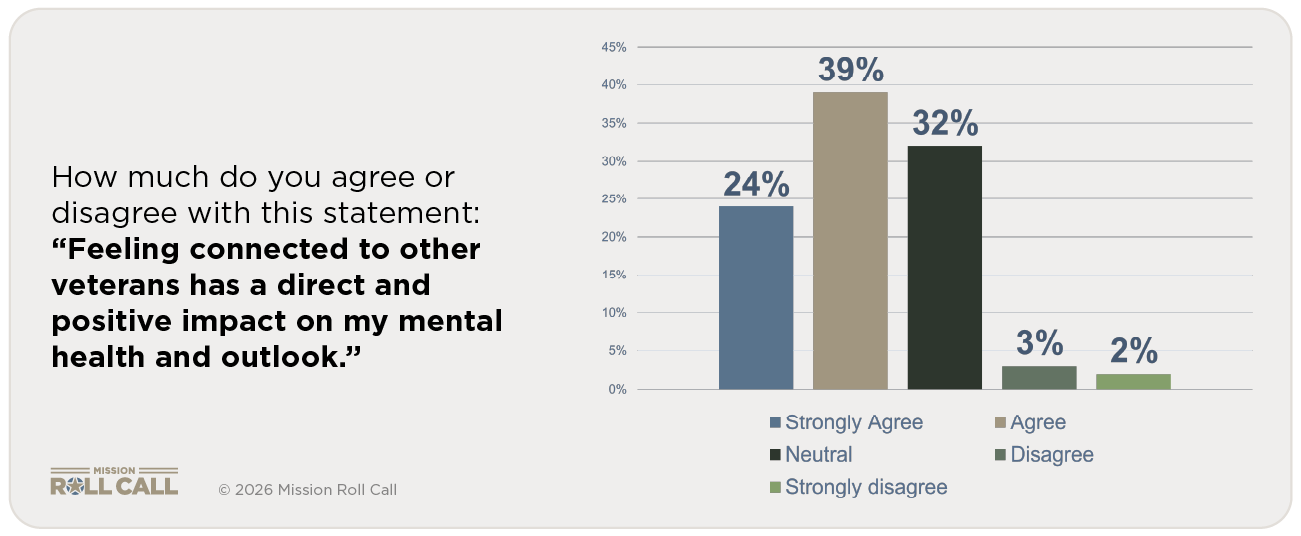
This reliance on peer trust is a strength, but it also exposes a gap. Veterans who are not connected to other veterans are less likely to receive guidance from the people they trust most. Institutional support may exist, but without trusted messengers, it often remains out of reach. Many of the challenges veterans face during the holidays can be traced back to the transition out of service. Many veterans say they were not clearly offered the chance to enroll in VA health care or benefits, or do not recall being offered that opportunity. This lack of clarity at separation has lasting consequences. Veterans who do not enroll early are more likely to face confusion, delays, or avoidance later. During the holidays, when stress increases and navigating systems feel especially burdensome, unresolved transition gaps become real barriers to care. The data also shows that many veterans left service without a strong understanding of the full range of benefits available to them and their families. This uncertainty reinforces the perception that help is difficult to access or not meant for them. One veteran reflected, “I didn’t even realize what I was eligible for until years later. By then, it felt like I’d already missed my chance.” Despite these challenges, veterans are clear about what helps. Most agree that feeling connected to other veterans has a direct and positive impact on mental health and overall outlook.

Veterans also identify practical, achievable ways relationships could be strengthened. More local events consistently emerge as a priority. Veterans emphasize the importance of accessible, community-based opportunities where they can connect in low pressure settings. These events matter most when they are nearby, recurring, and easy to attend, reducing the barriers that often prevent veterans from participating in organized programs.
Better communication is another critical theme. Many veterans report that opportunities for connection do exist, but information about them is fragmented, inconsistent, or difficult to find. Veterans want clearer, more reliable outreach that explains what is available, who it is for, and how to get involved without navigating multiple platforms or agencies. When communication is straightforward and comes from trusted sources, veterans are more likely to engage.
Opportunities that include families also rank highly. Veterans emphasize that reintegration and well-being do not occur in isolation. Family inclusive activities help reduce stress at home, normalize the veteran experience for spouses and children, and remove the need to choose between supporting their family and maintaining peer connections. For many veterans, events that welcome families feel safer, more sustainable, and more relevant to their daily lives, especially during the holidays, when family dynamics and expectations are already heightened.
Together, these responses show that veterans are not asking for abstract solutions. They are pointing to concrete, realistic changes that could strengthen relationships, rebuild trust, and reduce isolation by meeting veterans where they are, both geographically and emotionally.

These responses make clear that veterans are not disengaged by choice. They are actively identifying practical, achievable solutions that would reduce isolation and strengthen support, particularly during high stress periods like the holidays. As one veteran explained, “I’m not looking for something formal or complicated. I just want to know there’s someone who understands and a place I can show up without feeling out of place.”
Taken together, the data paints a clear and consistent picture. Holiday hardship among veterans is not a seasonal problem that can be addressed with temporary outreach or short-term campaigns. The holidays simply expose and intensify long standing gaps in connection, trust, and access to care that exist year-round. Without stronger, more reliable pathways to community and clearer, more accountable support at the point of transition, these same challenges will continue to surface every year.
For many veterans, the hardest part of the holidays is not physical isolation. It is the experience of knowing that support systems exist on paper but feeling unable to reach them in moments of real need. When help feels distant, fragmented, or conditional, the burden falls back on veterans to navigate alone at precisely the time when connection matters most.