An Air Force Veteran’s Search for Safety, Stability and a Way Forward
Content warning: This story contains references to military sexual trauma, domestic violence, sexual assault, addiction, depression, and grief and loss.
Every week another paycheck arrived, yet no matter how many hours Carla worked, the money never seemed to stay long enough to keep her family financially secure. Working two and sometimes three jobs should have been enough to prevent foreclosure, but each paycheck disappeared almost as quickly as it arrived, consumed by her husband’s gambling addiction while she tried to raise her daughter, attend college and convince everyone around her that everything was fine.
From the outside, her life appeared stable. She had a family, a home and steady employment, all of the things people often associate with success. Behind closed doors, however, the financial pressure was becoming overwhelming, and she was carrying a burden she rarely shared with anyone.
“I was living a double life,” she recalled. “One behind closed doors and one that I allowed everyone to see.”
By the time she lost her home, the foreclosure was only the latest chapter in a much longer story. Years earlier, she had left the Air Force carrying invisible wounds that followed her into civilian life,
shaping relationships, affecting her mental health and making it difficult to recognize how much those experiences still influenced her decisions.
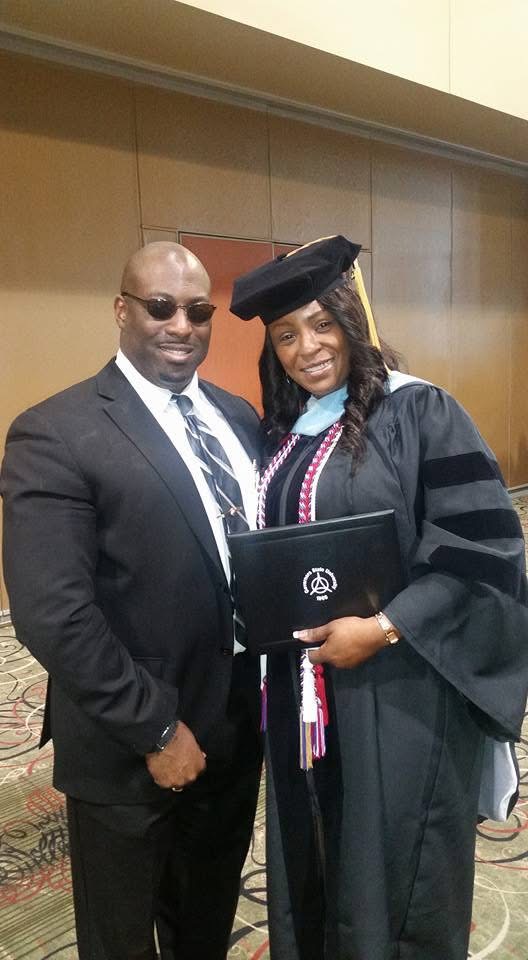
Today, Carla Simone Anyaso is known as Dr. Carla Anyaso, an educator, author and entrepreneur. The journey to that title did not begin in a classroom or at a graduation ceremony. It began during a period when simply finding a safe place to live felt uncertain.
Carla enlisted in the Air Force at 17 after graduating from high school early. Her parents could not afford college, and military service
offered an opportunity to continue her education while serving her country. She trained as an emergency medical technician and patient care technician, believing the military would provide a solid
foundation for her future.
Instead, she found herself navigating experiences that would remain with her long after her military service ended. While on active duty, Carla experienced Military Sexual Trauma (MST) and entered an abusive relationship with another service member. The violence escalated until one encounter nearly became fatal, ending only after military police intervened. The abuse also left her with invisible trauma and wounds another reminder that some injuries remain long after the visible wounds have healed.
Looking back, Carla said she did not fully understand how deeply those experiences would affect the years that followed. Like many veterans transitioning during that period, she knew very little about available resources and received no guidance on navigating civilian life.
“My transition out of the military was very hard,” she said. “At the time, I did not receive any housing assistance, career transitioning support or financial assistance.”
If resources existed, she did not know where to find them.
She continued moving forward the only way she knew how. Carla worked, enrolled in college and focused on creating a better future for herself and, eventually, her daughter. Even with that determination, stability remained difficult to achieve. Her second marriage introduced a different kind of abuse, one rooted in manipulation, emotional control and financial instability rather than
physical violence.
Her husband struggled with a gambling addiction that steadily consumed the family’s income.
“No matter how hard I worked, there was never enough money to keep us afloat,” she recalled. “I always felt as though I was drowning.”
Every attempt to regain financial stability seemed temporary. Savings disappeared, bills accumulated and the pressure of trying to hold everything together became increasingly difficult. Eventually, the family lost their home, and what followed was a prolonged period of housing instability that led to homelessness three separate times despite Carla’s continued efforts to work, attend school and provide for her daughter.
The financial hardship was painful, but the shame proved equally difficult to carry. Carla had worked hard to build a life she believed reflected success, and admitting that everything was falling apart felt almost impossible. She later described those years as exhausting because she was constantly trying to protect the image of stability while privately wondering how much longer she could keep her family together.
By the third experience with homelessness, Carla had reached a point where determination alone was no longer enough. After years of trying to solve every problem herself, she called the Department of Veterans Affairs hoping someone could help her find a path forward.
The VA referred her to a nonprofit organization serving disabled veterans, and within hours another veteran arrived.
Yvette Jones-Swanson had spent years helping veterans secure housing and understood that Carla needed more than another referral. She needed someone willing to assess the situation, develop
a housing strategy and begin removing the barriers standing between her family and stable housing.
“I called the VA for help and they sent me to a small nonprofit organization that said they had funding for disabled veterans,” Carla said. “Within hours Yvette pulled up in her truck and said that she had a landlord who would take me within days.”
There was still one significant obstacle. Carla was facing an eviction that could have remained on her housing record and made securing another rental far more difficult. Rather than accepting that
outcome, Jones-Swanson contacted Carla’s landlord, explained the situation and negotiated an agreement that allowed Carla to move within five days without the eviction appearing on her record.
At the same time, Jones-Swanson had already identified a landlord willing to rent to Carla despite her recent housing crisis. Movers were arranged, the relocation was coordinated and, within days, Carla and her daughter moved into what she still affectionately describes as “a beautiful little two-bedroom dollhouse.”
The home itself was modest, but for Carla it represented something she had not experienced in years. It provided safety, stability and the opportunity to begin rebuilding a life that had been consumed by crisis for far too long. Looking back, she still returns to that moment when asked what changed the direction of her life.
“That one key component changed everything.”
Within a month of moving into the little two-bedroom house, Carla accepted a full-time federal position, something that had once seemed impossible while she was consumed with simply finding a
place to live. Stable housing did not erase the trauma she carried or solve every problem overnight, but it gave her something she had not experienced in years: the ability to think beyond the next crisis.
For the first time, she could begin addressing the parts of her life that had been pushed aside while she struggled to survive. She entered counseling, committed herself to intensive therapy and
started confronting the lasting effects of MST, domestic violence and years of instability.
As her own life became more stable, opportunities began opening for her daughter as well. Within six months, Carla approached the same landlord who had given her a chance and asked whether he had another property available. He agreed to rent her a larger home in a highly regarded school district, a decision Carla believed would create opportunities her daughter otherwise might never
experience.
The difference was immediate.
Years later, her daughter reflected on that period with words Carla has never forgotten.
“Mom, this has been the best year of my life. What took you so long?”
The move gave her daughter access to educational and extracurricular opportunities that had once seemed out of reach. She joined her school’s choir and later traveled throughout Europe, performing in several countries. Today she has built a successful career as an esthetician in Georgia and continues exploring the world, experiences Carla believes began with something as basic as
having a stable place to call home.
As life gradually became more predictable, Carla found herself able to focus on goals that had once been postponed indefinitely. She returned to school, eventually earning a doctorate in educational
leadership from Governors State University. Her dissertation examined veteran food insecurity, a topic shaped by both her professional work and her own lived experience navigating financial
hardship.
She also began writing.
Her first book, No Is Not an Option, reflects a lesson she carried from military service. In the military, she explained, “no” was rarely accepted as the final answer. If one solution failed, another had to be found until the mission was complete. That same mindset became part of her civilian life as she continued writing books focused on federal employment, nonprofit development, entrepreneurship and supporting veterans as they rebuilt their lives.
During her recovery, Carla met another veteran named Vince.
Unlike the relationships that had come before, Vince brought understanding instead of fear. Having worked with service members experiencing severe combat trauma, he recognized many of the
struggles Carla continued carrying years after leaving the military. He encouraged her to remain committed to treatment, take her medication consistently and believe that healing was possible even if it never felt complete.
“He helped me understand that I was going to be okay,” she said.
The two eventually married, but their time together was brief. Vince died after only 11 months of marriage, leaving behind a loss that Carla still feels today. She credits him with helping her recognize that she deserved peace, stability and a future beyond simply surviving. His encouragement also helped her secure the disability benefits and medical care she had struggled to pursue for years.
Recovery, however, has never followed a straight line.
Earlier this year, a workplace incident unexpectedly triggered memories she believed she had largely worked through. The experience led to several weeks of depression and ultimately cost her
a teaching position. Rather than immediately looking for another job, Carla stepped away from work and gave herself time to understand why those feelings had resurfaced after so many years.
Answering questions for this story became part of that process. Revisiting the most difficult chapters of her life forced her to look at experiences she had spent years trying not to revisit. As painful as that reflection was, it also reminded her how much had changed.
“I realized how far I’ve come,” she said. “It doesn’t matter how I got there. All that matters is that I don’t get stuck again. I’m moving forward.”
Only days after reaching that realization, Carla signed a new teaching contract and prepared to return to the classroom.
Today she is developing the Anyaso Learning Institute, an online educational platform designed to help people build financial stability through entrepreneurship and federal employment. The work
reflects many of the lessons she learned while rebuilding her own life, although she is careful not to present herself as someone who has finished healing.
When asked what accomplishment means the most to her, she does not mention earning a doctorate or publishing books.
“My greatest accomplishment is seeking ongoing support and treatment for my mental health so that I can continue to thrive and not merely survive.”
For Carla, stable housing did more than provide an address. It created enough stability for counseling, employment, education, healthier relationships and the opportunity to imagine a future that once felt impossible. Looking back, she still describes the move into that small two-bedroom dollhouse as the moment everything began to change, not because it solved every problem, but because it gave her and her daughter a place from which they could begin rebuilding.
To learn more about Mission Roll Call’s work uplifting veteran voices and advancing effective housing solutions, visit our Homelessness
page: https://missionrollcall.org/spotlight-priorities/housing-and-homelessness/
Mission Roll Call is committed to listening first. If you are a veteran, family member, caregiver or community partner, we invite you to share your story with us. Your experiences guide our advocacy and help us push for the changes veterans say matter most.
Your voice matters here. We encourage veterans, families, caregivers and supporters to share their experiences through Mission Roll Call’s national surveys. Your stories help shape policy, raise awareness and ensure veterans are seen and heard: https://missionrollcall.org/surveys/
Understanding the truth brings us one step closer to ensuring every veteran has what they deserve: stability, dignity and a place to call home.
If you or someone you know is in crisis, contact the Veterans Crisis Line by calling 988 and pressing 1, texting 838255, or chatting at VeteransCrisisLine.net.
About the Author
Yvette Jones-Swanson, M.A., is a subject-matter expert on veteran homelessness and housing, an Army veteran, Realtor and national housing advocate. Drawing from her own experience as a formerly homeless veteran and more than 25 years of frontline housing work, she has helped thousands of veterans secure stable housing and connect with critical resources nationwide.
As Founder and CEO of VetMentors LLC and a Veteran Voices contributor for Mission Roll Call, she works to elevate veteran stories, strengthen housing solutions and ensure the lived experiences of veterans help inform policy discussions and practical solutions.