VA Performance Improving, but Transformation Remains Elusive
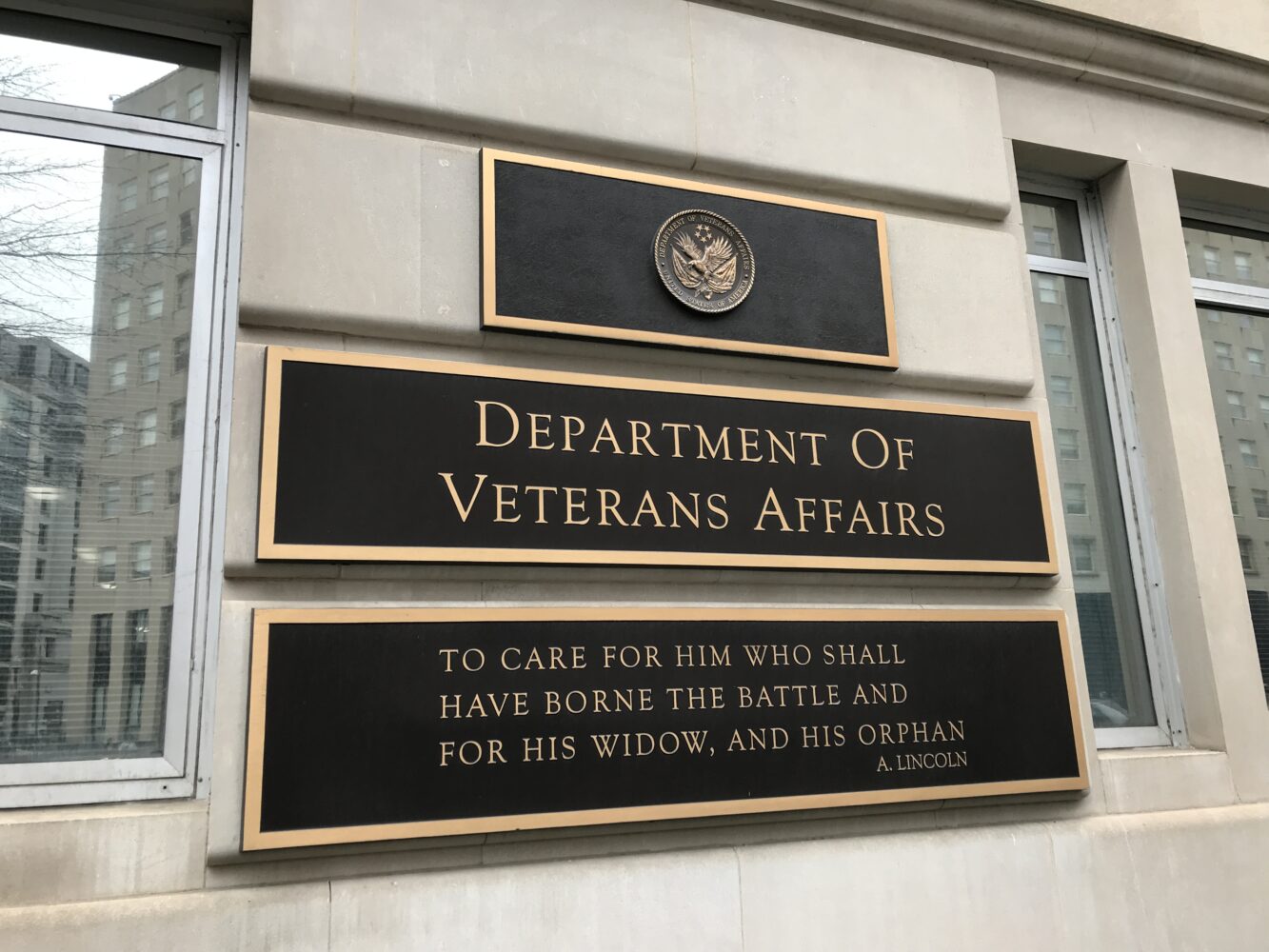
Mission Roll Call’s February 2026 survey of more than 2,200 veterans asked respondents to gauge the VA’s change in performance one year after Secretary Collins was appointed. The results point to a Department of Veterans Affairs that is holding steady, with modest signs of improvement over the past year. But stability, particularly in a system serving a growing and evolving veteran population, is not the same as progress.
The key question we asked in this survey was:
Thinking about your experiences with the Department of Veterans Affairs over the past year, please indicate whether each area has gotten better, stayed about the same, or gotten worse.
View the Full Report
Overall VA Performance

Nearly half of respondents say overall VA performance has stayed about the same, while 38% report improvement and 17% report that conditions have worsened. This distribution suggests that while positive movement is occurring, it has not yet translated into a consistent experience for most veterans.
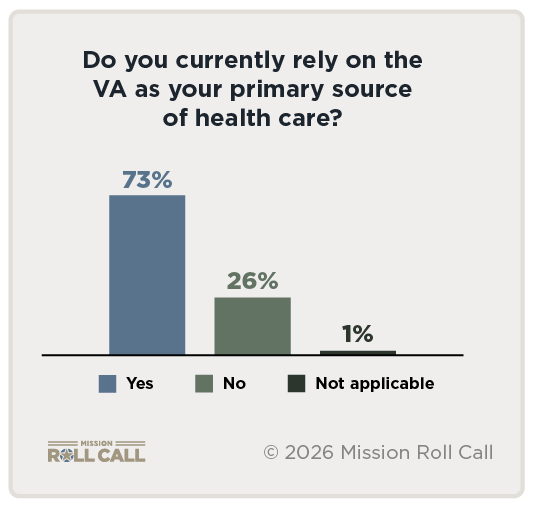
That distinction matters. Seventy-three percent of respondents rely on the VA as their primary source of health care, meaning that incremental gains are often overshadowed by day-to-day realities around access, timeliness, and continuity of care. For these veterans, performance is measured in whether they can get an appointment when they need one, maintain a relationship with a provider, and receive care without unnecessary delay.
The data reflects a system that is trending in the right direction but not yet keeping pace with demand. Improvements in overall performance and quality of care are evident but often constrained by underlying challenges in staffing and access.
Access to Care Remains the Defining Issue
Demand for VA services remains high, and for many veterans, the system is a central part of their health care. Survey responses show widespread use across primary care, specialty care, and community care, reinforcing how heavily veterans rely on the VA to meet both routine and complex medical needs.
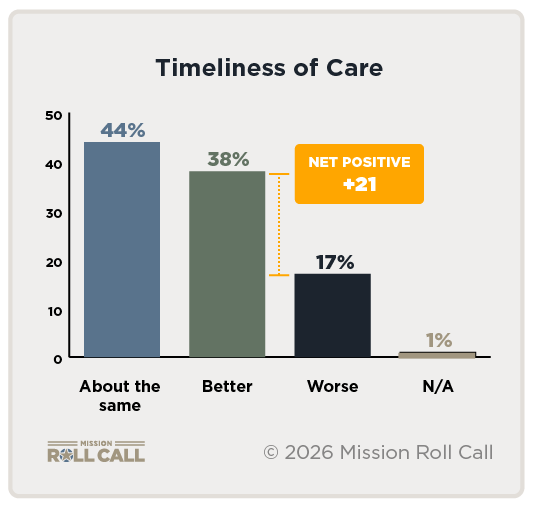 Across multiple categories, veterans report a similar pattern: the system works, but not always when they need it. As shown in the graphic, Timeliness of Care mirrors overall performance, with 44% of respondents saying it has stayed the same, 38% reporting improvement, and 17% reporting it has worsened. These numbers suggest that while progress is being made, it has not yet translated into a reliably faster or more responsive experience for most veterans.
This gap between availability and accessibility shows up in practical ways. Veterans often describe delays in scheduling, long wait times for specialty care, and difficulty navigating referrals—particularly when transitioning between VA providers and community care. For those living in rural areas or managing ongoing conditions, these delays turn routine care into a prolonged process.
 Community care has expanded options for many veterans, but it has also introduced additional complexity. While some report positive experiences, others point to delays in authorization, lack of coordination between providers, and confusion about eligibility or next steps. The VA system offers more pathways to care, but not always a clearer or faster route to receiving it.
Staffing Shortages Continue to Limit Access
Behind many of the access challenges veterans report is a more fundamental constraint: staffing.
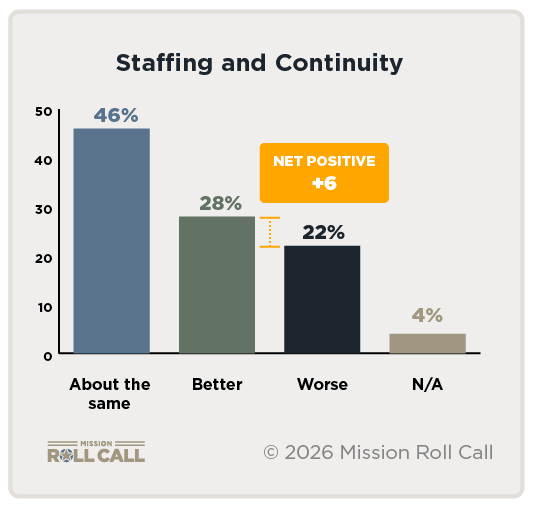 Survey results show that staffing and continuity of care remain among the weakest performing areas. Nearly half of respondents say conditions have stayed the same, while a higher percentage of veterans report worsening conditions, producing one of the lowest scores across all categories.
When staffing levels are insufficient, the effects show up in different ways. Appointment availability declines and wait times increase. Veterans are more likely to see different providers from one visit to the next, making it harder to build continuity and trust.
The takeaway from the data shows that access and timeliness cannot be achieved without addressing staffing capacity. Scheduling systems and referral pathways can be refined, but without enough providers to meet demand, those improvements will have limited impact.
Mental Health Access Remains Inconsistent
 Mental health care is one of the most critical services the VA provides, and it is where the system’s strengths and limitations are most clearly felt.
Survey results show that access to mental health care has made incremental improvement, but remains uneven. While some veterans report improvement, a significant portion indicate no change. Taken together, these responses point to a system that is not consistently reaching all veterans who may need support.
Unlike other areas of care, gaps in mental health services can have more immediate and lasting consequences.
Veterans frequently describe difficulty maintaining consistent relationships with providers, particularly when staffing shortages lead to turnover or reassignment. In a field where trust and continuity are essential, disruptions in care can make it harder to sustain progress or seek help during periods of need.
These figures suggest the VA should keep a close eye on the relationship between staffing and mental health care. When mental health professionals are in short supply, appointment availability declines and wait times increase. This can lead to delayed care, reduced session frequency, and greater reliance on already stretched providers.
Stability Is Not Enough
The VA is showing improvement in the first year of Secretary Collins’ tenure, though work remains.
Over the past year, the department has made targeted investments in the right areas. Efforts to improve scheduling and referral systems, strengthen continuity of care, and modernize how care is delivered are beginning to show up in performance data. Veterans are reporting gains in overall performance and quality of care, and the VA has taken steps to improve how it coordinates with community providers and processes payments. These are meaningful moves, and they reflect a system that is focused on the right problems.
Progress leads to performance at scale, and there are notable areas for continued improvement. The most consistent constraint remains staffing. Without enough providers, improvements to scheduling, referrals, and community care cannot deliver the access veterans need. The result is what veterans are reporting: a system that is getting better in places, but still inconsistent when it matters.