What Veterans Are Telling Us About the Take Care of America’s Veterans Act
As Congress considers the Take Care of America’s Veterans Act (TCAVA), Mission Roll Call asked veterans what they believe should guide major veterans legislation. Rather than focusing on political rhetoric or competing advocacy campaigns, we wanted to hear directly from the people who rely on the Department of Veterans Affairs every day. The result is a snapshot of how veterans view the legislation’s priorities, the broader debate surrounding it, and the issues they believe deserve Congress’s attention.
The findings presented here combine Mission Roll Call’s latest national survey of 1,058 veterans, as of July 13th, with results from more than 25,000 veteran, family member, and caregiver survey responses collected between 2024 and 2026. Across that research, veterans have consistently identified access to care, suicide prevention, brain health, caregiver support, transition assistance, innovation, and accountability as among the VA’s highest priorities. Those same priorities are reflected throughout the Take Care of America’s Veterans Act, providing an opportunity to compare the legislation with the issues veterans themselves have repeatedly said matter most.
Mission Roll Call does not conduct polling to tell veterans what to think. We do it to listen. We conduct research to ensure policymakers understand what veterans are saying. We hope the information in this report contributes to a more informed discussion and helps Congress, the media, and the public evaluate the legislation through the perspective of those it is intended to serve.
Clicking on any of the pages below will open the full report in a new browser tab.
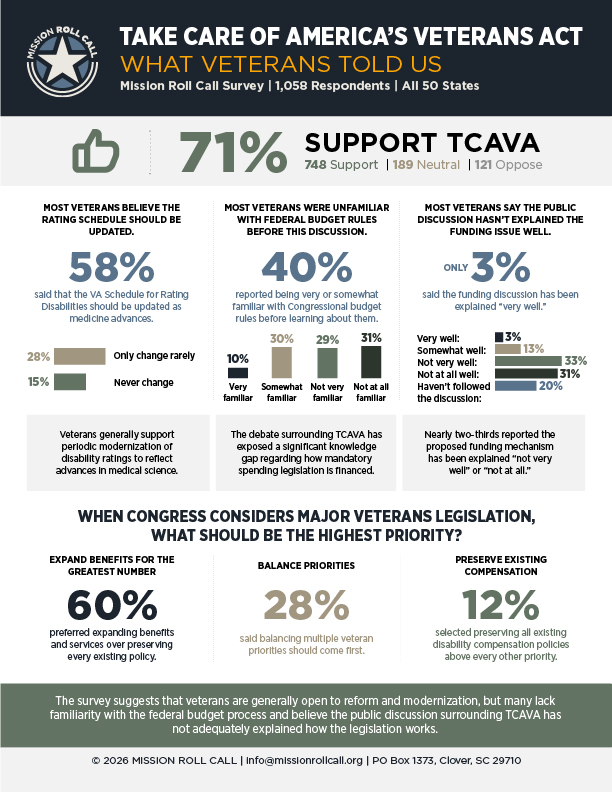
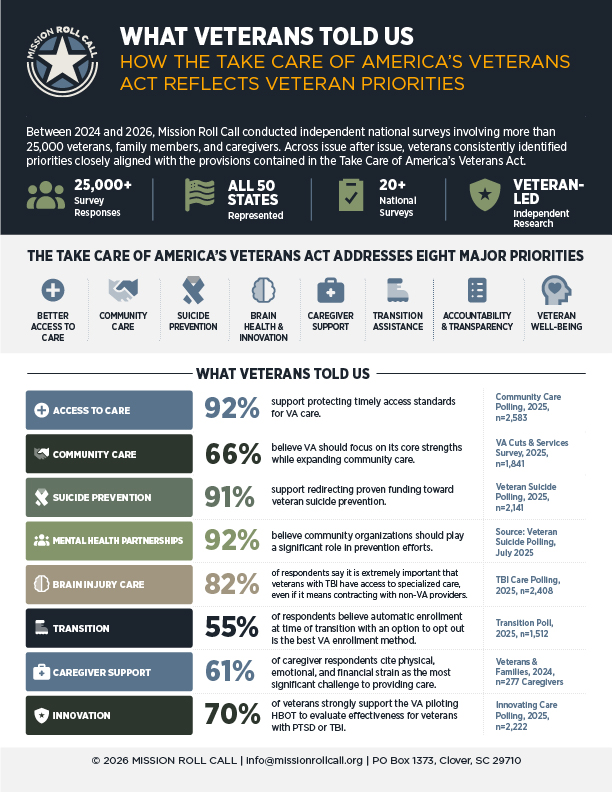
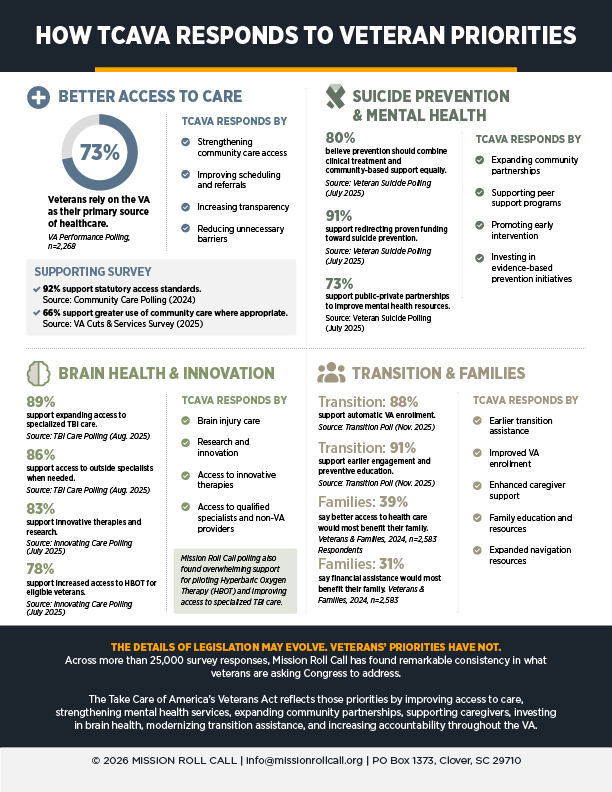
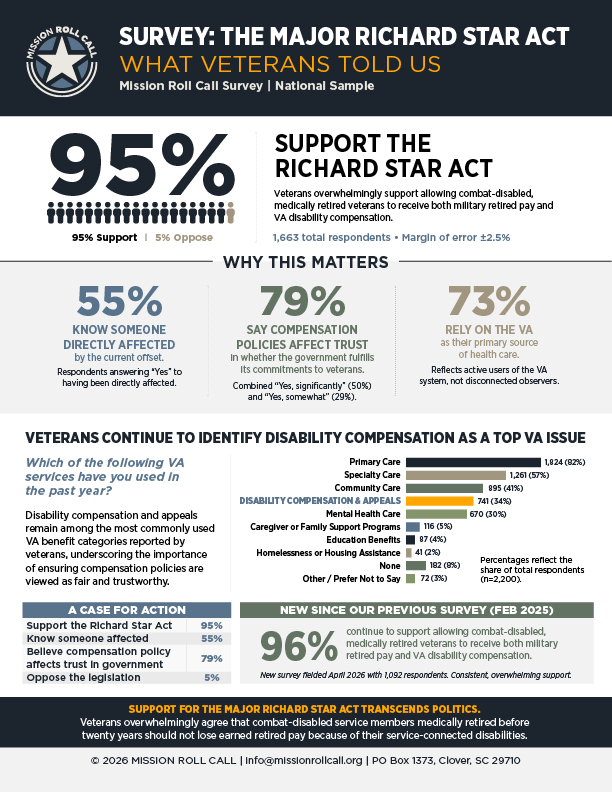
Survey Methodology
Mission Roll Call’s mission is not to tell veterans what to think—it is to ensure policymakers know what veterans think.
About This Survey: Mission Roll Call conducts independent surveys to better understand the views, experiences, and priorities of America’s military and veteran community. The results help inform policymakers, veterans’ organizations, the media, and the public on issues affecting those who have served and their families.
This survey is open to individuals who identify as connected to the veteran community, including Veterans, Active Duty, National Guard, Reserve, Military Spouses, Family Members, Caregivers, and Survivors. Unless otherwise noted, published findings may report results for veterans specifically or for the broader military and veteran community, depending on the question being analyzed.
Participation is voluntary. Each participant is encouraged to complete the survey only once. Mission Roll Call employs technical safeguards and data quality reviews to identify duplicate or incomplete submissions before results are analyzed.
To strengthen confidence in the findings, Mission Roll Call may distribute the same survey through multiple recruitment channels, including its established participant network, public survey links, and partner organizations. Comparing results across these recruitment methods helps assess whether findings remain consistent regardless of how participants entered the survey.
Mission Roll Call is committed to transparency. Survey reports include field dates, sample size, methodology, and questionnaire details whenever practical. Results are reported regardless of whether they support or challenge Mission Roll Call’s policy positions.
FAQ
Who can participate?
Individuals who identify as Veterans, Active Duty, National Guard, Reserve, Military Spouses, Family Members or Caregivers, and Survivors.
How is my information used?
Survey responses are analyzed in aggregate and used to better understand the views of the military and veteran community. Individual responses are not publicly attributed.
Can I take the survey more than once?
No. Please complete each survey only once. Mission Roll Call uses quality-control procedures to identify duplicate submissions.
Are all survey results published?
Mission Roll Call publishes findings based on completed surveys and is committed to reporting results regardless of whether they support or challenge the organization’s policy positions.