Semper Fi, Still Standing: How Doug Learned Asking for Help Isn’t Weakness
This past spring, Doug picked up a pencil for the first time in roughly 25 years.
He was supposed to be journaling. That was the assignment coming out of his time in the UNC THRIVE Program, the kind of homework meant to keep the work going once the structured part of treatment ends. Journaling never fit him. So he found a pencil instead and started sketching again, badly at first, the way anyone would after a quarter century away from it. Since May, he has finished six or seven pieces. Sketching has become the closest thing he has to journaling, a way of getting something out of his head and onto paper without having to find the words for it.
It is a small habit. It is also one of the clearest signs of how far Doug has come from where he was a year ago, when the only thing he was putting on paper was a joke to cover for what he would not say out loud.
A work ethic built in boot camp
Doug earned the title of U.S. Marine in July 1984. His military occupational specialty was 2512, field wire technician, and he cross-trained across communications during his service. Boot camp was hard, he said, and knowing what he knows now, he would still do it again.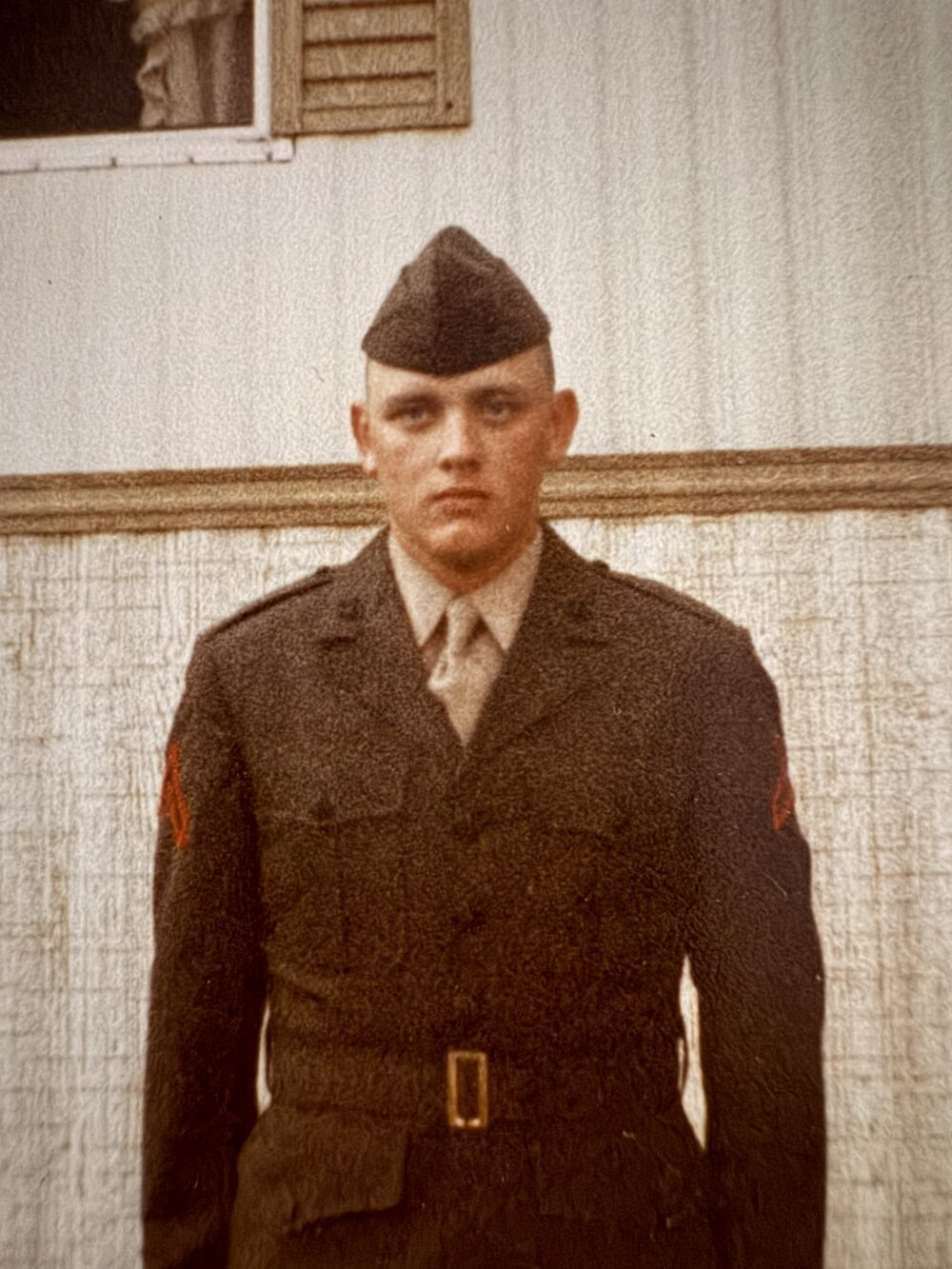
“The Marine Corps really toughened me up,” Doug said. “I feel like I have more drive because of it. My work ethic is second to none. I don’t believe in missing work, and I’ve worked while sick.”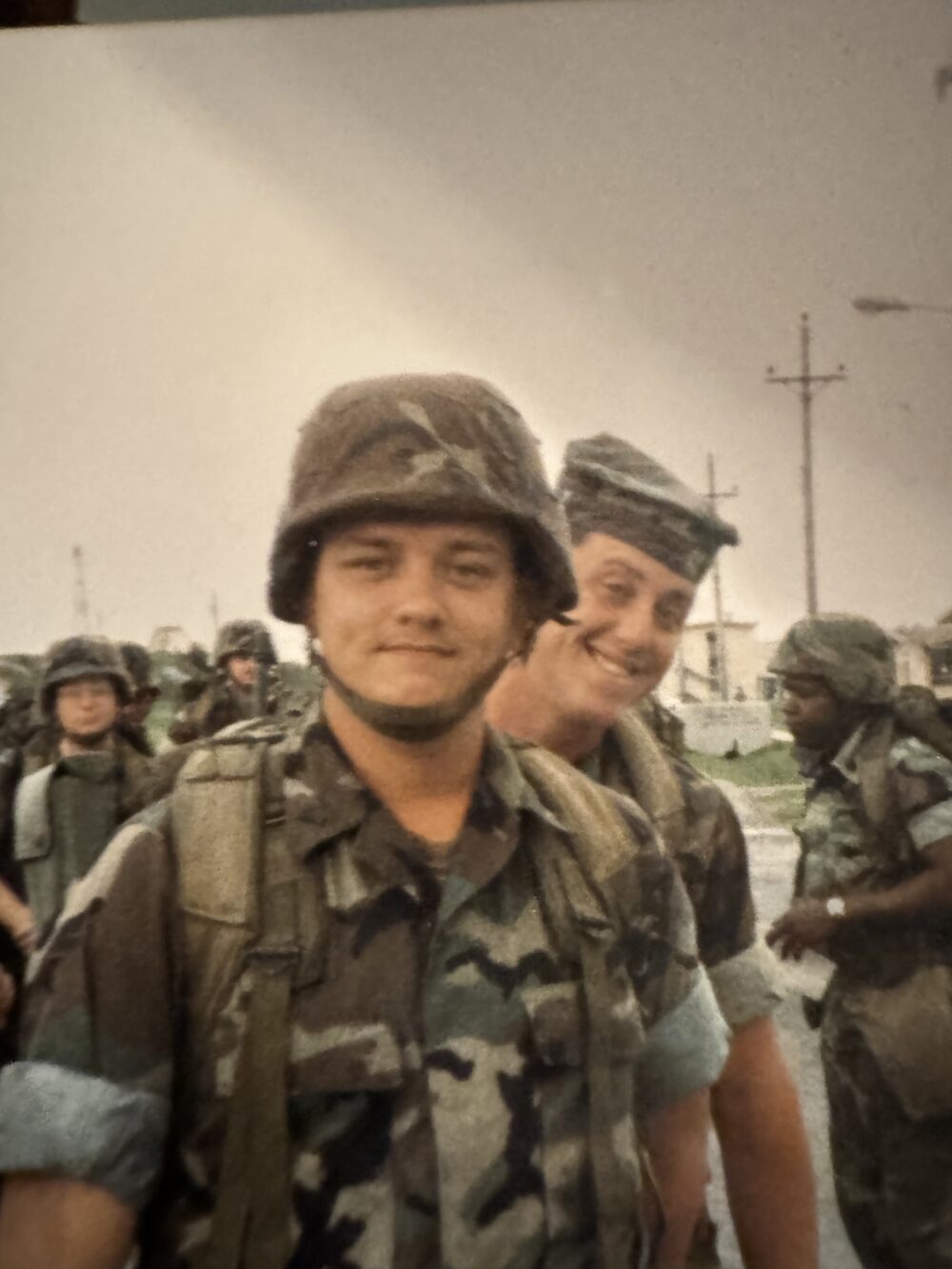
There were stretches when he wanted out of the Corps and stretches later when he wished he had never gotten out, but he is clear about the net effect. If he had not joined, he would not be the man he is today. That held true even after an accident during his service, a fall from a telephone pole that knocked him unconscious and left him with headaches that have never fully gone away, only quieted for a while before building back up. Even then, he said, he did not want to quit.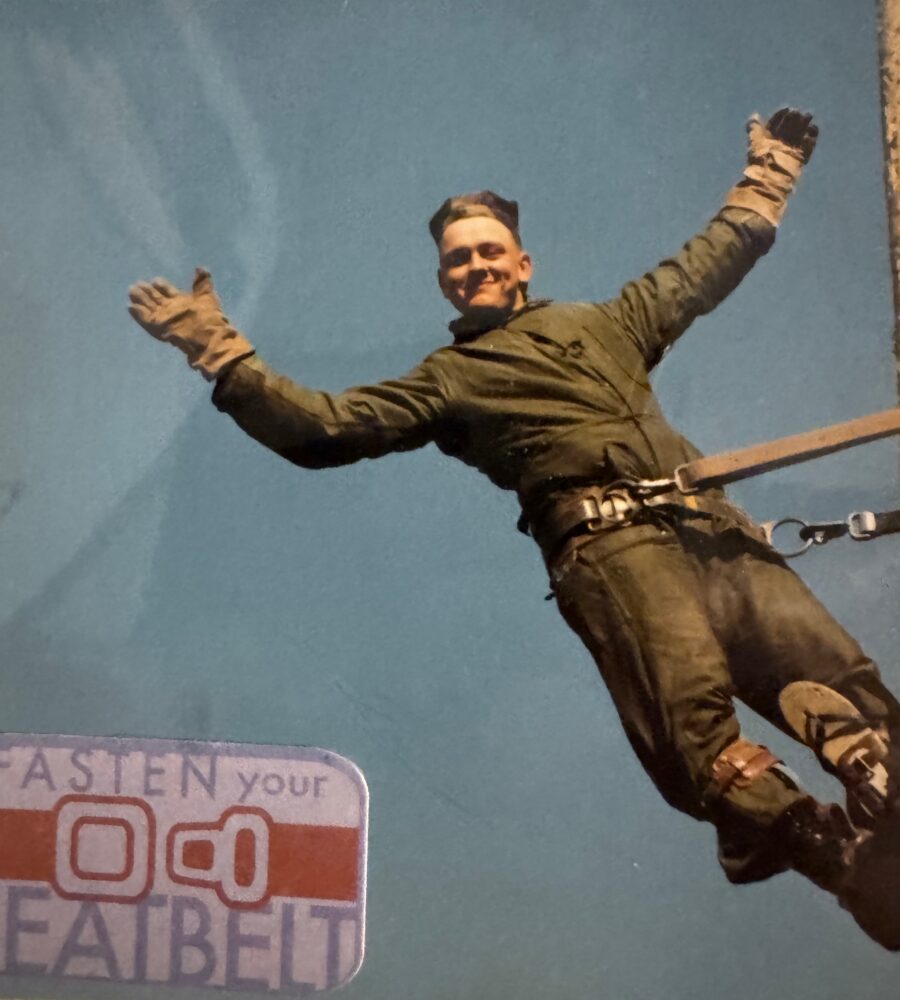
Rebuilding a career from scratch
The transition to civilian life put that work ethic through a different kind of test. Doug’s first job after the Marine Corps was at a rental and repossession company, selling and reclaiming equipment and vehicles. It ended not long after a manager asked him where he saw himself in five years, and Doug told him, plainly, that he hoped to have the manager’s job.
BellSouth turned him down straight out of uniform, telling him he needed a college education first. Doug went to community college, earned an associate’s degree, and reapplied in 2000. That time, they hired him.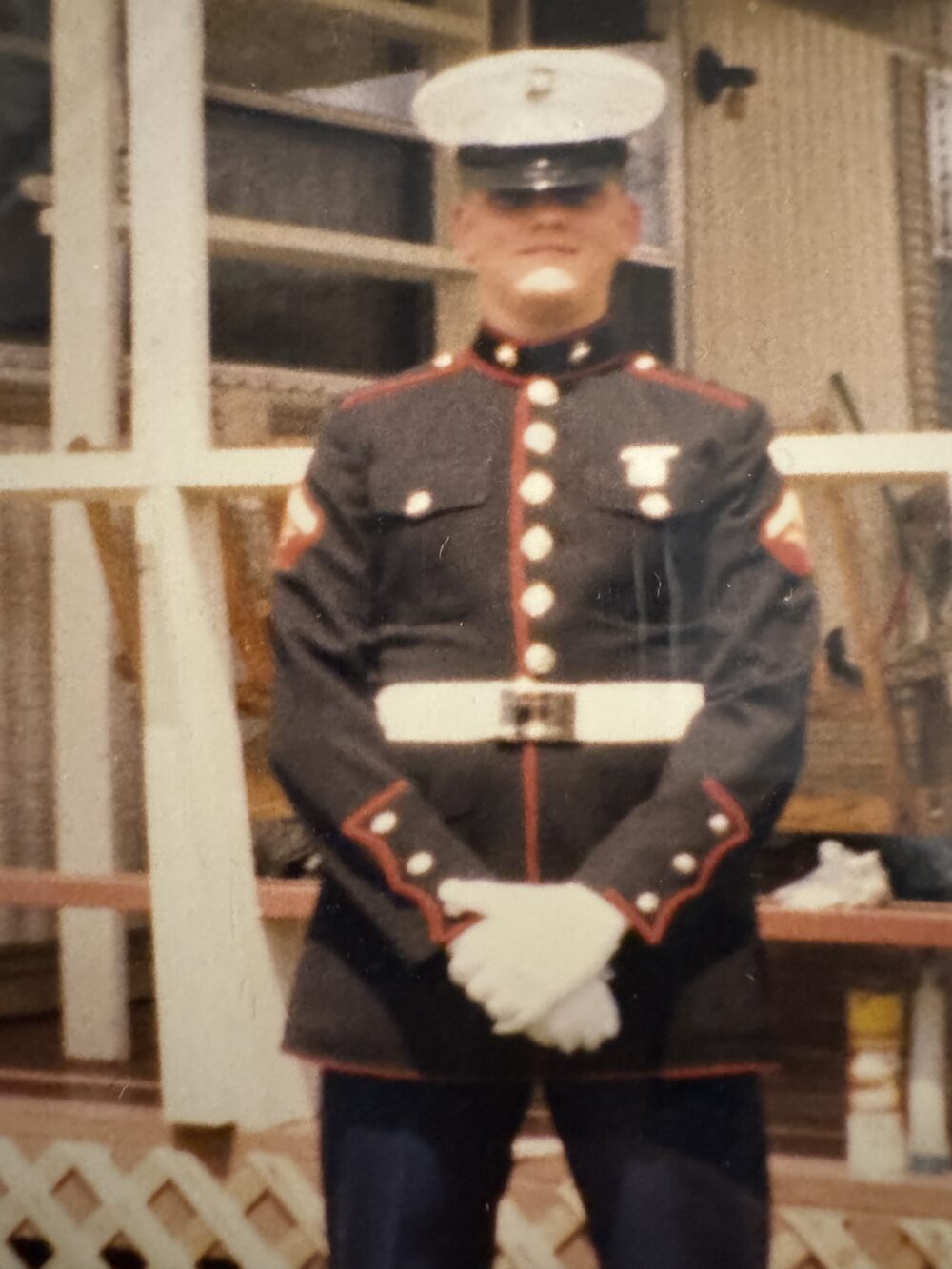
The job suited him. It was physical, structured, and demanding in a way that felt familiar after the Marine Corps, and Doug did well. Then AT&T acquired BellSouth, and the ground shifted under him. Morale dropped. The culture that had once felt like a family gave way to close monitoring and a sense of being just a number. Doug said he has never been comfortable with that kind of oversight, and the mismatch has worn on him. The stress fed directly into the headaches that trace back to the fall off that telephone pole decades earlier, a traumatic brain injury he had been carrying, unnamed, for most of his adult life.
The weight he kept behind jokes
For years, what most people saw of Doug was the work ethic and the humor. What they did not see was the rest of it: depression, anxiety, memory loss, headaches, anger issues he has carried into four marriages and into his relationship with his own children. He describes himself as overweight and says he has struggled with self-esteem for a long time. He kept most of it bottled up and made jokes about it instead of addressing it head-on.
He always told people he was not suicidal and that he would never do anything to hurt himself. That was the version he gave other people. It was not the whole truth of where he had actually been.
The phone number that changed things
The turn came through another veteran, a VA employee who had gone through a traumatic brain injury similar to Doug’s during his own military service. That veteran had been through the UNC THRIVE Program and handed Doug the number. Doug called, applied, and went through the process.
The THRIVE Program, formally known as Transforming Health and Resilience in Veterans, was launched in 2021 by researcher Jason Mihalik through the Matthew Gfeller Center at the University of North Carolina at Chapel Hill, built on a $12.5 million gift from the Avalon Action Alliance. It serves veterans, first responders and active-duty service members dealing with traumatic brain injury, post-traumatic stress and related conditions, and has served close to 300 participants since it began. The program runs in three stages: a three-day multidisciplinary evaluation in Chapel Hill, an optional three-week intensive outpatient program for those who qualify, and up to 12 months of case management support afterward to help participants keep their care going in their home communities.
Doug went through the full three-day evaluation and was invited into the three-week intensive outpatient program, which he attended in April 2026.
Cohort 24
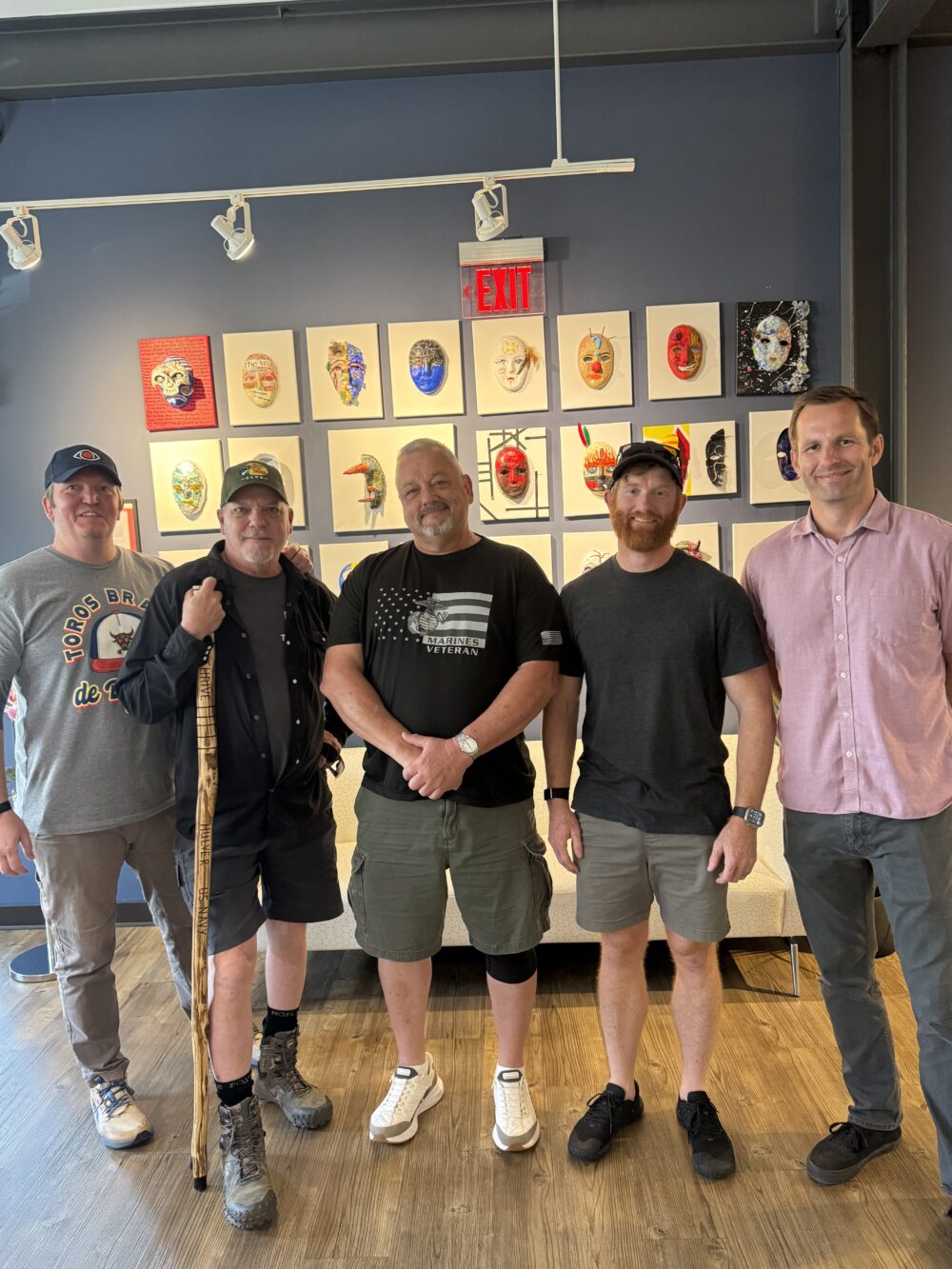
Doug entered THRIVE with an open mind and no real idea what to expect. He was placed in Cohort 24 alongside four other men from different backgrounds, some with combat experience, some without. As the days passed and the group built trust, Doug started to open up. They laughed. They cried. Somewhere in that process, he came to understand that he had been living in a deeper, darker place than he had ever let himself admit, even to himself.
Part of what shifted was generational. Doug was raised to believe that a man who asks for help is weak. THRIVE worked against that belief directly, treating the act of asking as a form of strength rather than an admission of failure.
“It takes strength to admit that something is wrong,” Doug said.
A conversation with his kids
When Doug came home from the program, he sat his children down. He told them that his anger, and the ways he had lashed out at them over the years, was never their fault. He told them that he was the one who had been struggling, and that he was working to change how that struggle had shaped the way they saw him. It was a hard conversation, the kind that takes more out of a person than it looks like from the outside.
What three weeks can and cannot do
Doug is candid that three weeks did not fix him. Nobody walks out of an intensive outpatient program cured. What he walked out with instead was a set of tools, ongoing support through THRIVE’s case management, and a slower process of turning what had felt like a very dark view of the world into something brighter. That process is where the sketching comes back in, the pencil replacing the journal he was supposed to keep, the six or seven pictures since May standing in for the words he still has trouble finding.
He has also started making himself more of a priority, something that did not come naturally after a lifetime of putting the mission, the job or the family ahead of himself. He hopes it makes him a better father.
Why he is becoming an ambassador
Doug is direct about why he is willing to put his story on the record. He has seen people inside the THRIVE Program who were on the edge of ending everything, and he watched the program change their minds and their outlook on life. That is the reason he is becoming a THRIVE ambassador. He is clear that three weeks did not fix him. Something in him began to change anyway, sitting in a room with four other men doing the same hard work, and he thinks that shift is worth handing forward.
His advice for anyone considering the program echoes what got him through his own cohort: go in with an open mind, and be willing to actually use the tools instead of nodding along and setting them aside.
“If I can help even one person get out of the dark place I’ve been in,” Doug said, “becoming an ambassador will be worth it to me.”
The pencil is still on his desk. So is the work.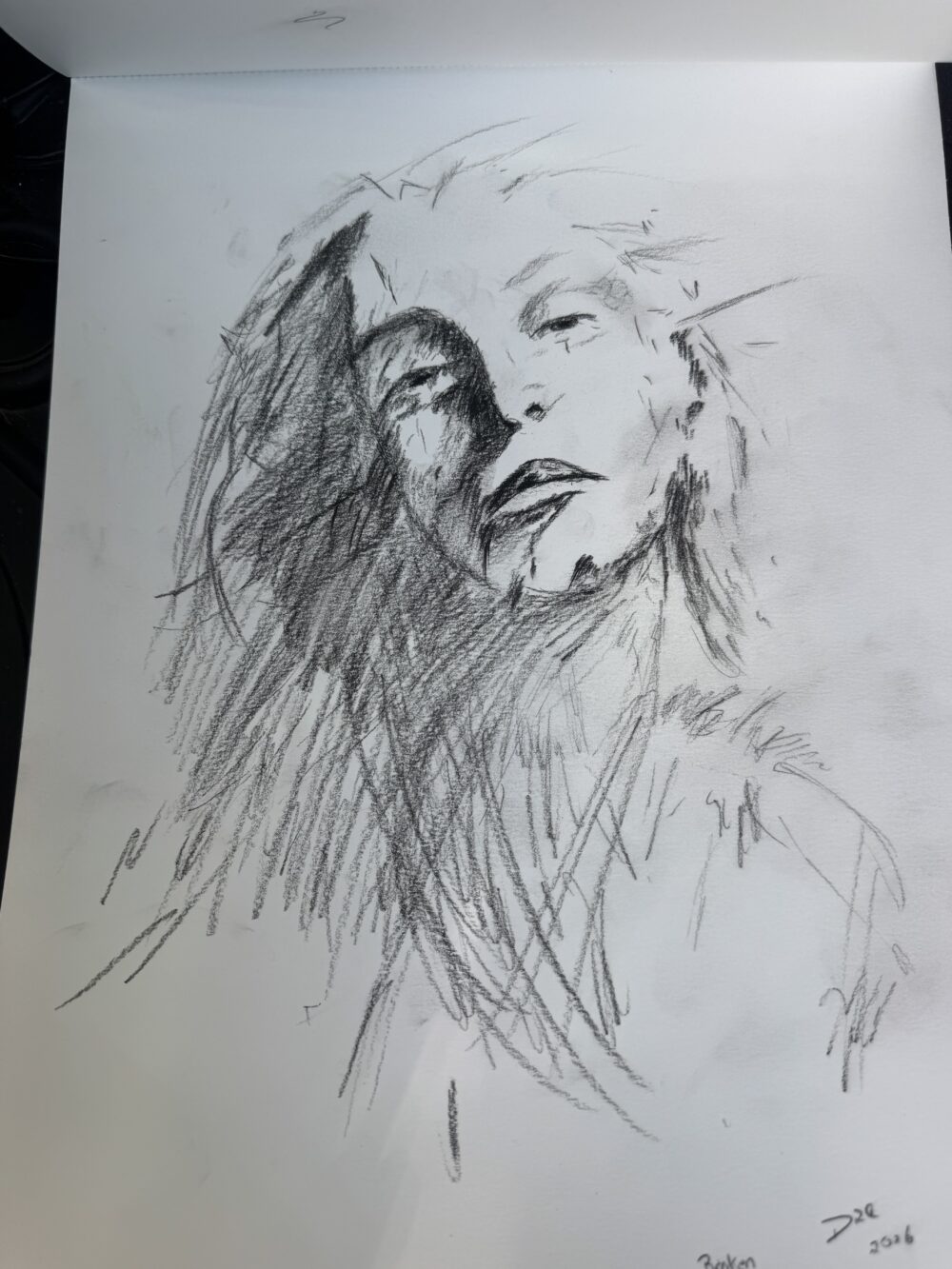
Mission Roll Call has resources available to veterans navigating traumatic brain injury, mental health and recovery programs like UNC THRIVE, including its resource directory.
If you or someone you know is struggling, the Veterans Crisis Line is available 24 hours a day, seven days a week. Call 988 and press 1, text 838255, or chat online at veteranscrisisline.net.