When Home Was Not Safe: Marine Veteran Shane McCrea’s Experience With IPV and Homelessness
Trigger Warning: This story contains references to intimate partner violence, infant loss, suicidal ideation and substance use. If you or someone you know is in crisis, contact the Veterans Crisis Line by dialing 988 and pressing 1, texting 838255 or visiting VeteransCrisisLine.net.”
December 2022 was supposed to mark the beginning of Shane McCrea’s transition from the United States Marine Corps into civilian life. December 2022 was supposed to mark the beginning of Shane McCrea’s transition from the Marine Corps into civilian life. His daughter died on Dec. 20, the same week he was scheduled to leave.
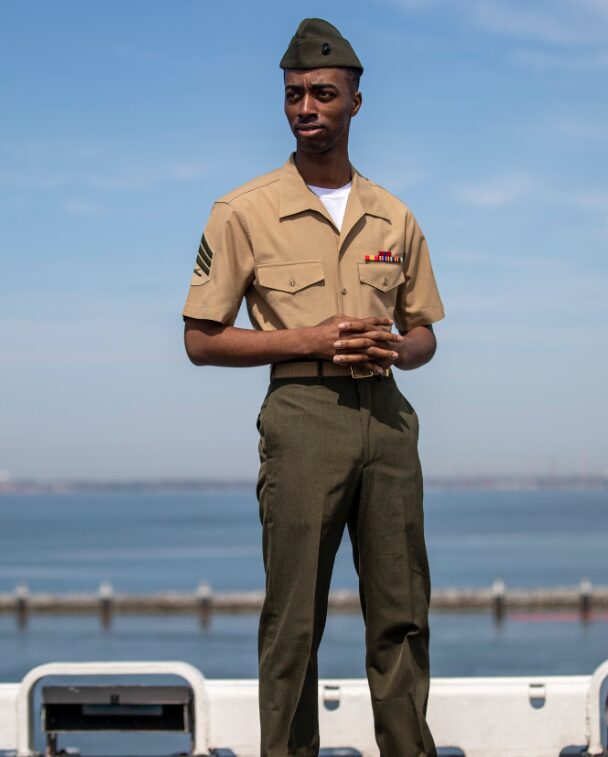
McCrea enlisted in the Marine Corps on Sept. 8, 2015. He served as a postal clerk, military occupational specialty 0161. His assignments took him to Marine Corps Air Station Iwakuni in Japan, Marine Corps Recruit Depot San Diego and Camp Lejeune. He also deployed with the 22nd Marine Expeditionary Unit.
McCrea was scheduled to leave the Marine Corps in December 2022, but his daughter passed away on Dec. 20—the same week he was expected to transition out. Her cause of death remained unknown. Following her passing, the Marine Corps granted McCrea a two-month extension before he ultimately left the service as a sergeant.
“Everything that I had planned for my future entailed my daughter and her future,” McCrea said. “Now that she was gone, I felt like I no longer had a future.”
McCrea was already carrying the grief of two other significant losses. His uncle, who was only three years older than McCrea and had grown up with him like a brother, passed away from pneumonia. McCrea was also grieving a junior Marine who had died by suicide.
As he prepared to enter civilian life, McCrea was confronting several traumatic losses without the support or stability he needed. Within months, he was homeless and living in his car.
Grief Compounded by Intimate Partner Violence
During his transition, McCrea was in a relationship that became a marriage. He said he experienced physical and mental abuse at the hands of his spouse, who was also a service member.
Intimate partner violence, or IPV, is a pattern of abusive or controlling behavior by a current or former intimate partner. In McCrea’s case, the IPV involved physical and mental abuse.
McCrea reported the IPV to his spouse’s command but said he did not receive meaningful assistance. He also had his spouse arrested on one occasion but later dropped the charges.
“I felt bad for her, even though I was the victim,” he said.
His decision reflects the emotional complexity many IPV survivors face. Survivors may still care about the person harming them, blame themselves, fear retaliation or worry about the consequences of pursuing charges. Those emotions do not make the abuse less serious or the survivor less deserving of protection.
McCrea said he repeatedly tried to tell others what was happening.
“I made reports,” he said. “There was nothing being done to hold her accountable.”
His experience highlights a reality that is overlooked: Men can experience IPV, and asking for help does not guarantee they will be heard, believed or protected. McCrea’s experience is evidence of that.
The IPV, grief and instability sent McCrea into what he described as a downward spiral. He struggled to organize his thoughts and could not identify a safe place to go.
“I didn’t know who to call,” he said. “My mind was so gone. I couldn’t think of who to call or what to do.”
For veterans experiencing IPV, leaving an abusive home does not always lead immediately to safety. Without emergency housing, income or a trusted support network, leaving may mean sleeping in a vehicle, staying temporarily with others or returning to an unsafe relationship.
That became McCrea’s reality.
When a Truck Stop Became Home
Before leaving the military, McCrea had built an audience through social media. Creating content gave him something to focus on while he struggled with his mental health and the losses he had experienced.
Believing his online work might provide a path forward, McCrea drove from North Carolina toward Atlanta to pursue a possible collaboration with a well-known social media comedian. The two had communicated before the trip, but once McCrea arrived in Georgia, the person stopped responding.
McCrea had little money. His VA disability claim was still pending, and he did not have a stable place to stay. He began sleeping in his car at a truck stop in Macon, Georgia.
The vehicle provided temporary shelter, but it did not provide safety, stability or a plan. McCrea was alone, grieving and unsure how he would move forward.
One of his closest friends eventually paid for two nights in a hotel and provided enough gas money for him to return home. It was an important act of compassion, but it could not resolve the circumstances surrounding his homelessness.
Without a safe housing alternative, McCrea returned to the abusive marriage.
Temporary Shelter Was Not Stability
When the relationship remained unsafe, McCrea accepted an invitation to stay with his father. The arrangement offered a roof, but it did not become the stable support system he needed.
McCrea said his relationship with his father was already strained because they had not met until McCrea was 17. Their differing expectations about employment and McCrea’s social media work soon created additional conflict.
McCrea increasingly withdrew to his car rather than remain inside the house. Even when he technically had a place to sleep, he did not feel secure, supported or at home.
His experience illustrates how hidden homelessness can unfold. A veteran may move between a vehicle, a hotel, an abusive relationship and a relative’s home without ever entering a shelter. Although some of those arrangements may appear to be housing, none provides the permanence and safety needed for recovery.
McCrea attempted to contact the Department of Veterans Affairs for grief counseling following the loss of his daughter. He said he did not receive the returned calls or guidance he needed.
Without effective support, he turned to alcohol.
“I was drinking heavily, really bad,” he said. “Every day, I was getting blackout drunk.”
A Crisis on His Daughter’s Birthday
One month after his daughter passed away, her birthday brought McCrea’s grief to a breaking point. He decided he could no longer continue using alcohol to escape what he was feeling.
That morning, his thoughts began racing. He experienced suicidal thoughts and struggled to breathe and swallow as a severe panic attack took hold.
McCrea got into his car and drove to the home of a nearby friend, who helped him calm down and remain safe. That trusted relationship became a lifeline at a time when formal systems felt distant and inaccessible.
Soon afterward, another friend offered him a temporary place to stay in Hawaii. McCrea accepted, hoping the distance would give him room to begin recovering.
Housing Created Room to Breathe
McCrea’s VA disability claim was finally processed while he was in Hawaii. When the accompanying back payment arrived, it gave him the financial means to return to the mainland and secure an apartment.
“Once I got my VA compensation, it gave me some room to breathe, get a place to stay and attempt to get back on my feet,” he said.
Housing did not immediately erase his grief or restore his mental health. While in Hawaii, McCrea continued to experience severe psychological distress. He recalled sitting on his friend’s patio, struggling to understand what his life had become and believing he could see his daughter nearby.
At the same time, his YouTube platform grew rapidly, increasing from approximately 20,000 subscribers to 160,000 in two months. The income helped him remain afloat, but his public success did not mean he was emotionally well or securely housed.
His experience challenges a common assumption about homelessness. A person can be visible online, earn income or build a large audience while privately experiencing profound housing and mental health instability.
Recovery required more than money or an apartment. McCrea also needed sustained mental health care, sobriety and an opportunity to rebuild his sense of purpose.
Choosing Recovery
Today, McCrea describes himself as being in a much healthier place. He does not publicly disclose where he currently lives, and that boundary is part of protecting the stability he has worked to rebuild.
He no longer drinks, smokes or vapes and does not use drugs to cope. He has remained in therapy for nearly three years and credits his therapist with helping him process much of what he endured.
McCrea is also divorced from the person he said subjected him to physical and mental abuse. He maintains weekly communication with his son, who lives across the country, and sees him according to their visitation arrangements.
His life is no longer centered only on surviving what happened to him. He now uses his experience and online platform to help others.
Becoming the Voice He Once Needed
McCrea advocates for veterans and speaks about civic participation, politics, community improvement and educating young people.
His story shows how veteran homelessness is connected directly to military transition, grief, IPV, mental health care, delayed benefits and access to safe housing.
McCrea’s recovery came through several overlapping interventions over time. Friends provided temporary shelter, gas money, emotional support and a safe place during a mental health crisis. VA compensation eventually helped him secure housing. Therapy supported his long-term recovery, while advocacy gave him a renewed sense of purpose.
His experience shows why veterans leaving abusive relationships need safe housing, timely benefits, trauma-informed care and trusted people who will listen before the crisis becomes homelessness.
McCrea now offers others what he needed during the most unstable period of his life: a voice.
“When I didn’t have a voice and I needed someone to speak for me, I transitioned into being a voice for those who don’t have one,” he said.
Veterans experiencing IPV can contact the VA’s Intimate Partner Violence Assistance Program for information about support, safety planning and connections to additional services. Asking for help is not a sign of weakness, and no veteran should have to face abuse alone.
To learn more about Mission Roll Call’s work elevating veteran voices and advancing effective housing solutions, visit its Housing and Homelessness initiative.
Mission Roll Call is committed to listening first. Veterans, family members, caregivers and community partners are encouraged to share their experiences through Mission Roll Call’s national surveys. These stories help shape advocacy, raise awareness and ensure veterans are seen and heard.
If you or a veteran you know is experiencing a mental health crisis, contact the Veterans Crisis Line by dialing 988 and pressing 1, texting 838255 or visiting VeteransCrisisLine.net.
About the Author
Yvette Jones-Swanson, M.A., is a writer and Mission Roll Call’s subject-matter expert on veteran homelessness and housing. A U.S. Army veteran, former homeless veteran and survivor of military sexual trauma, she brings more than 22 years of frontline experience as a Veterans REALTOR® and housing advocate.