Twenty-Five Years Later: Remembering 9/11 and How We Carry Its Impact Forward

This year marks the 25th anniversary of 9/11, an event that changed military service and the United States we know today. Many of us remember exactly where we were when the planes hit. Some of us were at school, at work or at home, watching a pivotal moment in history that would reshape our country, its policies and the lives of millions.
In the years that followed, between 1.9 and 3 million service members served in military operations in Afghanistan, Iraq and other post 9/11 conflicts. Men and women experienced war, lost fellow service members and carried the physical and emotional effects of their service home with them.
While the last U.S. military forces left Afghanistan in 2021, the war never ended for many veterans. Since 2001, 15.7% of veterans deployed during Operation Enduring Freedom and Operation Iraqi Freedom screened positive for post-traumatic stress disorder and more than 30,000 post 9/11 veterans have died by suicide – four times more than those who died in combat.
As we move further away from September 11, 2001, we must ensure that future generations understand what happened that day, what followed, who served in its aftermath and the lasting legacy of that service. Roughly 100 million U.S. adults today were either born after 2001 or were too young to remember the attacks, making veterans’ stories an important part of preserving the memory of 9/11 and helping future generations understand how its impact continues to shape our country.
In recognition of the 25th anniversary, Mission Roll Call spoke with two U.S. Army veterans to hear their stories. We asked them, “Where were you on 9/11?” “How did 9/11 influence your decision to serve?” and “If you could leave people with one thought about the 25th anniversary of 9/11 and our responsibility to veterans, what would it be?”
Timothy Morgan, U.S. Army Ranger Veteran
U.S. Army veteran Timothy Morgan was in his fourth-grade class at Fort Leavenworth, Kansas, when American Airlines Flight 11 hit the North Tower. Growing up in a military family, he went to school on base, and when the second plane hit the South Tower, military police escorted him and the rest of the students off campus.
When he got home, his parents were watching the news. His mom didn’t know how to explain the attacks to him and told him to go play with his friends. One of his friends’ tried to explain what had happened, but at just nine years old, he didn’t realize how much that day would change the trajectory of his and his loved ones’ lives.
The Decision to Serve
As Morgan grew up, the war became an increasingly visible part of his life and for the rest of Americans. He noticed that the U.S. became consumed by the aftermath of 9/11, with constant footage of the wars and messages urging Americans to support the troops.
Morgan’s father deployed to Afghanistan and Iraq several times, as did many of his high school peers. By 19, Morgan had enlisted in the military, eventually deploying to Afghanistan multiple times himself.
“I grew up in [the military], and it’s what I knew,” Morgan said. “But 9/11 definitely solidified that decision to serve. Seeing friends go overseas and not come home made it feel like a larger than life thing. There was a sense of obligation to serve.”
Remembering 9/11 Today
As the nation marks the 25th anniversary of 9/11, Morgan believes Americans should remember more than the events of that day. He remembers a country coming together in the face of tragedy and recognizing how much they had in common. Despite how divided the country may feel today, he thinks that sense of community is worth carrying forward.
Morgan also noted that Americans should take time to remember the victims, Gold Star families and those who made the ultimate sacrifice, while recognizing that the effects of that day are still being felt every day.
“There were a lot of sacrifices made across 20-plus years of combat, and some of the effects of 9/11 are still ongoing,” Morgan stated. “Policies and priorities shift, but we should never forget about those who have been affected permanently. The war never really ended for a lot of people – they need support.”
Morgan personally knew about 20 service members who were killed during post 9/11 conflicts, though a large percent of those deaths were due to suicides and overdoses after they returned home.
Transitioning to civilian life after years, or decades, in the military is challenging for service members and is often when they fall through the cracks. Even though the VA and other federal and state resources exist, supporting veterans also requires communities to recognize when veterans are struggling. Listening to veterans, taking their concerns seriously and reminding them they’re not alone can prevent irreversible decisions.
Our Responsibility For The Next Generation
With younger generations growing up without a lived memory of the 9/11 attacks, Morgan believes veterans have a responsibility to help them understand what that day meant and what can be learned from everything that followed.
“It’s hard to conceptualize something like this if it didn’t happen during your generation,” he said. “You can learn about Pearl Harbor and understand the magnitude of it, but you weren’t there. Being part of the 9/11 generation, you understand what that moment felt like.”
One lesson Morgan hopes to pass on is the importance of doing something for your fellow human being and contributing to something larger than yourself. He also sees being an informed citizen as part of that responsibility, such as taking the time to understand issues, check sources and seek out quality information before making decisions that shape the country.
“Understand the gravity and magnitude of sending people to war. History repeats itself but doesn’t have to repeat itself in the same way. The next generation doesn’t have to make the same mistakes.”
– Timothy Morgan, U.S. Army Veteran
Keith Smith, Retired U.S. Army Veteran, Green Beret and CW03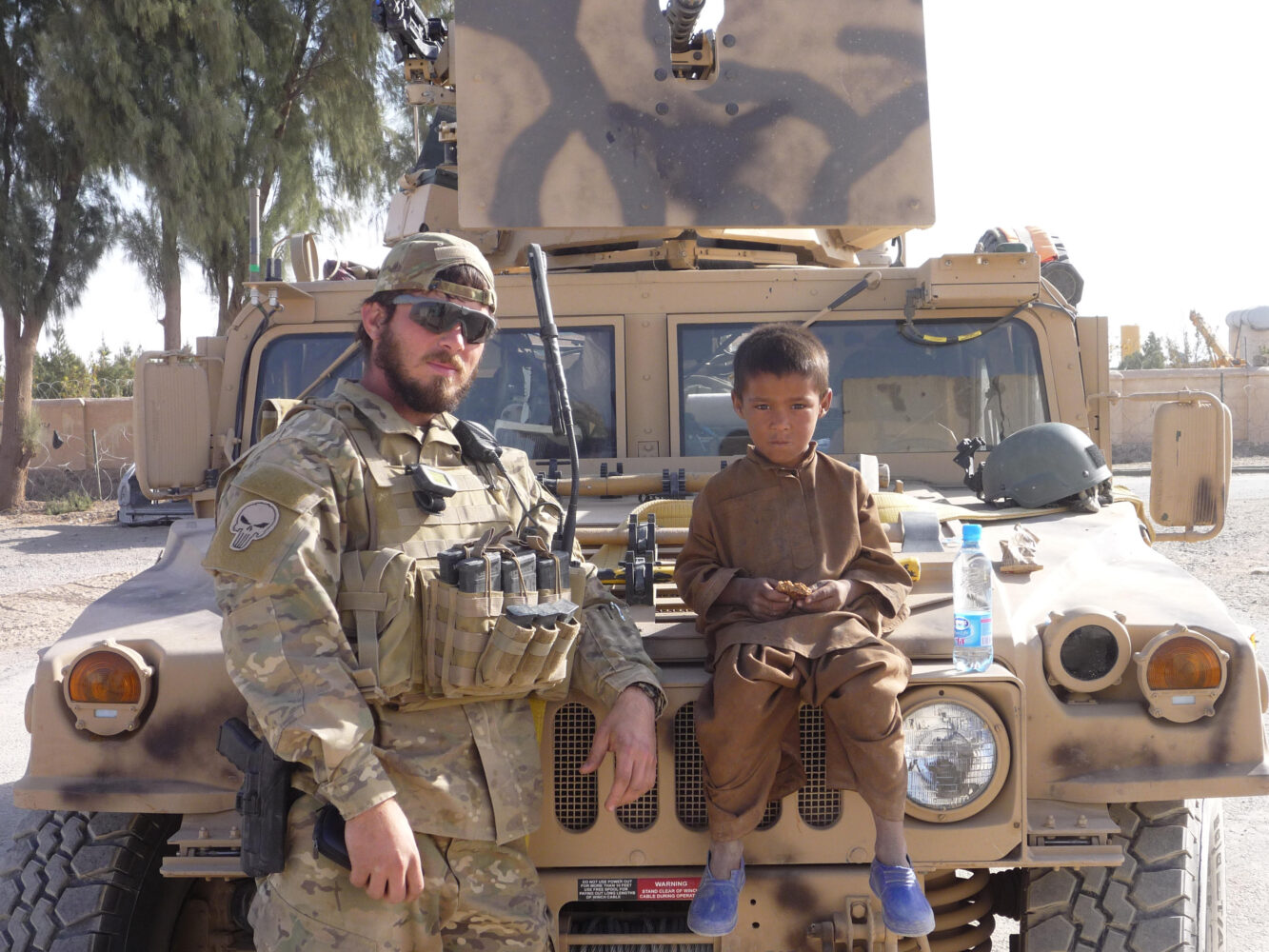
Keith Smith was walking out of his Spanish class at Texas A&M when he learned about the attacks. As he made his way to check his mailbox, a friend told him that a plane had crashed in New York.
Smith initially thought it was just a small plane crash, but as he walked back across campus, there seemed to be no one around and noticed something was off. He then heard a crowd gathered in a room and walked in to find them watching the news. Smith remembers seeing the smoke from the first plane crash, then watching the second plane hit the South Tower.
The Decision to Serve
Smith had already planned to join the military before 9/11. He grew up believing the military was where heroes served, and he never felt pressure from his family or anyone to enlist.
When the planes hit, that decision suddenly took on greater urgency. Smith saw 9/11 as one of the most significant attacks on the U.S. since Pearl Harbor, and wanted to be part of the immediate response.
Smith called an Army recruiting office, ready to leave college and serve his country. His friends and family members, however, encouraged him to finish college. He listened and enlisted shortly after his graduation in 2004.
Smith quickly moved into special operations, and over his career, he deployed eight times, including four deployments to Afghanistan and additional deployments to Somalia and Niger, for roughly 20 trips overseas.
“My goal [was] for my kids to never experience that again…and that’s why I kept grinding for 22 years,” he added.
Remembering 9/11 Veterans
When Smith reflects on the years of service that followed 9/11, he believes one of the most important lessons is the responsibility to continue supporting the men and women who chose to serve.
“At the end of the day, no matter what your beliefs are, the soldiers who volunteered…they were volunteering for the American people,” Smith said.
Smith believes the country learned important lessons from the Korean and Vietnam wars. The Korean War eventually became known as the “Forgotten War,” while many Vietnam veterans returned home without the support or recognition they deserved. He wants the country and future generations to carry those lessons forward by continuing to recognize post-9/11 veterans through Veterans Day, Memorial Day, Soldier Day and other moments of remembrance.
“Continue to honor [them]. Honor the fallen, honor our history – not just the ones who paid the ultimate sacrifice – honor the ones who did come home because they came home with some scars.”
– Keith Smith, Retired U.S. Army Veteran, Green Beret and CW03
That support can take many forms, including something as simple as thanking a service member for their service. Even if veterans brush off the gesture or say they don’t need the recognition, Smith believes it can still go a long way.
Ways to Support Veterans
Supporting veterans starts with listening to their needs and ensuring their voices are part of the conversations that shape their communities and the country. Many of the issues affecting veterans also come into focus at the voting booth, making civic engagement and understanding the military community important parts of supporting those who served.
If you are a veteran, active duty service member or family member, make your voice heard by participating in our monthly polls and surveys.
People looking to make an impact can also start by engaging with veterans in their local communities. Having a conversation with a veteran and simply lending an ear can be incredibly encouraging.
Volunteering with veteran-serving organizations also creates opportunities to build stronger support systems that veterans rely on, while advocacy and donations can help connect veterans and their families with resources and services. For instance, Mission Roll Call’s Veteran Resource Directory includes more than 100 Veteran Service Organizations that create meaningful differences in veterans’ lives every day.
Remembering 9/11 Today and Into the Next 25 Years
We can never forget what happened on September 11, 2001. As time passes and more Americans learn about 9/11 through history rather than personal experience, preserving the far-reaching impact of that day and everything that resulted from it becomes increasingly important.
Veterans who lived through the post-9/11 era are an essential source for younger generations trying to understand what happened and how those events shaped and continue to shape our everyday lives. Supporting these veterans, creating opportunities for them to remain active in their communities and making space for them to share their experiences helps ensure their stories remain part of our history today and 25 years from now.