Moving Veteran Suicide Prevention Further Left of Clinical – A Two-Part Series

Mission Roll Call’s 2027 priorities include a clear push to reach veterans before difficulties become a crisis. With 49.6 percent of respondents selecting suicide prevention in our 2027 priorities survey, earlier support deserves a central place in our advocacy. Our left of clinical approach emphasizes connection, purpose, and practical assistance alongside timely clinical treatment. It asks policymakers to consider what happens in veterans’ lives before they reach a treatment setting.
The priorities survey establishes what respondents want us to address. Our September 2025 wellness survey provides separate context about belonging, participation, and community support. These surveys involved different respondent groups and questions. Together, they help identify issues for further action and evaluation, but they do not demonstrate that a particular wellness program reduces suicide.
Building Social Networks After Military Service
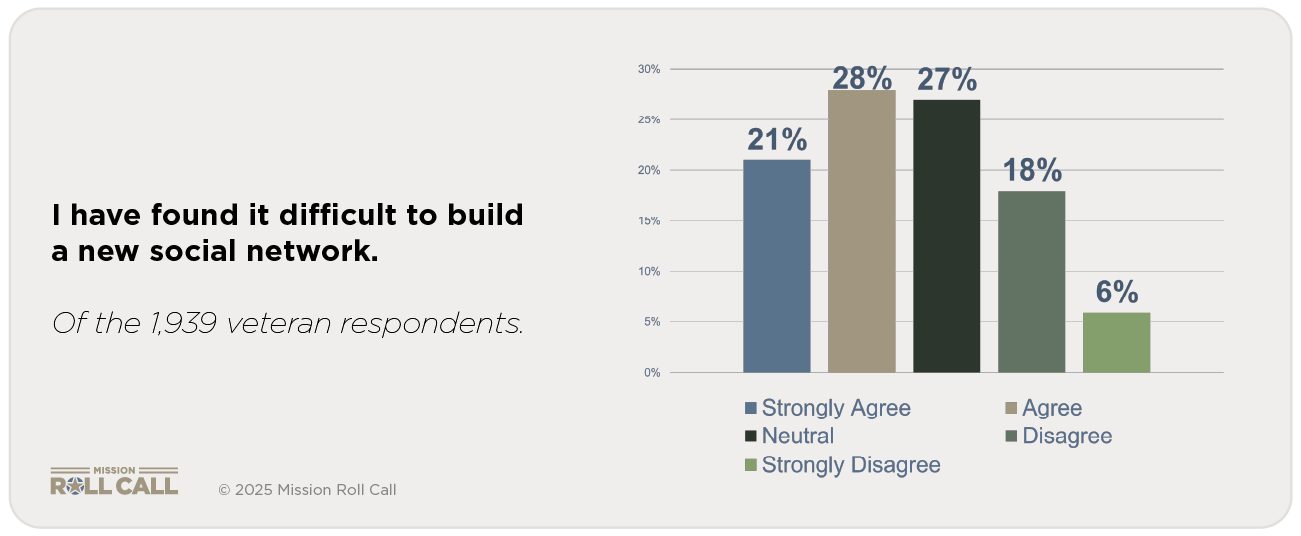
Part One of our Left of Clinical series examines the challenge of building social connections after military service. In the original MRC chart below, 21 percent strongly agreed and 28 percent agreed that they had found it difficult to build a new social network. These rounded responses show that about half of the 1,939 veteran respondents experienced that difficulty. The findings support making opportunities for social connection easier to find throughout civilian life.
That work should begin during transition and remain available as circumstances change. A veteran moving to a new community, leaving a job, or assuming caregiving responsibilities may need help finding relationships and meaningful activities. Families should be included in outreach and planning. Practical referrals should connect people with opportunities they can actually attend.
Remove the Barriers to Participation
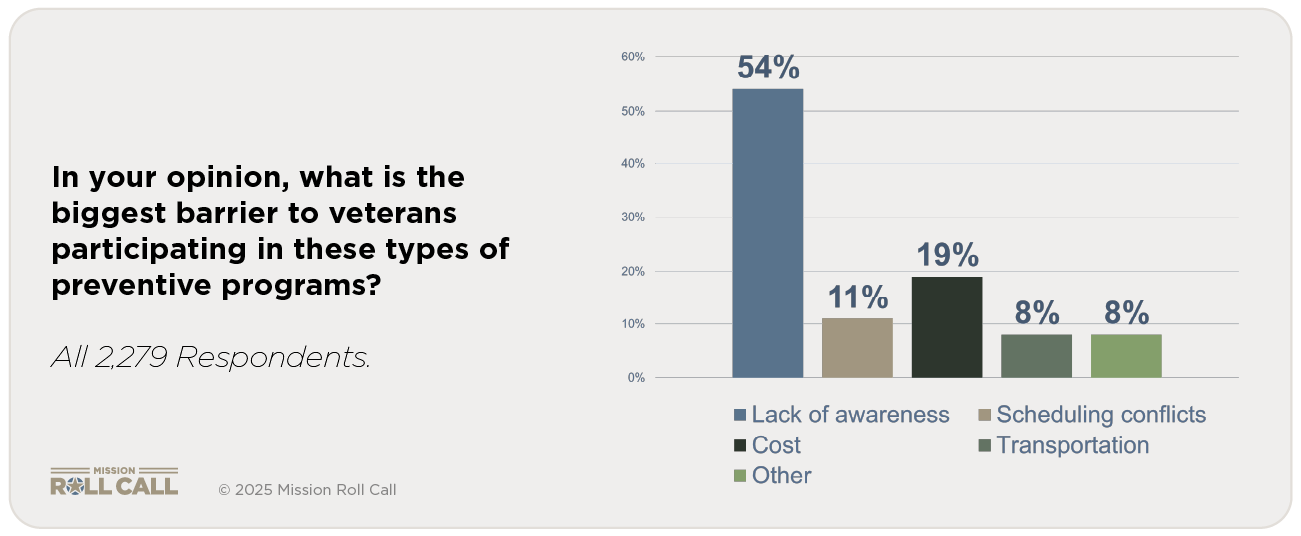
Part Two of the series identifies obstacles that can keep preventive programs out of reach. Lack of awareness was reported by 53.7 percent, followed by cost at 18.8 percent, scheduling conflicts at 11.3 percent, and transportation at 7.5 percent. The original chart covers all 2,279 respondents and rounds those percentages. Better outreach and affordable local options should be part of program design.
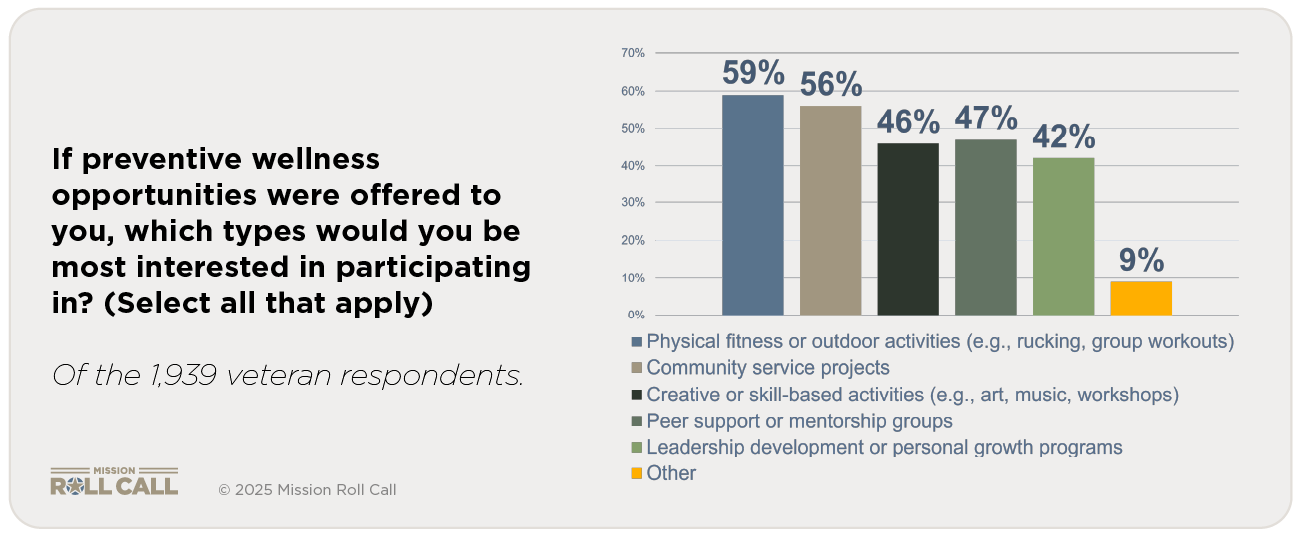
Veterans also described activities that interested them. Among 1,939 veteran respondents, the original chart shows 59 percent selecting fitness or outdoor activities, 56 percent community service, 47 percent peer support or mentorship, 46 percent creative or skill based activities, and 42 percent leadership development or personal growth. Multiple selections were allowed. Those preferences offer a starting point for building opportunities around veterans’ interests.
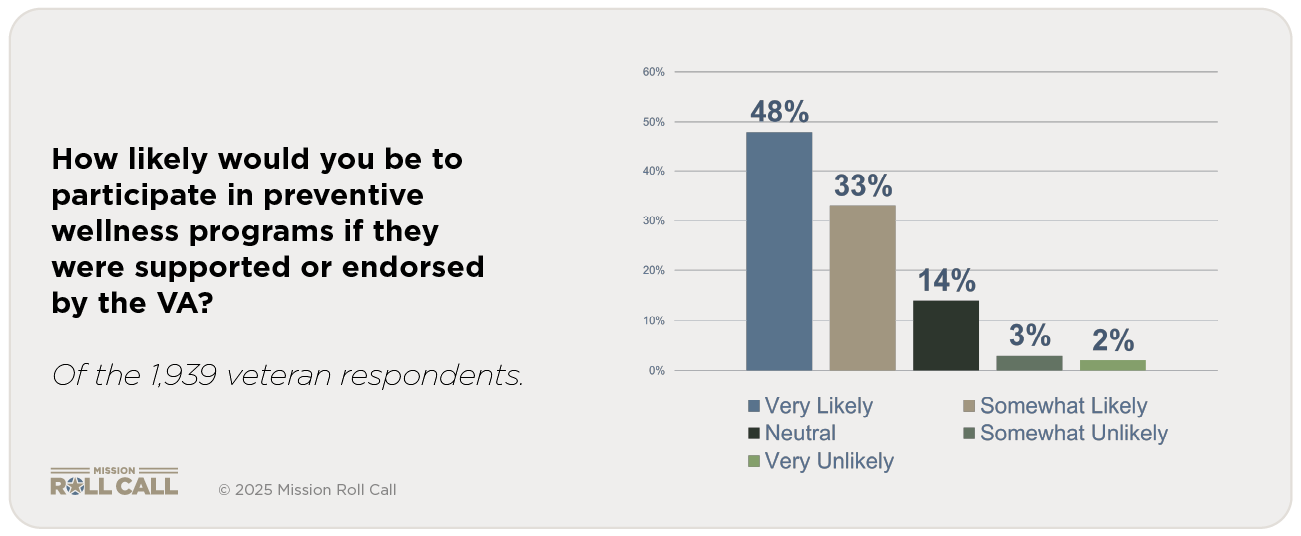
The same survey found that 48.1 percent would be very likely to participate in preventive wellness programs endorsed by the VA, with another 33.3 percent somewhat likely. That stated interest suggests an opening for outreach. Evaluation must then determine whether veterans enroll, remain involved, and experience meaningful improvements in well being.
Make Earlier Prevention a Policy Priority
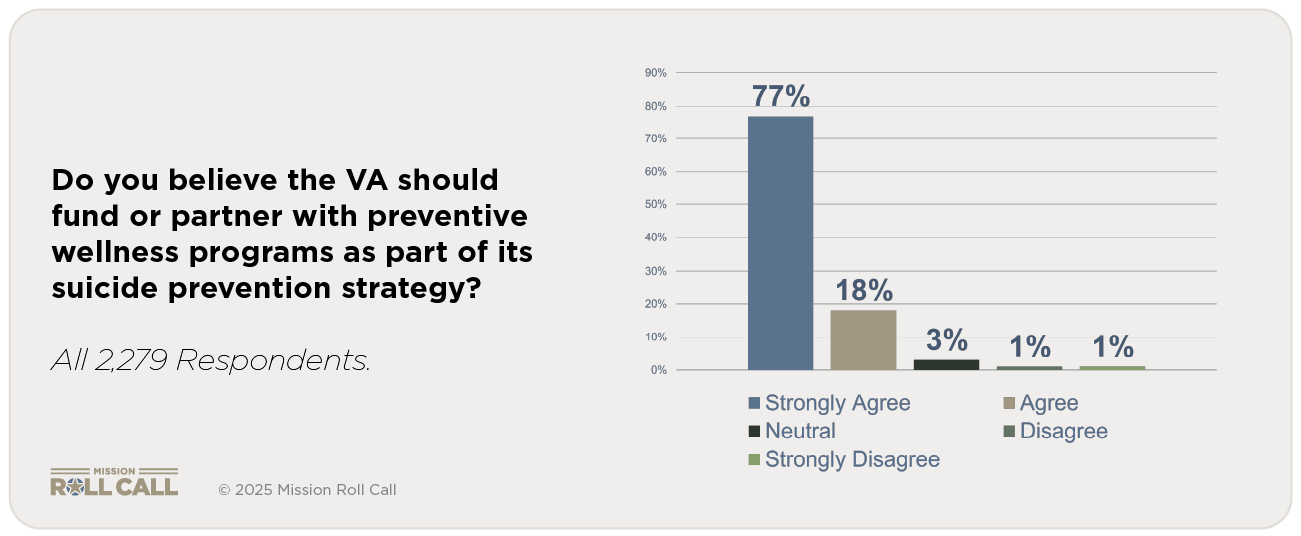
Part Three of the series examines responsibilities for the VA, Congress, and community organizations. Among all 2,279 respondents, rounded chart results show 77 percent strongly agreed and 18 percent agreed that the VA should fund or partner with preventive wellness programs as part of its suicide prevention strategy. That support gives policymakers a reason to examine credible partnerships and the evidence needed to guide them.
The VA can coordinate referrals and help veterans find appropriate programs. Congress can examine funding, authorities, and oversight. Local organizations can provide activities rooted in their communities. Accountability should track who is reached, which barriers remain, and whether participants benefit. Participation totals alone cannot establish effectiveness, and pilot findings should inform decisions about expansion.
Congressional Voices Support Earlier Action
Lawmakers in both parties have described related priorities. Discussing the Fox Suicide Prevention Grant Program on May 1, 2025, Senator John Boozman said, “Veterans who battle mental health challenges respond best to support from those they know and trust.” Senator Mark Warner emphasized the need to “meet veterans where they are, in their communities” on July 31, 2025. Their statements highlight the value of trusted local support.
Transition is another opportunity for earlier action. In prepared remarks for an August 23, 2024, House Veterans’ Affairs field hearing, Representative Derrick Van Orden stated, “Getting TAP right is an upstream solution.” For Mission Roll Call, that connection supports stronger preparation for civilian life, family inclusion, and access to assistance before a veteran leaves service.
Community support should also be accessible across ages and locations. Older veterans, caregivers, and people living far from established programs need options that fit their circumstances. Clear information, flexible schedules, and transportation assistance can make an invitation usable. Partnerships should be judged partly by whether they reach people who have previously been left out.
Our 2027 advocacy should turn these priorities into practical questions: Can veterans find help, afford to participate, and remain connected? Do referrals lead to usable support? Does well being improve? Moving further left of clinical means asking those questions early and expecting answers. Veterans deserve relationships, purpose, and stability in daily life, with effective care available whenever they need it.