What Veterans Want Mission Roll Call to Prioritize in 2027 – A Two-Part Series
Veterans have given Mission Roll Call a clear direction for 2027: improve access to health care, make benefits easier to navigate, and support aging veterans and their families. Our latest 2027 priorities survey asked 1,505 respondents to select the four issues they believe should guide our work. Their answers will inform our research, public education, and engagement with Congress and the Department of Veterans Affairs as a new Congress begins.
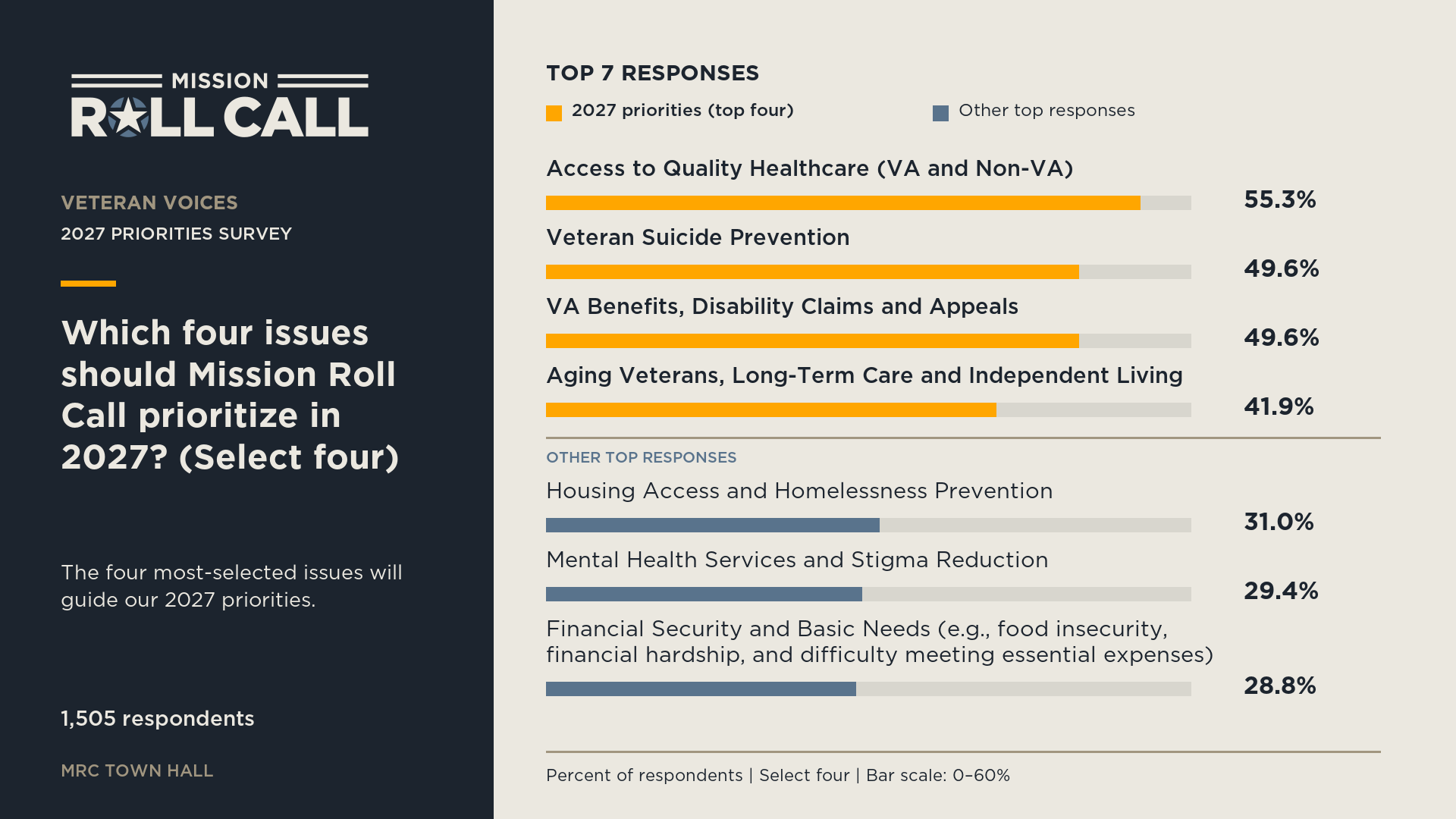
Access to quality health care led the responses at 55.3 percent. VA benefits, disability claims and appeals received 49.6 percent, followed by aging veterans, long term care and independent living at 41.9 percent. Housing access and homelessness prevention received 31 percent, mental health services and stigma reduction 29.4 percent, and financial security and basic needs 28.8 percent. The complete priorities chart below presents these results together. They reflect the views of survey respondents and identify areas where veterans want sustained attention.
Health Care Access Must Lead to Timely Help
Veterans need access to care through both the VA and community providers when appropriate. Appointment availability, specialty care, staffing, and distance can shape whether someone receives help when it is needed. For rural veterans and people managing chronic conditions, a service that exists on paper may still be difficult to use. Our advocacy should focus on the steps between asking for an appointment and receiving treatment.
Improving access also requires clear navigation. Veterans should understand where to seek care, whom to contact when a referral stalls, and how to resolve administrative obstacles. Congress and the VA should examine delays and the experience of veterans moving between providers. Progress should mean that a veteran reaches appropriate care sooner and understands what happens next.
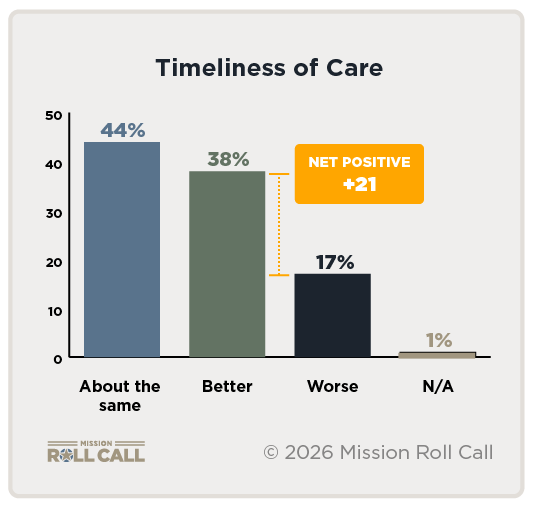
In MRC’s separate February 2026 survey, 38 percent reported improved timeliness of care, 44 percent said it stayed about the same, and 17 percent said it worsened. Another 1 percent selected not applicable. The chart below presents those responses.
Benefits Should Provide Stability
The strong response on benefits, disability claims and appeals reflects the importance of reliable support. Compensation can help veterans meet essential expenses when service connected injuries or illnesses limit employment or create continuing medical needs. Confusing requirements, uncertain claim status, and difficulty getting answers can add stress to an already demanding process.
Mission Roll Call will continue calling for accurate decisions, understandable communication, and a claims system veterans can navigate. Technology and processing capacity matter, but oversight should also ask whether applicants understand decisions and know how to respond. Our Resource Directory offers another place to look for assistance while veterans work through benefits questions. Practical support during that wait can help veterans maintain financial stability.
Aging Veterans and Families Need Greater Attention
The prominence of aging veterans, long term care and independent living deserves sustained attention. Remaining at home may require coordinated medical care, transportation, accessible housing, and dependable assistance. Policies should recognize those needs together, rather than leave families to assemble support across separate programs with different requirements.
Spouses, adult children, and other caregivers are central to that work. Their ability to help can depend on information, training, time, and resources. Mission Roll Call’s advocacy should examine whether existing programs strengthen independent living while supporting the people providing daily care. Services should include older veterans and caregivers, with clear guidance and dependable assistance as needs change.
Other Concerns Remain Important
Housing access, mental health services, and financial security remain important even though respondents placed other issues in the top four. Housing insecurity, financial strain, and difficulty obtaining care can overlap, making it harder for veterans to maintain stability. The priorities chart above shows the level of support for each issue. Policymakers should consider these needs together when evaluating whether assistance reaches veterans and families.
Our 2026 priorities also emphasized access to health care, support for service-connected injuries and conditions, and housing. The latest findings show continuing concern about those issues while bringing aging and independent living into sharper focus. Because the surveys used different questions and respondents, their results should not be treated as precise changes in national veteran opinion.
Turning Priorities Into Action
The practical test for this agenda is whether veterans can obtain the services they need without becoming responsible for coordinating the entire system themselves. A veteran should know where to turn when a referral stalls, a claim needs clarification, or a family needs assistance at home. Oversight should examine those experiences and use them to identify specific improvements.
For 2027, Mission Roll Call will press for accountability that reflects veterans’ experiences. Congress, the VA, and community partners should ask who receives support, who faces barriers, and what improves after assistance is provided. Veterans’ voices should guide those questions throughout the year. Our research and public education will continue bringing those experiences into conversations about services, benefits, and the resources families need.
