The Bus Bench Was Never the End of Dr. Allen Brown’s Story
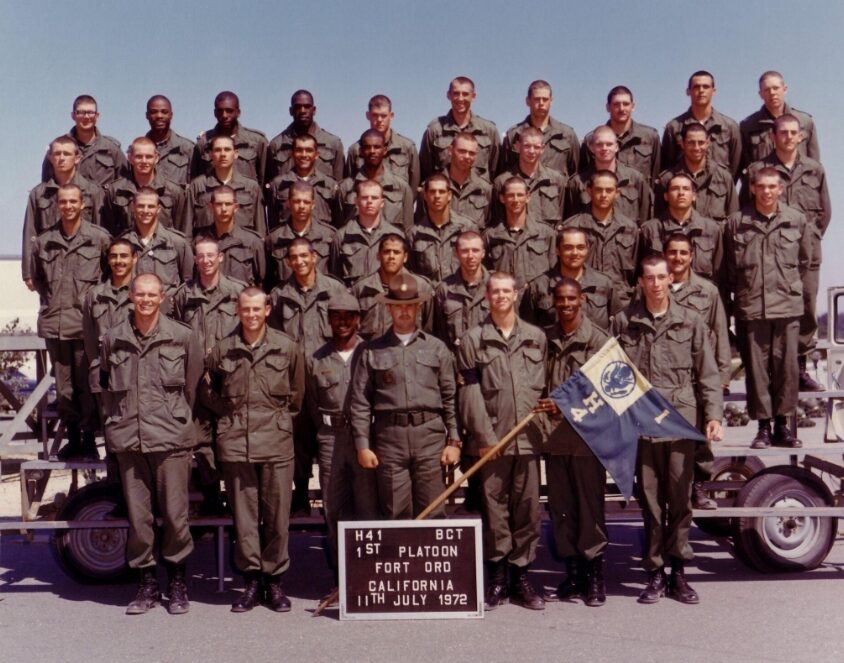
When the nights turned cold, a bus bench became Dr. Allen Brown’s bed. Long before protective dividers were added to public benches, he could stretch out across the seat and sleep until morning. It was far from comfortable, but it offered a place to rest while he tried to figure out what came next after military service. Like many veterans returning home, Brown expected to build a new life. Instead, he found himself searching for direction, stability and a place to belong.
“I didn’t know exactly what I was going to do with myself,” Brown recalled. “I was used to taking an order or a command and following through, no matter what.”
For Brown, however, homelessness did not begin after he left the Army. It had become part of his life years before he ever put on a uniform. The military gave him structure and purpose, but it could not erase the hardships that had shaped his childhood or guarantee stability when he returned to civilian life. His journey from homelessness to homeownership would take years, and along the way he would discover that his greatest calling was helping other veterans find the hope he had once struggled to find himself.
Housing instability entered Brown’s life after the ninth grade. Although he remained connected to his parents and visited them from time to time, alcoholism and instability at home made it
difficult to depend on them. Without a consistent place to live, he learned to adapt to circumstances that no young person should have to face. Over time, the uncertainty became so familiar that it quietly shaped the way he viewed himself and the world around him.
“I was used to things not being my own, having no home,” Brown said. “It was sinking into my psyche.”
One place where Brown found stability was on the football field. The game taught him discipline, teamwork and responsibility while giving him something to believe in beyond his circumstances.
Coaches expected him to show up, work hard and contribute to something larger than himself. Those lessons stayed with him long after the final whistle and eventually became the foundation
for the way he approached military service.
His talent on the field earned him an opportunity to attend the University of Arkansas at 17, where he was recruited to play football. Although it was a significant achievement, the challenges he had experienced growing up did not disappear. He eventually returned to Los Angeles carrying more questions than answers about what his future would hold.
One day he found himself standing at a bus stop with no destination in mind.
“I asked myself,’Where was I going?'” Brown said.”I didn’t have an answer.”
An older man noticed him standing there and struck up a conversation. Rather than offering sympathy, the man offered direction. He told Brown about a school that helped young people and veterans prepare for employment and encouraged him to return the next morning before going inside. When Brown came back, the man handed him a clean shirt and smiled.
“He called it ‘dress for success,'” Brown recalled.
The gesture may have seemed small, but it changed the course of Brown’s life. Someone had taken the time to see potential instead of problems, and the conversation introduced him to an idea he had never seriously considered before. The man spoke about military service as a place where young people could find discipline, opportunity and purpose.
“He told me a little bit about the military,” Brown said. “He said,’That might work for you.'”
For Brown, the Army represented far more than a career. It offered the structure he had been searching for throughout much of his life. He enlisted in the U.S. Army believing that service could provide the stability that had always seemed just beyond his reach.
Assigned to supply as an E-4, Brown quickly earned the trust of the soldiers around him. He developed a reputation for remembering what people needed and finding ways to get it, even when it meant traveling to another installation to locate equipment or supplies that were unavailable nearby. Fellow soldiers came to rely on him because they knew he would follow through on his word.
“The guy asked for it, and I said I knew where to get it,” Brown recalled. “I think I got popular that way.’Hey, Brown can get anything for us.'”
Military service reinforced many of the qualities football had first introduced into his life. Discipline became routine. Responsibility became expected. Teamwork became second nature. For the first time in many years, Brown belonged to an organization where everyone depended on one another and every person had a purpose.
He enjoyed being a soldier despite the challenges that came with military life, but when his service ended, the structure that had carried him through those years disappeared almost overnight. Like many veterans, he discovered that transitioning home required far more than receiving discharge papers.
His family offered him a place to stay, but after years of surviving on his own, Brown wanted to establish an independent life. The determination to make it on his own came with a heavy price.
There were nights when he slept in parks because he had nowhere else to go, and there were times when he stayed in hotels until the money ran out.
“I still slept in a park a couple of times,” Brown said. “Hotels get pretty expensive sometimes, and I still liked to eat.”
When money became scarce, Brown found himself among other veterans who were also trying to survive. Some gathered in parks while others found temporary shelter inside unfinished homes that were still under construction. They respected the properties, cleaned up after themselves and moved on before workers arrived each morning, but Brown knew those arrangements were never meant to become permanent. They helped people survive another night without giving them the stability needed to rebuild their lives.
Watching other veterans struggle opened Brown’s eyes to a larger problem. Many had returned home carrying visible and invisible wounds while trying to navigate a civilian world that no longer
felt familiar. Some were living with post-traumatic stress. Others were coping with physical injuries or trying to figure out how to begin again after years of military service. Many simply did
not know where to turn, and the thought of asking for help often felt more intimidating than sleeping outside.
Brown understood those feelings because he had lived them himself. He knew what it meant to wake up each morning without a permanent address and without a clear path forward. More importantly, he understood that stable housing was only the first step. Veterans also needed someone willing to walk beside them until they could believe in their own future again.
Brown’s own experiences taught him that veterans rarely needed someone to lecture them. They needed someone they could trust. Having lived through homelessness before and after military service, he understood why many veterans hesitated to enter programs or seek assistance. Years of disappointment, confusing systems and broken promises had convinced some that sleeping outdoors felt more predictable than navigating another process that might end in frustration.
As Brown spent time with other veterans, he began accompanying them to offices where help was available. He learned that support often existed, but finding it required persistence. Veterans frequently had to locate military records, verify their service and navigate unfamiliar systems while carrying the weight of homelessness. For someone already exhausted by survival, each additional step could feel like another barrier instead of a pathway toward stability.
“Every city that I found out about did have some type of VA support, ” Brown said. “They may have been hidden off in the offices someplace, way in the back of a building, but they were there.”
Brown also understood why some veterans simply stopped trying. If every conversation ended with another form, another office or another delay, many chose the certainty of familiar surroundings over the uncertainty of another promise. Their reluctance was not a lack of desire to rebuild their lives. It was often the result of losing confidence that the system would work for
them.
Rather than judging those decisions, Brown focused on building relationships. He discovered that veterans responded when expectations were clear and when they believed the person standing beside them genuinely understood what they were experiencing. His goal was never to push someone into housing before they were ready. Instead, he worked to earn their trust first, believing that trust created the foundation for lasting change.
His background in acting gave him an unexpected way to prepare veterans for the conversations ahead. Brown used role-playing exercises to help them explain their situations, discuss challenges such as post-traumatic stress and understand what would be expected as they entered housing programs. The process gave veterans an opportunity to practice difficult conversations before they found themselves sitting across from a case manager or housing provider.
“We’re going to do our best to get through that, but we’ve got to get you off the street first,” Brown would tell them.
Brown knew that moving indoors was only the beginning of recovery. Veterans who had spent months or years surviving outside often struggled with the rules, routines and shared environments that came with transitional housing. Rebuilding a life required patience, encouragement and someone willing to help them adjust to a different way of living instead of expecting change to happen overnight.
He encouraged veterans to think beyond the crisis they were experiencing and remember who they had been before hardship became the defining chapter of their lives. Together, they explored the interests, talents and dreams that had once given them purpose, then developed practical plans to help them reconnect with those strengths while working toward permanent housing and long-term stability.
Brown continued pursuing his own education as his passion for helping others grew. He earned a bachelor’s degree in behavioral science, a master’s degree in dramatic arts and a doctorate in
behavioral science. Those achievements represented more than academic success. They reflected his determination to understand human behavior and use that knowledge to serve people navigating trauma, homelessness and major life transitions.
“It just helped it all come together,” Brown said.
His education eventually opened opportunities to work in hospitals and expand his nonprofit work, combining behavioral science with the performing arts to help veterans and young people
facing difficult circumstances. Whether working with someone experiencing homelessness or helping an injured veteran adjust to life after losing a limb, Brown focused on possibilities rather
than limitations. He believed every person still had purpose, even when they could no longer see it for themselves.
Another important influence in Brown’s life was his grandfather, World War II veteran Archie Ellis. Although Ellis offered him a place to stay, he also challenged his grandson to build an
independent future. Brown remembered those conversations as moments of both encouragement and accountability, lessons that stayed with him long after they were spoken.
“He said, ‘Then go do it. Plan it. Follow it through. Don’t come back here with any excuses,'” Brown recalled.
Brown accepted that challenge. He eventually secured stable housing and later used his VA home loan benefit to purchase his first home near 76th Street and Western Avenue in Los Angeles, the city where he had grown up. For someone who had spent years wondering where he would sleep, walking through the front door of a home he owned represented far more than buying real estate.
“I bought my first house through the VA,” he said.
Homeownership became a symbol of everything he had worked to achieve. It represented stability after years of uncertainty, independence after surviving without a permanent home and the fulfillment of a goal that once seemed impossible. The young man who had stood at a bus stop without knowing where he was going had built a future through perseverance, education and opportunity.
Today, Brown continues that work through Flashback Academy Inc., formerly known as GRCN, an organization that has served communities since 1983. His mission extends beyond housing
because he understands that lasting stability requires education, mentorship, personal growth and the confidence to believe that a different future is possible. Every veteran he encourages
carries a reminder of the path he once walked himself.
Brown still describes veterans as family, regardless of their branch of service, background or life circumstances. He believes that a simple question between two veterans can open the door to
trust, understanding and hope in ways few other conversations can.
“They come in all shapes, colors and sizes,” Brown said.”Those are our family.”
His story demonstrates that homelessness is rarely just about lacking shelter. It is about losing stability, direction and connection while trying to find a way forward. It also reminds us that when
veterans receive the right support, trust and opportunity, they can rebuild lives that once seemed beyond reach.
The bus bench was never the end of Allen Brown’s story. It became one chapter in a lifetime defined by resilience, service and an unwavering commitment to helping other veterans find the same stability, dignity and sense of purpose that changed his own life.
Mission Roll Call is committed to listening first. If you are a veteran, family member, caregiver or community partner, we invite you to share your experiences through Mission Roll Call’s national surveys. Your voice helps shape advocacy, raise awareness and ensure veterans are seen and heard.
Understanding the truth brings us one step closer to ensuring every veteran has what they deserve: stability, dignity and a place to call home.
About the Author
Yvette Jones-Swanson, M.A., is a writer and Mission Roll Call’s subject-matter expert on veteran homelessness and housing. A U.S. Army veteran, former homeless veteran and survivor of military sexual trauma, she brings more than 22 years of frontline experience as a Veterans REALTOR® and veterans housing advocate.