From a U-Haul to the Lakefront: A Coast Guard Veteran’s Path Home
Homelessness does not always look the way people expect it to. Sometimes it looks like a storage facility after hours. Sometimes it looks like a veteran quietly calculating how to survive without being seen—without asking for help until there is nowhere else to turn.
This is the story of a Coast Guard veteran I’ll call Mr. Coast Guard Veteran.
For nearly a year—11 long months—he lived inside a U-Haul storage facility. Not on the street. Not in a shelter. But also not with permission. Every night carried the same risk: discovery, removal, and starting over again with nowhere to go. He was in transition—a term we use far too casually, and often misunderstand.
What “In Transition” Really Means
Being “in transition” does not mean safe. It does not mean stable. It does not mean housed.
“In transition” can mean living under a permanent roof without permission. It can mean staying somewhere temporarily while your access is expiring. It can mean running out of money, being in conflict with the loved one who is providing housing, or waiting as the home you’re in is sold out from under you. It often means relying on government programs whose timelines don’t match real life.
For this Coast Guard veteran, transition meant sleeping in a U-Haul facility—hidden, vulnerable, and one knock away from complete displacement.
He is also a wheelchair user.
That matters. Because when systems fail, they fail faster—and harder—for veterans with disabilities.
The Help That Should Have Come First
Homelessness rarely begins with a single bad decision. It usually begins with a missed moment.
Before he lost housing, this veteran needed early intervention: rental assistance before funds ran out, housing navigation before relationships fractured, and a voucher before survival replaced stability. The programs existed. The timing did not. Like too many veterans, the help arrived only after the fall.
By the time I met him, he had already been surviving outside the system.
As a Realtor, I don’t “place” homeless veterans. I house them. Because housing homeless veterans is real estate. We move people—by educating landlords, navigating voucher stigma, and executing housing strategy in a market that often says no before it understands the problem.
Housing Is Strategy, Not Charity
The solution for Mr. Coast Guard Veteran was HUD-VASH—the HUD-VA Supportive Housing voucher program. HUD-VASH is not a handout. It is a proven housing strategy when it is paired with execution, accountability, and access to real inventory.
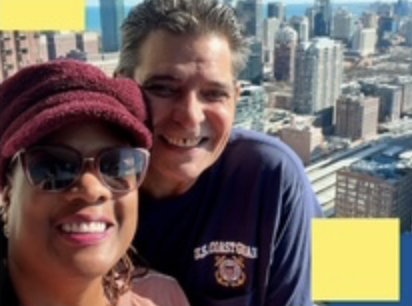
Using that voucher, we secured a two-bedroom, two-bath condo in downtown Chicago overlooking Navy Pier and Lake Michigan. A building with a doorman. A permanent home.
That move—from a U-Haul facility to a condo on the lakefront—was not luck.
It was policy, paired with action.
What Happens When Veterans Are Properly Housed
This is the part of the story we don’t tell often enough: what happens after housing.
Once housed, this veteran didn’t just survive—he stabilized. And from stability came progress.
He went on to compete year after year in the Veterans Valor Games—Paralympic-style adaptive sports competitions for wounded, injured, and ill veterans. From cycling and rowing to archery and powerlifting, events like the Midwest Games hosted by the Chicago Park District are about more than athletics. They are about identity, connection, and reclaiming purpose.
Housing created the conditions that made all of that possible.
You cannot train, compete, or heal while wondering where you’ll sleep next.
The Bigger Picture
Veteran homelessness is often treated as a visible crisis, when in reality it begins during invisible transitions.
It begins while someone is still indoors. When money runs out. When a lease ends. When a home is sold. When a program is delayed. When no one steps in before instability becomes displacement.
If we are serious about ending veteran homelessness, we must stop waiting for veterans to reach rock bottom before we respond.
Call to Action
Mr. Coast Guard Veteran’s story could have ended very differently. Instead, it shows what is possible when housing is treated as strategy, not sympathy.
To learn more about Mission Roll Call’s work uplifting veteran voices and advancing effective housing solutions, visit our Homelessness page: https://missionrollcall.org/spotlight-priorities/housing-and-homelessness/
Mission Roll Call is committed to listening first. If you are a veteran, family member, caregiver, or community partner, we invite you to share your story with us. Your experiences guide our advocacy and help us push for the changes veterans say matter most.
Your voice matters here. We encourage veterans, families, caregivers, and supporters to share their experiences through Mission Roll Call’s national surveys. Your stories help shape policy, raise awareness, and ensure veterans are seen and heard: https://missionrollcall.org/veteran-voices-survey/
Understanding the truth brings us one step closer to ensuring every veteran has what they deserve: stability, dignity, and a place to call home.