Women have served in the U.S. Armed Forces with courage, commitment, and professionalism across generations. Today, women veterans represent one of the fastest-growing populations in the military community. As they transition from military to civilian life, many face distinct challenges in areas such as employment, housing, identity, and health care.
Recognizing and understanding these unique transition challenges is essential for building more inclusive and supportive systems that help all veterans succeed after service.
Employment
Finding meaningful employment after military service is one of the most important steps in a veteran’s transition journey. While many veterans benefit from federal and state-level employment programs, women veterans often face different barriers when reentering the civilian workforce.
Veteran Employment Statistics
In 2024, the overall veteran unemployment rate was 3.0%, with women veterans experiencing a slightly higher rate of 3.5%, compared to 2.9% for male veterans, according to the U.S. Bureau of Labor Statistics (BLS).
Common Employment Challenges
- Translating military experience: Many women serve in roles such as administration, logistics, healthcare, or communications; positions that may be undervalued or misunderstood by civilian employers.
- Workplace bias: Women veterans sometimes face gender-based discrimination or skepticism about their military service, especially in male-dominated industries.
- Caregiving responsibilities: Upon leaving the military, women often resume or continue caregiving duties for children or family members. This can limit access to full-time roles or positions with inflexible hours.
Helpful Resources
Programs like Hire Heroes USA, VA’s Women Veterans Program, and the Department of Labor’s VETS program offer tailored career counseling, resume assistance, and employer outreach for women transitioning to civilian employment.
Housing and Stability
Stable housing is a critical foundation for successful reintegration. While many services exist for homeless veterans, recent data shows that housing insecurity among women veterans is a growing concern.
Housing Statistics
- From 2020 to 2023, homelessness among women veterans rose by 24%, from 3,126 to 3,980.
- Unsheltered homelessness (living in vehicles, on the streets, or in unsafe conditions) increased by 48%, from 1,464 to 2,165 in the same period.
- In FY2024, more than 27,444 women veterans were served through VA homeless programs.
Contributing Factors
- Military Sexual Trauma (MST) and domestic violence histories may impact housing stability.
- Limited access to family-friendly shelters makes it harder for women with children to find transitional housing.
- Underreporting: Women experiencing homelessness are more likely to stay with friends or family than enter shelters, making them less visible to service providers.
Supportive Solutions
Initiatives such as Supportive Services for Veteran Families (SSVF) help provide rent assistance, case management, and long-term housing solutions for women veterans.
Identity and Belonging
A less visible but equally important challenge is the issue of identity and recognition. Many women veterans report feeling unseen or excluded within both military and civilian spheres.
Common Identity Challenges
- Public perception still largely associates military service with men, leading to misconceptions about who qualifies as a veteran.
- Underrepresentation in veteran imagery, leadership, and outreach efforts can cause women to question whether they belong in veteran spaces.
- Women who mention their service may be assumed to be a spouse or family member of a veteran, rather than a veteran themselves.
Rebuilding Identity
Organizations like Women Veterans Alliance, Service Women’s Action Network (SWAN) and Mission Roll Call are working to elevate the voices of women veterans and foster a stronger sense of identity and belonging within the veteran community.
Health Care
Health care remains one of the most critical components of a successful transition. While the Department of Veterans Affairs (VA) continues to expand care options for women, understanding the specific health needs of women veterans is essential to ensuring quality and access.
Key Health Insights
- Military Sexual Trauma (MST) affects about 1 in 3 women veterans using VA services, according to the National Center for PTSD.
- Post-Traumatic Stress Disorder (PTSD) may present differently in women and can go underdiagnosed or misdiagnosed.
- Reproductive health care access is improving, but gaps remain in access to OB/GYN services across some VA locations.
- Suicide risk: Women veterans using VA care are nearly twice as likely to attempt suicide as their male counterparts, per a DAV mental health report.
Resources for Women Veterans
- VA Women’s Health Clinics offer specialized care for reproductive health, mental health, and MST recovery.
- Whole Health programs provide personalized wellness support for veterans.
Strategies and Recommendations
Transitioning from military to civilian life is not a one-size-fits-all experience. For women veterans, it’s essential that transition programs, support systems, and outreach efforts reflect their unique journeys. Listed below are strategies and recommendations we could all advocate for to better support women veterans in the workplace, at home, and in the world.
- Tailor transition programming: Expand content in the Transition Assistance Program (TAP) to address caregiving needs, civilian workforce reentry, and gender-specific challenges.
- Support women-focused housing solutions: Increase access to safe, trauma-informed, and child-friendly transitional housing options for women veterans.
- Strengthen women’s health care access: Ensure all VA facilities have properly staffed women’s clinics, and offer MST-trained providers with same-gender care options when requested.
- Promote visibility and leadership: Highlight women veteran leaders in national campaigns and ensure representation across VA boards and advisory councils.
- Expand outreach and benefit education: Utilize community-based partnerships (e.g., women’s shelters, clinics, colleges) to reach women veterans who may not engage with traditional channels.
Conclusion
At Mission Roll Call, we believe that every veteran’s voice deserves to be heard, and that includes the voices of women who have worn the uniform with pride. As the population of female veterans continues to grow, so too must our commitment to supporting their transition to civilian life, ensuring they have the tools, recognition, and resources they need to thrive. You can help by amplifying women veterans’ stories, hiring those who have served, or supporting organizations dedicated to their success.
By working together — across government, community, and industry — we can build a future where women veterans are not just supported but celebrated.
When the call of duty sends a warrior into harm’s way, it often draws a caregiver into a world of unseen burden and quiet sacrifice. You — spouses, partners, family members, and loved ones — take on the weight of recovery, navigating injuries both visible and invisible. You advocate for medical care, manage daily life through uncertainty, support emotional healing, and often do it all while pushing your own needs aside.
The weight can feel heavy, relentless, and isolating.
But there is support for you. One organization making a powerful impact is Operation Healing Forces (OHF). This nonprofit is dedicated to serving America’s wounded, ill, and injured Special Operations Forces (SOF) and their families. And while many know about their Couples Retreats and crisis support, fewer realize that OHF offers specialized Caregiver Retreats, created just for people like you.
Why Caregiver Retreats Matter
As a caregiver, it’s easy to lose yourself in the role. Stress, burnout, sleeplessness, compassion fatigue, and emotional exhaustion can build up over time. That’s why OHF’s Caregiver Retreats offer more than just a break, they offer a lifeline.
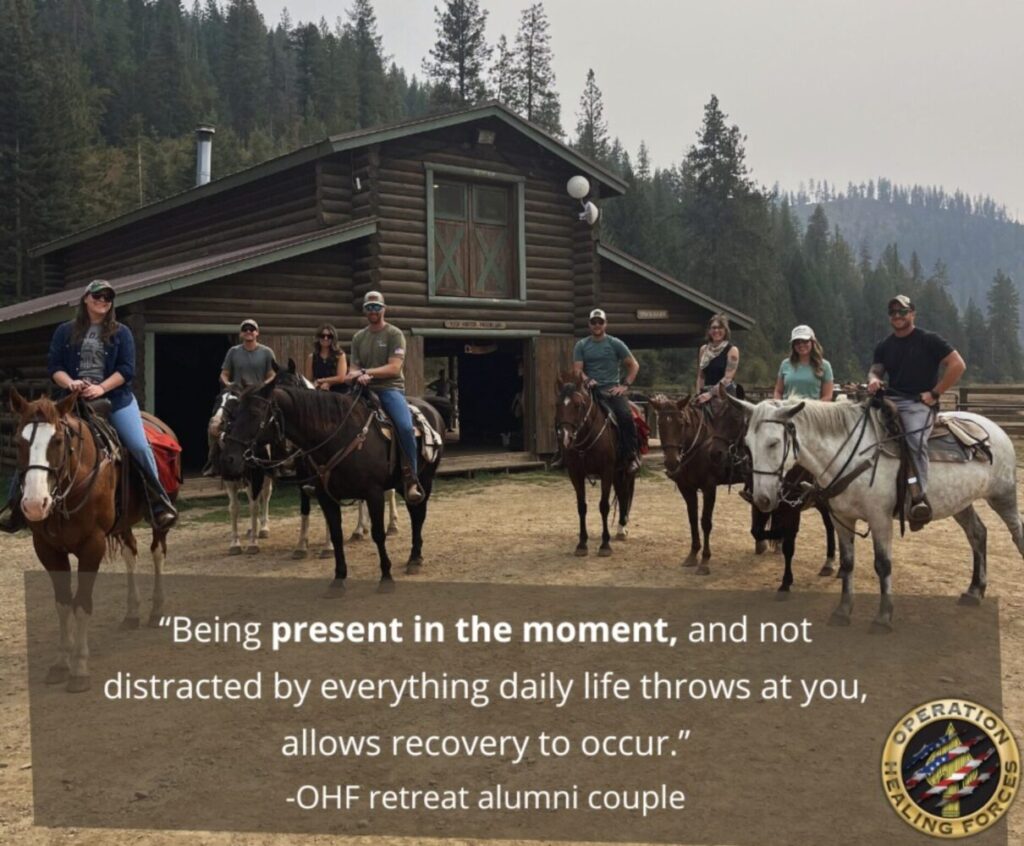
These immersive retreats are hosted in peaceful, restorative locations. They provide time and space for you to reset, reflect, and reconnect with yourself. You’ll engage in meaningful activities, enjoy nature, and build connections with others who understand the caregiving journey firsthand.
Led by former SOF operators and their spouses, these retreats offer comfort and understanding. Unlike traditional therapy sessions, these experiences are built on shared trust and mutual respect. Each retreat includes private accommodations, small group support, and the chance to experience real healing in a safe, supportive environment.
Support Beyond the Retreat
Operation Healing Forces understands that caregiving doesn’t end when the retreat does, and neither should support.
In addition to their retreats, OHF offers a range of ongoing caregiver resources:
- Immediate Needs Program: Providing financial assistance for emergencies, travel, medical supplies, and respite support.
- HatchPath Behavioral Health Coaching: A virtual wellness platform offering customized coaching in resilience, stress management, nutrition, life balance, and more. This resource is available at no cost to approved caregivers and SOF family members.
One of the most unique aspects of OHF is that 100% of donations go directly to programs, not overhead. This means more direct impact and deeper care for the people who need it most, including you.
You Are Eligible And You Deserve This
If you are caring for a wounded, ill, or injured SOF service member or veteran, or if you are a spouse or family member supporting someone in that category, you may be eligible to apply for an OHF caregiver retreat or support program.
The application process is simple. Share your story, complete the intake form, and request the support that fits your needs. Retreat spots are limited, so early applications are encouraged.
Many past participants describe the experience as life-changing. Some report feeling renewed hope. Others say they found the clarity, energy, and connection they had been missing for years.
A Stronger Network Through Mission Roll Call
Operation Healing Forces is proud to be a partner of Mission Roll Call to impact the lives of more veterans, military families, and supporters.
Through this partnership, you can find OHF listed in the Mission Roll Call Resource Directory, along with many other vetted organizations that serve the veteran and caregiver community. Whether you’re looking for legal resources, mental health support, financial aid, or peer connections, the directory is a one-stop shop for real, accessible help.
Explore it here: Mission Roll Call Veteran Resource Directory
Take the First Step Toward Your Own Healing
Your journey as a caregiver matters. Your health, your peace, and your purpose are just as important as those you care for.
Visit operationhealingforces.org to learn more about the Caregiver Retreat Program or to apply today. Don’t wait until you’re burned out or breaking down. Give yourself the gift of healing, connection, and rest. You have carried others for so long. Let someone carry you for a change.
Each September, Congress faces the same deadline. The fiscal year ends on September 30, and if lawmakers cannot agree on appropriations, they pass a continuing resolution, or CR, to keep the government funded. A CR is meant to be a bridge. Owing to political gridlock, too often it becomes a bargaining chip. When that happens, veterans risk getting caught in the crossfire.
This year’s Continuing Appropriations and Extensions Act, 2026, carries more than budget numbers. It extends the Department of Veterans Affairs’ authority to operate programs that directly serve the most vulnerable veterans. Without passage, those authorities expire at the end of the month. If they expire, lifelines disappear overnight.
One example is the Staff Sergeant Parker Gordon Fox Suicide Prevention Grant Program. These grants fund community organizations that reach veterans outside VA walls. They support peer networks, local outreach, and prevention specialists who connect with veterans in crisis. Many of these veterans may not walk into a VA hospital, but they will talk to a peer who has worn the uniform. Interrupting that network, even briefly, means lives are put at risk.
The Supportive Services for Veteran Families and Health Care for Homeless Veterans programs are just as critical. They provide emergency housing, rental assistance, and case management for veterans already on the edge of losing stability. If those services stop, veteran homelessness rises immediately. For veterans struggling with mental health challenges, the result is dangerous and destabilizing.
Rural veterans face another risk. The Rural Access Network for Growth Enhancement (RANGE) program provides case management for veterans with serious mental illness who live far from traditional care. If RANGE falters, those veterans lose their only lifeline.
The CR also extends VA’s obligation to provide nursing home care for veterans with severe service-connected disabilities. That obligation is a national promise. Allowing it to lapse would break faith with those who carry the deepest wounds of war.
These programs are not line items on a spreadsheet. They are suicide prevention hotlines, housing vouchers, peer counselors, case managers, and long-term care beds. They are veterans’ safety nets. And they are all at risk if this CR fails to pass by the end of the month.
Veterans did not create the fiscal year deadline. They did not ask for their programs to be wrapped into political debates. They served their country, and in return their country made commitments that cannot be subject to delay or disruption.
This is a simple concept that all can rally behind. We cannot allow veterans’ care to become collateral damage in budget politics. Congress should pass the CR to keep these programs running and then complete the job of passing full-year appropriations. Larger debates about health care or spending priorities belong on separate ground, not tied to whether veterans at risk of suicide or homelessness receive help.
Veterans deserve certainty. They deserve to know that the programs designed to save their lives will not shut down because of a missed deadline. Keeping those programs funded is keeping faith with sacred promises made to our veterans.
You’ve served. You’ve sacrificed. Now, as you transition or have transitioned out of uniform, there is another kind of readiness that matters: financial readiness. It’s not just about making ends meet. It’s about understanding the tools available, building confidence in financial decisions, and securing long-term stability. With the right financial understanding, small steps become strong foundations. All veterans deserve that peace of mind.
Why Financial Readiness and Literacy Matter
Financial pressure is something many veterans quietly carry, especially during and after the transition to civilian life. Rising costs of living, unexpected medical bills, and navigating unfamiliar financial systems outside the military can quickly become overwhelming. In fact, a survey by Wounded Warrior Project found that 64 percent of their participants said they did not always have enough money to meet their basic expenses in the past year. This clearly shows many veterans are living under financial strain with limited room for error.
That strain does more than affect bank accounts. It weighs on mental health, too. Financial stress can increase anxiety, depression, and feelings of helplessness, especially when combined with other post-service challenges. While grants and assistance can offer short-term relief, true financial readiness comes from something deeper: literacy.
Understanding how to budget, build credit, invest wisely, and protect yourself financially gives veterans long-term tools, not just temporary fixes. It is that knowledge and the confidence that comes with it that can help transform instability into security.
What Financial Readiness Looks Like
Here are the core pieces that add up to true readiness:
- Know your benefits, inside and out
- Benefits from the VA, educational benefits, service-related support, insurance, and housing programs all matter. Sometimes benefits overlap. Sometimes, the details like eligibility, tax implications, and documentation matter more than people realize.
- Budgeting and cash flow management
- Track every dollar: income, obligations, discretionary spending
- Build a buffer: even a small emergency fund helps reduce the risk of a financial crisis
- Adjust as life changes: deployment, family additions, separation, or civilian jobs
- Credit, debt, and loans
- Understand what affects your credit score and work to keep it healthy (on-time payments, low credit card balances)
- Be cautious with high-interest lenders
- Know your student loan or GI Bill options and repayment plans, if applicable
- Investing and long-term planning
- Retirement savings (for example, TSP or IRAs) are tools for growth, even if contributions are modest at first
- Diversify when possible, based on your risk tolerance and timeline
- Understand basic stock market principles so you can evaluate opportunities and avoid pitfalls
- Planning and protection
- Estate planning: wills, power of attorney, beneficiary designations
- Insurance: health, life, disability — know what is covered and what is not
- Fraud prevention: identity theft, scam awareness, and understanding your rights, especially when dealing with VA or contracting organizations
Spotlight: Effective Programs and Resources
These programs and tools can help veterans build financial literacy and readiness:
- Mission Roll Call’s “How the Stock Market REALLY Works”, a friendly, beginner-oriented video to help veterans make sense of investing
- Veteran Benefits Overview in 2024 breaks down benefit programs and eligibility clearly
- FINVET (National Veterans Financial Resource Center) helps veterans find trusted financial tools, learn best practices, and navigate their financial path
- Wounded Warrior Project’s Financial Readiness Program offers one-on-one counseling, budget planning, and tools for managing unexpected costs
- Office of Financial Readiness (FINRED) offers courses, resource libraries, and materials for all stages of military and post-military life
Practical Steps You Can Take Now
You don’t have to overhaul everything at once. Here are simple actions you can take today:
- Start small with budgeting: For one month, write down everything you spend. You’ll often spot easy areas to cut, such as unused subscriptions, banking fees, or impulse buys
- Automate what you can: If possible, have a portion of your income go directly into savings or investments
- Set clear, achievable goals: Examples: “Save $500 emergency fund in 3 months,” or “Reduce credit card debt by 25 percent in 6 months,” or “Watch one video per week to learn investing basics”
- Seek trustworthy mentorship or counseling: Use vetted resources that understand military and veteran needs
- Educate before big decisions: Whether buying a house, switching jobs, investing, or taking out loans, take time to research, compare options, and ask questions
- Protect yourself: Monitor credit reports, guard your identity, and understand what you are signing before entering any agreement. Know your rights under VA programs and military law, such as the Servicemembers Civil Relief Act
Empowering Your Financial Journey
Start with Mission Roll Call University. Watch the video How the Stock Market REALLY Works to build a solid and approachable foundation in investing. Then explore the Veteran Benefits Overview for 2024 to fully understand what benefits are available to you and how to access them.
Reach out to organizations like the Wounded Warrior Project, VeteransPlus, or FINVET to schedule a free or low-cost counseling session, or browse the resources in MRC’s Veteran Resource Directory. Choose one financial goal, whether it’s saving, paying off debt, or building credit, and take that first step toward achieving it.
Conclusion
Financial readiness is not about having a lot of money. It’s about having the right knowledge, healthy financial habits, support systems, and the mindset to stay steady through challenges. It’s about being able to breathe easier, sleep better, and face the unexpected with confidence. You earned that.
You may use grants and benefits, and those matter. But it is financial literacy that turns short-term relief into long-term security. The tools are out there. So are the people who understand what you’re navigating. Taking that first step may feel small, but it can lead to something steady and strong.
Subscribe to Mission Roll Call University (MRCU) to explore Mission Roll Call’s financial resources today and take the next step toward financial peace of mind.
September 7–13 marks National Suicide Prevention Week, a time to raise awareness, break down stigma, and take meaningful steps toward preventing suicide in our communities. For our nation’s veterans, this week carries special urgency. The mental health crisis among those who’ve served continues to deepen, and it’s one we must face together.
Veteran Suicide Is a National Crisis
The numbers are sobering:
- According to the VA’s 2024 annual report, an estimated 17.6 veterans die by suicide every day.
- But other research suggests the true number could be significantly higher. A study by America’s Warrior Partnership, Operation Deep Dive, estimates as many as 44 veteran suicides per day when accounting for drug-related deaths and self-injury mortality.
- That means we could be losing more than 16,000 veterans each year—more than all U.S. combat deaths since Vietnam.
Behind every number is a person. A family. A story that ended too soon. For a more comprehensive look at how these numbers are evolving and what’s driving them, see our breakdown of veteran suicide trends and underlying factors.
Understanding the Risk
Transitioning out of the military can be one of the most vulnerable times in a veteran’s life. Studies show that the first two years after leaving active duty are especially high-risk due to challenges like isolation, loss of identity, and limited access to care.
There are also alarming disparities across groups:
- Male veterans are 60% more likely to die by suicide than civilian men.
- Women veterans face a 92% higher suicide rate than civilian women.
Post-traumatic stress continues to affect a significant portion of the veteran community. About 15% of Iraq and Afghanistan veterans experience PTS in any given year, and roughly 1 in 3 will experience it at some point in their lifetime.
Access to care remains a major barrier as well. Nearly 45% of veterans report long wait times or delays in receiving health care through the VA. In some areas, wait times for mental health care exceed 50 days.
Progress Is Happening — But It’s Not Enough
The recent passage of the Elizabeth Dole Act has been a step in the right direction. It expands resources for employment, disability claims, mental health care, and support for the 7.8 million caregivers who walk alongside our veterans every day.
But policy alone can’t solve this crisis. It takes all of us veterans, families, communities, and advocates working together to ensure no veteran is left behind.
Support Starts Here
If you or someone you know is struggling, please know you’re not alone.
- Veterans Crisis Line: Dial 988 then press 1
- Veterans Resource Directory
- Mission Roll Call Suicide Prevention Page
Together, we can build a future where no veteran feels that suicide is their only option.
Get Involved: Ride & Run 4 Their Lives with HBOT4Heroes
This National Suicide Prevention Week, MRC is teaming up with HBOT4Heroes to help turn awareness into action through two powerful events that support veteran suicide prevention efforts and honor those we’ve lost:
Ride 4 Their Lives with Raging Bull Harley-Davidson
Sunday, Sept. 7 | Durham, NC
Kick off National Suicide Prevention Week with a scenic group ride to the Orange County Veterans Memorial.
- Registration at 10 AM | Kickstands up at 11 AM
- Riders: $25 pre-registration | $30 day-of
- Raffle prizes, community vendors, and more
Register here: hbot4heroes.org/events/ride-4-their-lives
Run 4 Their Lives 5K
Saturday, Sept. 13 | American Tobacco Trail
Run, walk, or roll — every step you take honors the 44 veterans we lose to suicide each day and helps protect the living.
- Family-friendly and fully accessible
- All proceeds support suicide prevention outreach and treatment
Register here: hbot4heroes.org/events/5k-run4theirlives
Can’t ride or run? You can still stand with us.
- Donate.
- Spread the word.
- Volunteer.
- Share your story.
National Suicide Prevention Week reminds us that hope is real, and help is out there. We honor those we’ve lost by showing up for one another, speaking out, and standing together in the fight for life.
Let’s ride. Let’s run. Let’s rise for their lives.
Today, we honor the life of U.S. Army veteran Michael Verardo, who passed away on August 26 at the age of 40. Michael’s story is one of courage on the battlefield, resilience in the face of unimaginable challenges, and lasting impact on behalf of America’s veterans and their families.
Michael proudly served as an infantryman and paratrooper with the 82nd Airborne Division at Fort Bragg. In Afghanistan, he survived two IED attacks, the second of which left him one of the most catastrophically wounded soldiers of the Global War on Terror. Despite devastating injuries and more than 120 surgeries, Michael refused to be defined by tragedy. Instead, he lived a life of purpose, advocating for his fellow veterans, strengthening the nation’s commitment to those who served, and inspiring countless Americans with his determination and spirit.
Alongside his beloved wife, Sarah, who now serves as the CEO of The Independence Fund, Michael turned his lived experience into advocacy that drove meaningful, permanent improvements in care and support for wounded veterans. His voice reached the highest levels of government, shaping reforms that continue to change lives today.
Governor Josh Stein ordered flags in North Carolina lowered to half-staff on September 2 in Michael’s honor, calling him “a man who lived a life of purpose and made tremendous sacrifices on behalf of our state and our country.”
Michael’s greatest joy, however, was his family. Together with Sarah, he built a beautiful life and leaves behind three daughters, Grace, Mary Scott, and Elizabeth. His legacy of love, strength, and service will live on through them and through the countless lives touched by his advocacy and example.
Mission Roll Call extends our deepest gratitude to Michael Verardo. His life reminds us of the resilience of our nation’s veterans and the enduring power of service, sacrifice, and love, and the importance of honoring service and sacrifice in moments like Veterans Day and beyond.
Airborne, All the Way.
According to a recent Mission Roll Call poll, when asked if they found it difficult to acclimate to civilian life, 46% of respondents answered “yes.” In spite of available resources, a further 81% indicated that they had never received transition assistance such as mentorship, financial support, or job placement from a local business, nonprofit, or community provider. Additionally, in a study conducted by Syracuse University, nearly half of veterans reported that the military transition assistance program did not adequately prepare them for leaving military service.
Given these challenges, supporting veterans in their job search requires leveraging resources and programs designed to translate military experience into civilian careers and connect them with employers who value those skills. Several organizations and initiatives offer tailored support, including resume writing and job search assistance, interview skills training, and direct connections to potential employers. Listed below are 10 organizations dedicated to supporting veterans through their career transition.
VBH serves as a bridge between service members, veterans, and families, forging connections with nonprofits providing job readiness resources and businesses keen on hiring veterans.
2. Operation Second Chance, Inc.
Operation Second Chance supports veterans and their families by identifying and supporting immediate needs and interests, promoting public awareness of the many sacrifices made by our Armed Forces. Operation Second Chance also helps maintain resources to assist veterans and their families with their numerous health, employment, and financial needs.
3. Operation Honor: Rural Salute
OHRS empowers rural veterans with resources, jobs, and community support, helping them thrive, feel connected, and build strong, fulfilling lives in the places they call home.
4. Paralyzed Veterans of America
Paralyzed Veterans of America’s Veterans Career Program, formerly known as PAVE, provides free employment support and vocational counseling assistance to all veterans, transitioning service members, spouses, and caregivers.
5. Veterans’ Employment and Training Service (VETS)
Part of the U.S. Department of Labor, VETS helps veterans, separating service members, and their spouses prepare for careers by providing employment resources, expertise, and protecting their employment rights.
Hire Heroes USA helps military families build bright futures by assisting U.S. servicemen and women, and their spouses, in finding rewarding career paths. They have a proven track record, with over 110,000 confirmed hires.
7. Warrior Foundation Freedom Station
Warrior Foundation Freedom Station supports medically retiring men and women as they transition to civilian life through transitional housing, outdoor therapy, career guidance, and much more.
8. VetJobs
VetJobs offers free career placement and training services to military veterans, retirees, transitioning members, National Guardsmen, reservists, and their spouses. They have a successful approach, citing 111,000+ verified placements since 2010, that combines personalized support, technology, and education to help job seekers succeed.
RecruitMilitary is a comprehensive military-to-civilian recruiting company that connects veterans, transitioning service members, and spouses with employment opportunities. They offer career fairs, placement services, and a job board, leveraging their expertise in translating military experience into civilian skills.
10. American Corporate Partners (ACP)
ACP offers free career counseling and mentoring to recently returned veterans, connecting them with professionals from top companies and universities.
As demonstrated by the wide range of resources listed above, supporting veterans with employment requires a tailored, multi-faceted approach involving both government and private sector organizations. By utilizing these resources and programs, veterans can overcome employment barriers and pursue meaningful careers that align with their skills and experience.

Mission Roll Call’s comprehensive Veteran Resource Directory connects veterans and their families to organizations ready to help. Visit missionrollcall.org/resource-directory to discover the support you need to find employment for you or your veteran.
In July, we celebrated two major themes—the legacy of American military service and the power of veteran independence. From commemorating 250 years of commitment and courage to highlighting modern-day stories of resilience, we focused on the tools, support, and spirit that allow veterans to thrive on their terms.
Through storytelling, research, interviews, and accessible resources, we continued our mission to elevate veteran voices, support autonomy, and honor every path forward after service.
Here’s what you might have missed:
We marked the 250th anniversary of the U.S. military by reflecting on the legacy of service that defines our country, and by exploring what independence looks like for today’s veterans.
– Countdown to 250: Honoring the Legacy of American Independence
– Taylor Morris: How a Quadruple Amputee Rebuilt His Life and Redefined Independence
– 7 Key Areas of Support for Veterans with Service-Connected Disabilities
– Need to Modify Your Home? These VA Grants Can Help
– Spotlight on Paralyzed Veterans of America
– Hyperbaric Oxygen Therapy and Veterans: A Breath of Fresh Air for Healing
The Lasting Mission Podcast
In July, The Lasting Mission featured powerful voices from two impactful organizations—Operation Honor: Rural Salute and the Wounded Warrior Project—highlighting both rural veteran challenges and the future of recovery for those with combat injuries.
– Operation Honor: Rural Salute – Part 1
– Operation Honor: Rural Salute – Part 2
– From Battlefield to Breakthrough – WWP: Part 1
– WWP CEO Walter Piatt: ‘We Owe Them More Than Thanks’ – Part 2
Mission Roll Call University (MRCU)
MRCU continued to deliver straightforward, practical content to help veterans and families navigate benefits and build stability. This month’s videos included guidance on adaptive housing grants, VA facility access, login systems, and even life insurance options many may not realize they qualify for.
– Make Your House a HOME With an Adaptive Housing Grant
– Find Your Veteran Affairs Facility – Fast & Easy
– Life Insurance: The Hidden Financial Superpower
– The Great Login Service Debate: Which One Is Right for You?
Veteran Town Hall: Your Voice in Real Time
Our July Town Hall brought together veterans from across the country to discuss pressing issues like healthcare access, disability support, and post-service independence. These live events are a powerful reminder that when veterans speak up, leaders listen.
– Watch the July Veteran Town Hall
From the Blog: Advocacy in Action
These articles gave readers the latest insights and policy perspectives rooted in our research and veteran polling.
– Prioritizing Veteran Healthcare in 2025 and Beyond
– Veterans Are Speaking Clearly on Suicide Prevention. It’s Time for a New Strategy.
– Want Alternate Healthcare Options? This Program Could Help Veterans and Their Families
MRC in the Media
Our message reached new audiences in July, with national and local coverage that emphasized our mission: to elevate veteran voices, push for smarter policy, and highlight solutions that work.
– Why Your Business Should Hire Veterans – Inc.
– Mission Roll Call Applauds Bipartisan Passage of VA Home Loan Program Reform Act
Speak Up: Your Voice Matters
Veterans and their families shape our advocacy—and we want to hear from you. Help guide our work by participating in our active polls and surveys.
– Take the Veteran Voices Survey
– Make Your Voice Heard in Our Open Polls
Looking Ahead: Employment, Transition & Opportunity
In August, we’ll focus on life after service—what it takes to transition well, build meaningful careers, and continue to find purpose in the civilian world. Stay tuned for powerful new content, real stories, and more updates from veterans like you.
If you’re a veteran, family member, or caregiver who’s used My HealtheVet or DS Logon to manage VA health care or benefits, there are some important changes coming. My HealtheVet has officially been retired, and DS Logon will no longer be available after September 30, 2025.
In our latest episode of Mission Roll Call University (MRCU), we explain what these changes mean, how to switch to a secure new login, and how to get support along the way.
Here’s what you need to know:
My HealtheVet is no longer available.
DS Logon will sunset on September 30, 2025.
To access VA.gov and other VA online services, you’ll now need to sign in with Login.gov or ID.me. Both options meet federal security standards and are free to use.
You can use either one—or even both—but here’s how to decide:
Choose Login.gov if you:
- Live in the U.S.
- Have a Social Security number
- Have a valid state-issued ID
- Already use government websites like USAJOBS or Social Security
Choose ID.me if you:
- Live outside the U.S.
- Don’t have a Social Security number
- Don’t have a valid ID or a phone in your name
- Need flexible identity verification options (like video calls or in-person appointments)
Setting up Login.gov:
- Go to VA.gov and click “Sign In”
- Select Login.gov and choose “Create an account”
- Confirm your email within 24 hours
- Set up a password and multi-factor authentication
- Upload ID photos or verify your identity in person at a post office
Setting up ID.me:
- Start at VA.gov and choose ID.me
- Create an account with your email and password
- Verify your identity with one of three methods:
- Self-service (photo ID, SSN, and a phone in your name)
- Video call with three forms of ID
- In-person appointment with three forms of ID
Need help getting started?
Support is available every step of the way.
- Visit Login.gov or ID.me for troubleshooting and FAQs
- Call VA Support at 877-327-0022 for help with sign-in and account setup
- Watch our full MRCU episode for step-by-step walkthroughs and practical tips
Haven’t made the switch yet? Don’t worry. You can still manage your care and benefits the way you always have—by phone, mail, or in person. Call 800-698-2411 or visit your local VA regional office for support.
For caregivers and guardians:
- Court-appointed guardians can call 877-327-0022 to explore temporary access options while a long-term solution is being developed
- Family caregivers should continue using the veteran’s own login credentials, just as before
Want to see exactly how to set up your account? Watch the full episode of MRCU to follow along with demos, tips, and help links to make the process simple.
Watch now:
For more how-to guides and helpful veteran-focused resources, explore our full video library on the MRCU YouTube channel.
When joining the military, recruits are generally expected to be in peak health to ensure they can meet the rigorous demands of training and the job itself. This includes both physical and mental well-being. Going from peak health to being discharged with a service-connected disability is an incredibly tough change. While leaving the military with a disability can qualify a service member for various benefits, including disability compensation from the VA, not all disabled veterans are eligible, and additional support is often needed to ensure they get the help they deserve.
Veterans with Service-Connected Disabilities
You might think this is a small group, but the numbers say otherwise. In 2023, roughly 30% of veterans in the U.S.—about 5.2 million people—had a service-connected disability. Additionally, about 50% of all veterans reported having some form of disability, including both service-connected conditions and self-reported disabilities via the American Community Survey (ACS).
With millions of veterans living with disabilities, how can we better support them?
7 Key Areas of Support for Veterans with Service-Connected Disabilities
- Donate to organizations: Groups like Disabled American Veterans (DAV), Wounded Warrior Project (WWP), and Paralyzed Veterans of America (PVA) rely on donations to provide transportation, financial help, and other essential services.
- Volunteer your time: Help out by driving veterans to appointments, assisting at VA hospitals, or offering administrative help through nonprofits.
- Advocate for veterans: Reach out to your elected officials and support policies that improve healthcare, education, and job opportunities for veterans.
- Offer direct assistance: Whether it’s yard work, transportation, or just being a good listener, small acts of support can go a long way in your community.
- Hire veterans: Create opportunities by hiring veterans, offering internships, or providing job training and mentorship.
- Spread awareness: Learn about the challenges veterans face and help others do the same. Share info about helpful organizations and ways to get involved.
- Support families of veterans: Caregivers need care, too. Programs like the VA’s Program of Comprehensive Assistance for Family Caregivers provide much-needed support—help families know where to turn.
Making a Difference
By taking even one of these steps, you can make a real impact in the lives of disabled veterans and show your appreciation for their service and sacrifice. Whether you’re giving time or money, there’s a way for everyone to get involved.
To join us in advocating for veterans and ensuring their voices are heard, visit www.missionrollcall.org.
At Mission Roll Call, we connect veterans with organizations like PVA and WWP that offer support across the spectrum. Join the mission by being part of our Veteran Resource Directory. If your organization supports veterans or their families, apply today to be featured.
Fuel Veteran Voices
A small gift powers the research and advocacy that brings veterans to the decision-making table.
Donate $5+