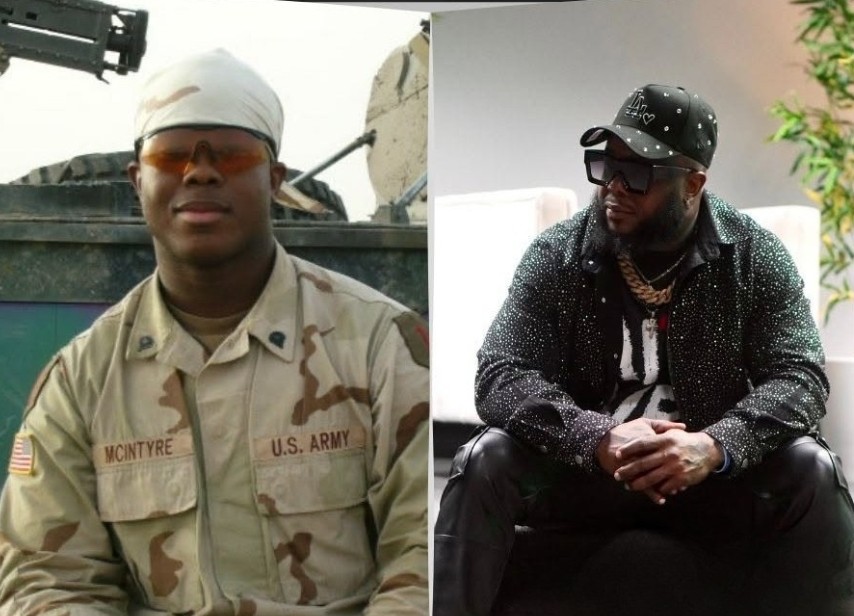
An Army veteran reflects on combat, PTSD and rebuilding a life after service
For years, every day started with a mission.
The Army told him where he needed to be, who depended on him and what success looked like. After 14 years in uniform, that routine disappeared almost overnight. The deployments ended. The structure that had shaped his adult life disappeared with them.
That was the beginning of a different fight.
JayR McIntyre enlisted in the Army in 2001 after growing up in Long Beach, California, where trauma touched his life long before military service. He lost his mother to AIDS and watched addiction affect members of his family. The Army offered a chance to build a different future, one defined by discipline, purpose and service.
During his career, he rose to the rank of Staff Sgt. and served in combat operations, leadership and personnel management. He completed three combat deployments and spent more than 55 months in combat zones, experiences that shaped both the soldier he became and the civilian he would later struggle to recognize.
“The military taught me leadership, resilience and accountability,” he said. “It also left emotional wounds that followed me home.”
Leaving the military was harder than he expected.
Combat had prepared him to make decisions under pressure and lead soldiers through dangerous situations. Civilian life required a different set of skills. The daily mission was gone. The identity he had carried for more than a decade suddenly felt uncertain.
At the same time, he was working through PTSD, depression, anxiety and survivor’s guilt while trying to build businesses, pursue higher education and support his family.
Like many veterans, he found himself carrying several battles at once.
Housing instability became one of them.
His experience never matched the public image many people associate with veteran homelessness. He was not sleeping on a sidewalk or in a shelter. Instead, business setbacks, financial losses following COVID and unresolved trauma created periods when stability felt uncertain. Bills piled up. Financial pressure grew. Asking for help became another obstacle.
Looking back, he describes those years in a way that many veterans may recognize.
“Even when you’re not sleeping on the streets, financial and emotional instability can make a veteran feel homeless internally.”
That experience mirrors what many veterans describe to Mission Roll Call. Housing instability often begins quietly. Savings disappear. Temporary living arrangements replace permanent ones. Veterans begin making decisions based on how long they can stretch the resources they have left.
Those circumstances rarely attract public attention, yet they shape how many veterans experience the transition home.
McIntyre believes another barrier is pride.
“There are resources available,” he said. “Many veterans either don’t know about them or they’re too overwhelmed to access them.”
He eventually reached a point where he stopped trying to hide what he had been carrying. Speaking openly about trauma, PTSD and failure became part of his own recovery. Those conversations also opened doors to helping other veterans who were living through similar experiences.
Education became another part of rebuilding his life.
He earned an associate degree, followed by a bachelor’s degree and an MBA. Today, he is completing a doctorate in Global Business. Each degree marked another step forward during a period when he was rebuilding confidence, purpose and stability.
Today, McIntyre speaks with veterans, young people and community organizations through his platform, Tha Hood Motiv8tor. Much of that work centers on conversations many veterans say they wish had happened sooner: mental health, transition, purpose and asking for help before a crisis grows larger.
He hopes policymakers continue investing in transition support, mental health care, housing assistance and opportunities that help veterans rebuild after military service.
For him, stable housing represents more than having a permanent address.
“It means peace, safety, healing and dignity,” he said. “It means having a foundation where you can rebuild your life mentally, emotionally, financially and spiritually.”
His story reflects a reality shared by many veterans. Military service eventually comes to an end. The work of rebuilding a life afterward often takes much longer.
Learn More
To learn more about Mission Roll Call’s work uplifting veteran voices and advancing effective housing solutions, visit our Homelessness page:
https://missionrollcall.org/spotlight-priorities/housing-and-homelessness/
Mission Roll Call is committed to listening first. If you are a veteran, family member, caregiver or community partner, we invite you to share your story with us. Your experiences guide our advocacy and help us push for the changes veterans say matter most.
Your voice matters here. We encourage veterans, families, caregivers and supporters to share their experiences through Mission Roll Call’s national surveys. Your stories help shape policy, raise awareness and ensure veterans are seen and heard:
https://missionrollcall.org/surveys/
Understanding the truth brings us one step closer to ensuring every veteran has what they deserve: stability, dignity and a place to call home.
About the Author
Yvette Jones-Swanson, M.A., is a subject-matter expert on veteran homelessness and housing, an Army veteran and Realtor. Drawing from her own experience as a formerly homeless veteran and more than 25 years of frontline housing work, she has helped thousands of veterans secure stable housing and connect with critical resources nationwide.
As Founder and CEO of VetMentors LLC and a Veteran Voices contributor for Mission Roll Call, she works to elevate veteran stories, strengthen housing solutions and ensure the lived experiences of veterans help inform policy and practice.