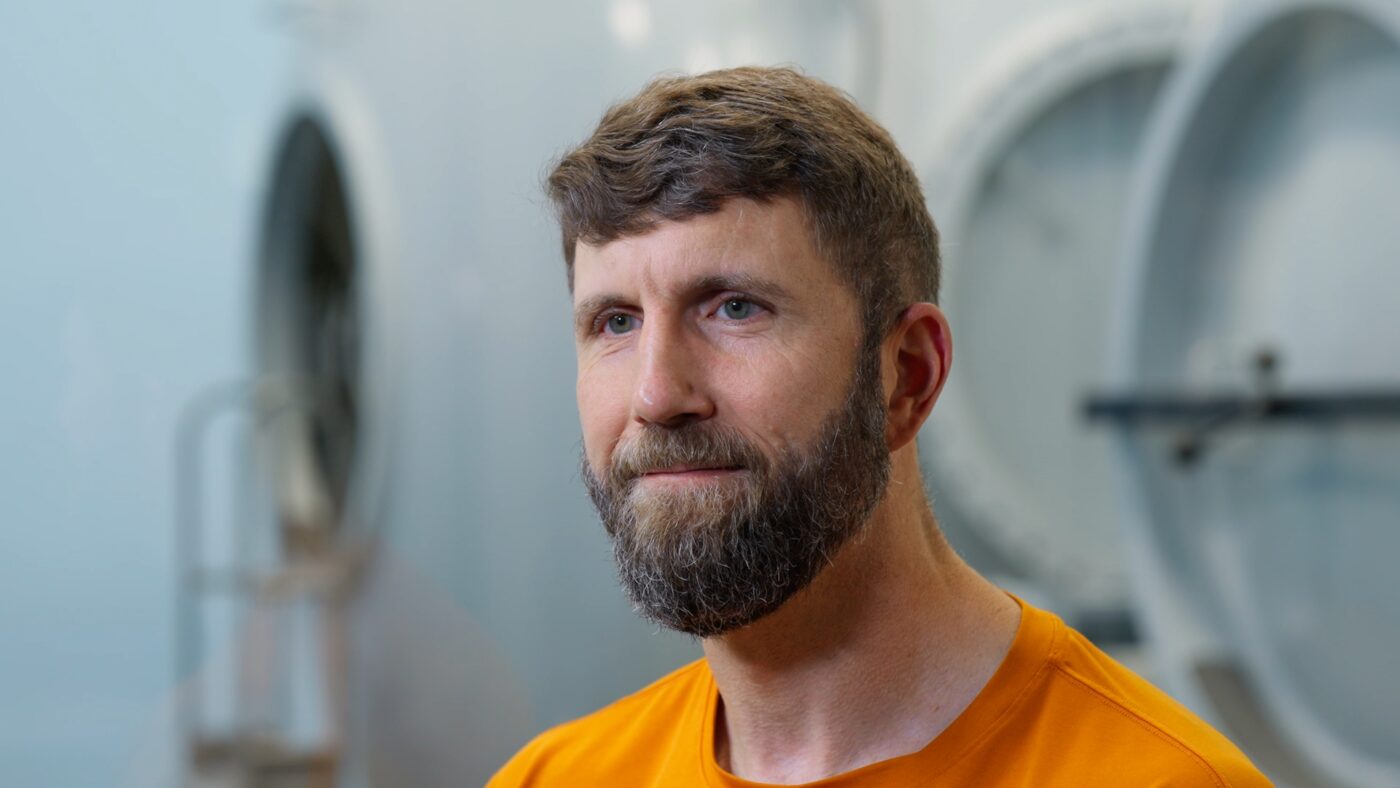
Michael Merzke Came Home with Invisible Wounds and a Son Who Needed Answers. What He Found, He Is Still Fighting to Share.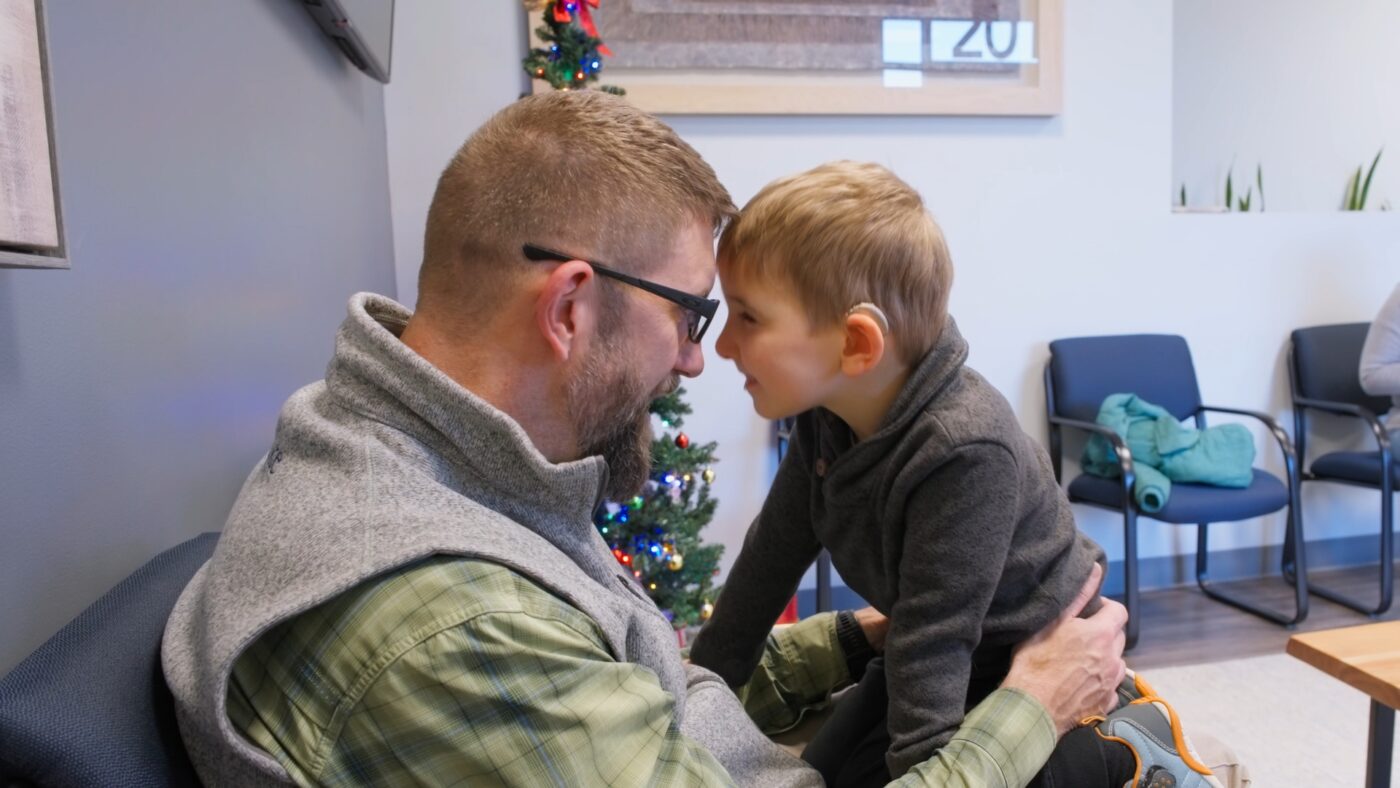
The hyperbaric oxygen therapy (HBOT) chamber looks like the inside of an airplane.
There are seats and overhead lights and a quiet hum of pressure building around you. You put on a hood that delivers oxygen directly, settle in for about an hour and a half, and let science do what science does.
Michael Merzke has been in that chamber around 80 times. His son Colin has been in it over 100.
They started together a few years ago, when Colin was around three years old. Colin has dystonic cerebral palsy and requires support even to sit upright, so he would sit on one of his parent’s laps for the duration. As the sessions accumulated, something started to shift. Colin began to move more, to wiggle, to push against the stillness that his body had always imposed on him. Whoever was holding him found that it had become its own kind of workout, just trying to keep up with a little boy who was suddenly, stubbornly, insistently in motion.
For a child whose diagnosis suggested his muscles would resist him, that restlessness was everything.
For Michael, sitting beside his son in that chamber, it turned out to be the beginning of something that changed them both.
A Career Built on Showing Up
Michael spent 25 years in the United States Army. Military police by trade, he spent more than half his career supporting special operations. He deployed multiple times, traveled across the globe, and retired in 2020 as a sergeant major, one of the highest enlisted ranks in the Army.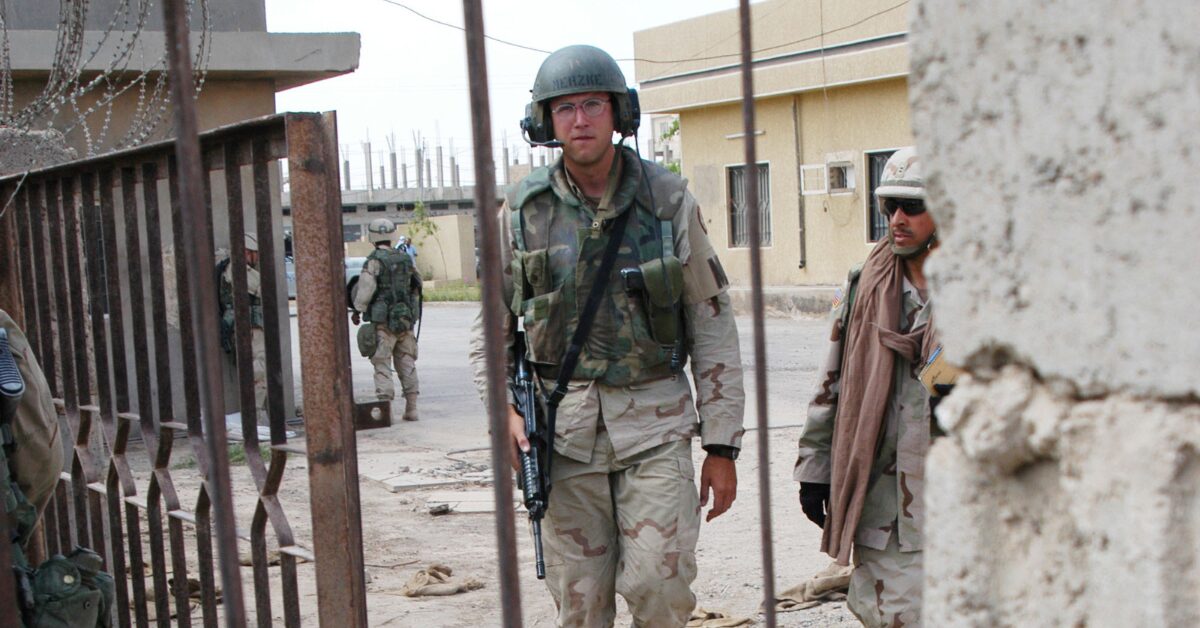
After retiring he earned an MBA at Duke’s Fuqua School of Business, worked in nonprofit veteran services, spent a couple of years at Dell Technologies, and eventually landed where he is now as director of strategic partnerships for Extivita, a company working to expand access to HBOT. He also volunteers with HBOT4Heroes, the nonprofit whose program changed things for him personally.
His service does not stop there. He sits on the board of Raleigh Veteran Connect, a locally focused professional networking organization built on veterans helping veterans. He volunteers with the VFW and the Wounded Warrior Project. He shows up for podcasts, legislative hearings, and grant applications. He is the June 2026 Veteran Town Hall guest for Mission Roll Call. He once emailed every Nebraska state legislator personally to share his story when that state was considering HBOT legislation.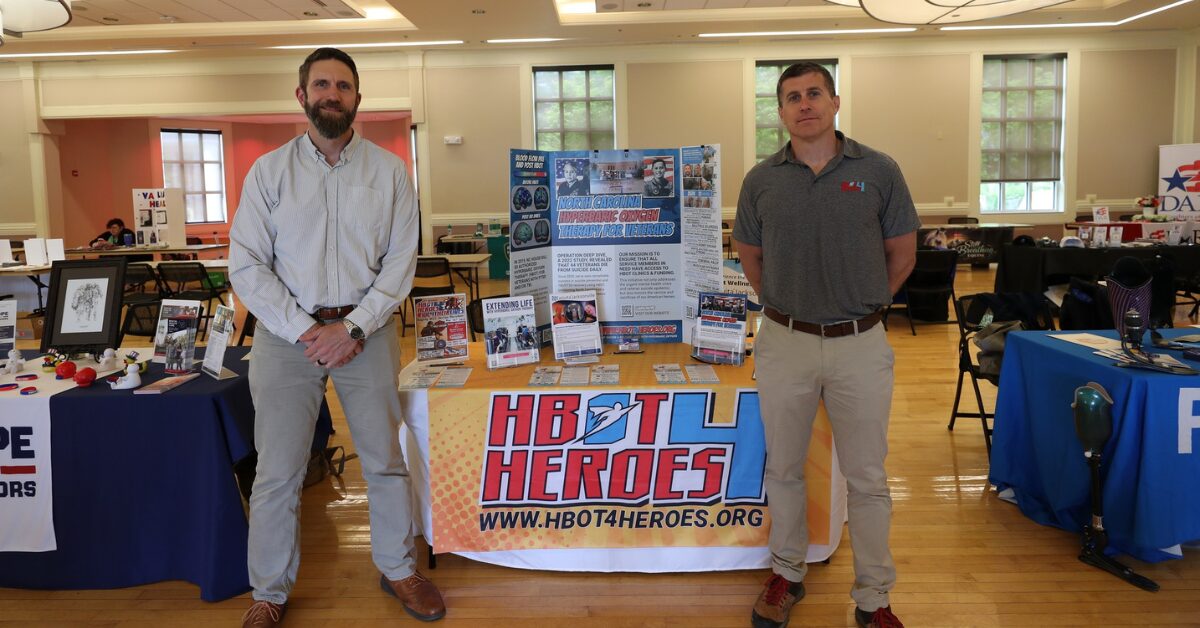
He is a man who has not stopped showing up for his mission. He just changed his address.
The Slip That Explained Twenty Years
In 2017, a physician assistant reviewing Michael’s medical records before his retirement made a phone call. Why, the PA wanted to know, had no one ever tested Michael for a traumatic brain injury (TBI) after he was caught in an IED blast in Iraq in 2003?
Michael did not have a good answer. In 2003, that question did not really get asked. A soldier survived a blast, someone confirmed he was functional, and the mission continued. What was happening inside his brain was nobody’s concern, at least not officially, and not yet.
The PA had found a sick call slip, small and bureaucratic and easy to miss. It read, in essence: service member involved in daisy-chained IED, possible concussive event, headaches, ringing in ears, Motrin, return to duty.
That was the entire record of an injury that would quietly shape the next two decades of Michael’s life.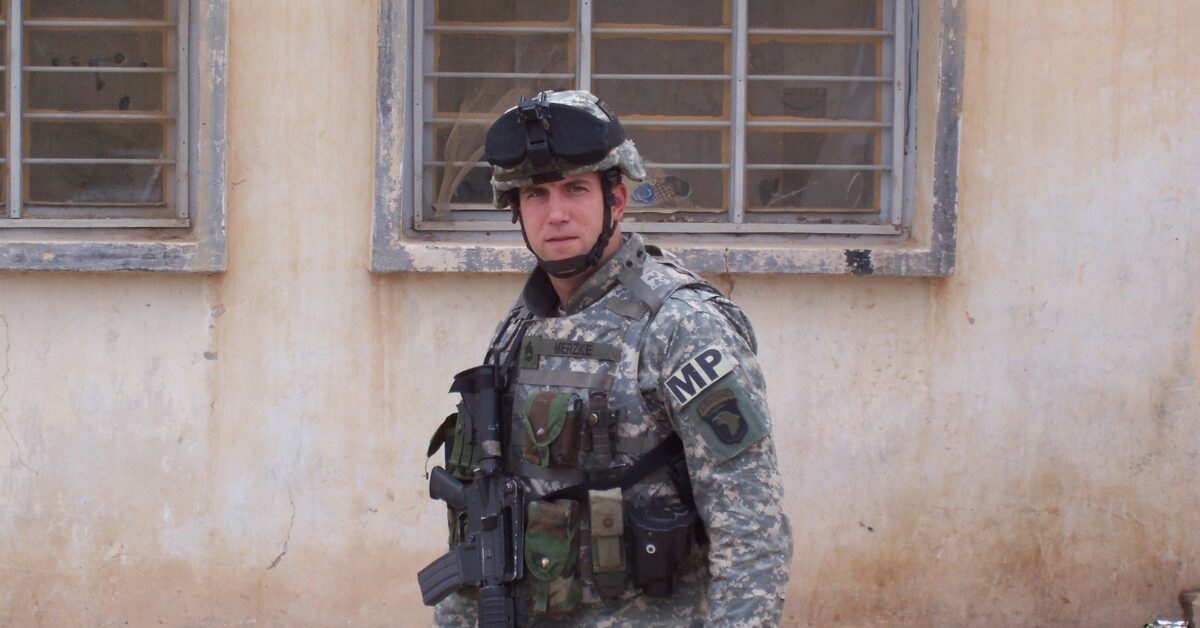
For more than 20 years he lived with migraines that would not quit. The medications and doctors changed, but the migraines did not. He began noticing changes in his memory and his ability to process information the way he once had. He had needed extended test time during his MBA at one of the country’s top business schools. He had once had a photographic memory, and somewhere in those 20 years, without ceremony or explanation, it was gone.
The Army eventually sent him to the VA Polytrauma Program in Tampa for six weeks of inpatient TBI evaluation. What he learned there changed how he understood his own story and led him to ask harder questions about what it would actually take to address his health rather than outrun it.
“I always felt like I could just outwork bad habits,” he said. “In my mind, I could lift a Buick and go run a marathon. But 40-year-old me was failing miserably.”
What Colin Started
Michael retired in March 2020. Colin was born that same month.
The birth did not go the way it should have. Colin was injured during delivery, and the injury caused dystonic cerebral palsy, which affects muscle tone and movement and requires ongoing support and therapy. Michael and his wife began researching every available option, and that search eventually led them to HBOT and to HBOT4Heroes.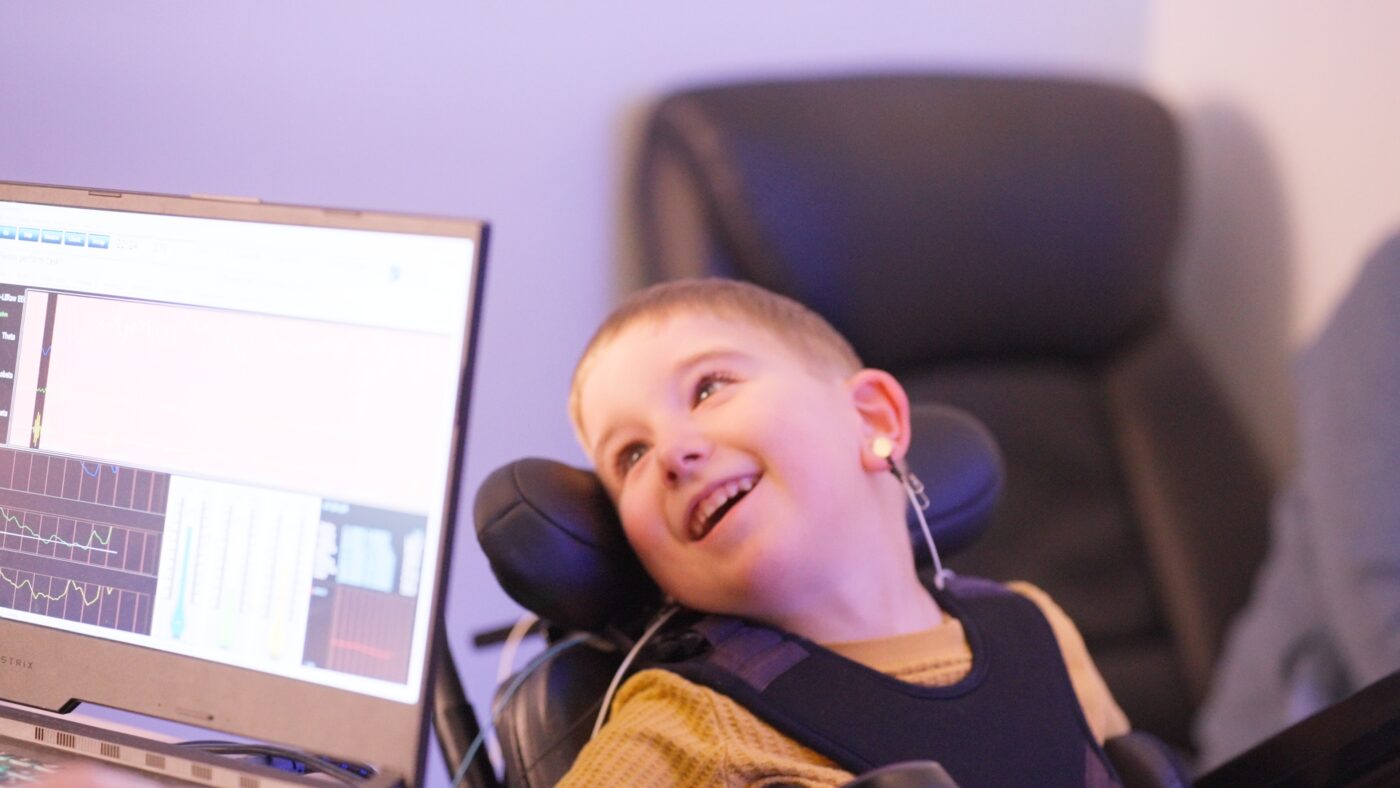
Michael signed himself and his son up at the same time. They would go through it together.
“We both saw huge improvements in our health,” he said simply.
What the Oxygen Did
Within the first 10 or so treatments, Michael’s migraines began to ease. By around treatment 20, they stopped and he has not had one since. His memory and executive functioning improved as well. He is careful to say he is not fully back to where he was before the injuries, but the decline he experienced over 20 years has meaningfully reversed. He also used HBOT last year to treat a back injury from deadlifting at age 48.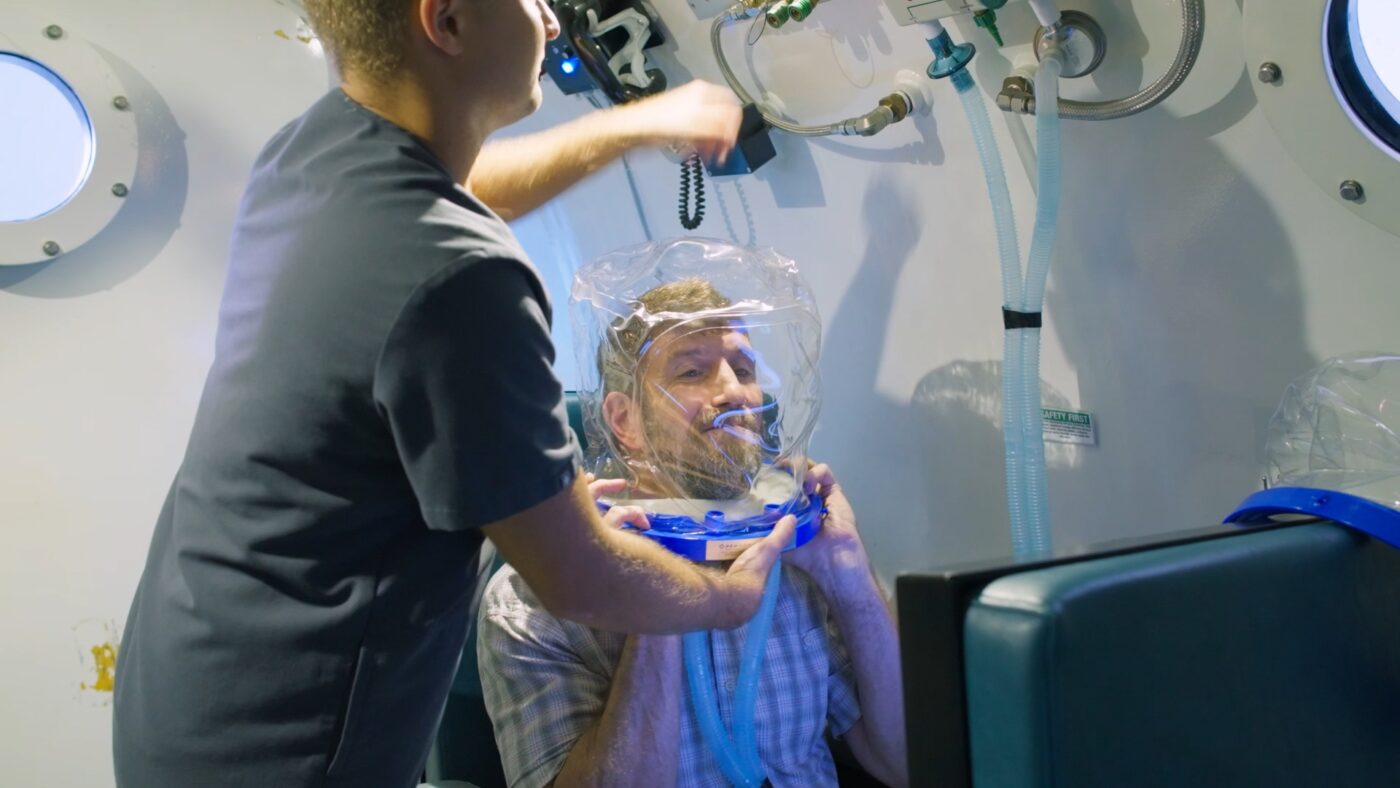
“I have never healed so fast from a pulled muscle,” he said. “I never healed that fast when I was in my twenties.”
He is clear that HBOT was not the only piece. Cleaning up his diet, cutting out sugar, and addressing the lifestyle habits he had spent decades outrunning all mattered too.
“If you are doing something that reduces inflammation and at the same time doing things that increase inflammation,” he said, “the math does not work in your favor.”
The Science Behind It
Think of it this way. Your blood is a liquid. Oxygen is a gas. Under pressure, that gas infuses deeper into the blood than it normally can, reaching cellular systems that standard breathing cannot touch. The result is that the body starts doing things it had stopped doing or never knew it could. New blood vessels and brain cells. Reduced inflammation. Activated stem cells.
“It is working at healing the brain,” he said. “Not just managing the symptoms.”
Michael describes HBOT as the world’s greatest anti-inflammatory. When you consider how many conditions veterans carry home, from post-traumatic stress disorder (PTSD) to TBI to chronic pain, are rooted in inflammation, that is not a small claim. It is just one the system has been slow to take seriously.
The Gap Between What Is Possible and What Is Happening
Here is the part that keeps Michael up at night.
The Department of Veterans Affairs, the Food and Drug Administration, and the Centers for Medicare & Medicaid Services say the evidence for HBOT treating PTSD and TBI is inconclusive. Michael disagrees and so does the data. HBOT4Heroes has documented a 58% reduction in suicidal ideation among the veterans it has treated. Israel is actively treating hundreds of patients daily with HBOT. Clinical trials in Louisiana have shown meaningful improvements. The science is moving ahead. The institutions have yet to follow.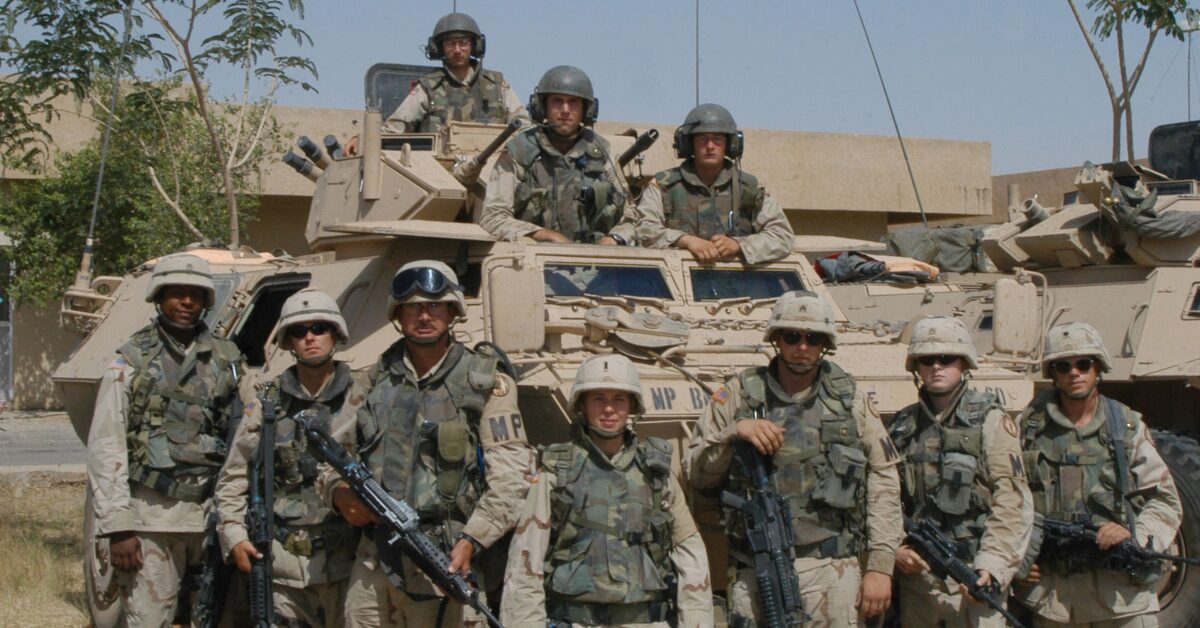
Right now more than 100 veterans are on the wait list for HBOT4Heroes, waiting for funding that is not there. Michael is working every lever available, state and federal legislation, grant applications, partnerships with organizations like the EOD Warrior Foundation, and direct outreach to the Department of Defense. The long-term solution he is pushing toward is CMS approval of HBOT as an indicated treatment for PTSD, TBI, and cerebral palsy. If that happens, private insurance follows. Then TRICARE. Then the VA. The funding barrier disappears.
The Bigger Argument
Research from American Warrior Partnership and Duke University suggests as many as 44 veterans a day are dying by suicide, a number the VA’s own reporting does not fully capture. More Vietnam veterans have died by suicide since coming home than were killed in combat during the war itself.
Most suicide prevention programming addresses the psychological dimensions of the crisis without touching the underlying physical damage that trauma does to the brain. That gap, Michael believes, is where HBOT has the most to offer and where the system is failing most quietly.
He also pushed back on something the data does not capture as easily. The way the culture sometimes frames veterans as broken, as victims of their service, removes agency rather than building resilience.
“We are not victims,” he said. “There is work to be done.”
What He Would Tell You
Michael is not someone who wraps things up neatly. He is still in it, still going back to the chamber, still showing up for Colin and for the 100 veterans on the wait list and for the ones who do not yet know the wait list exists.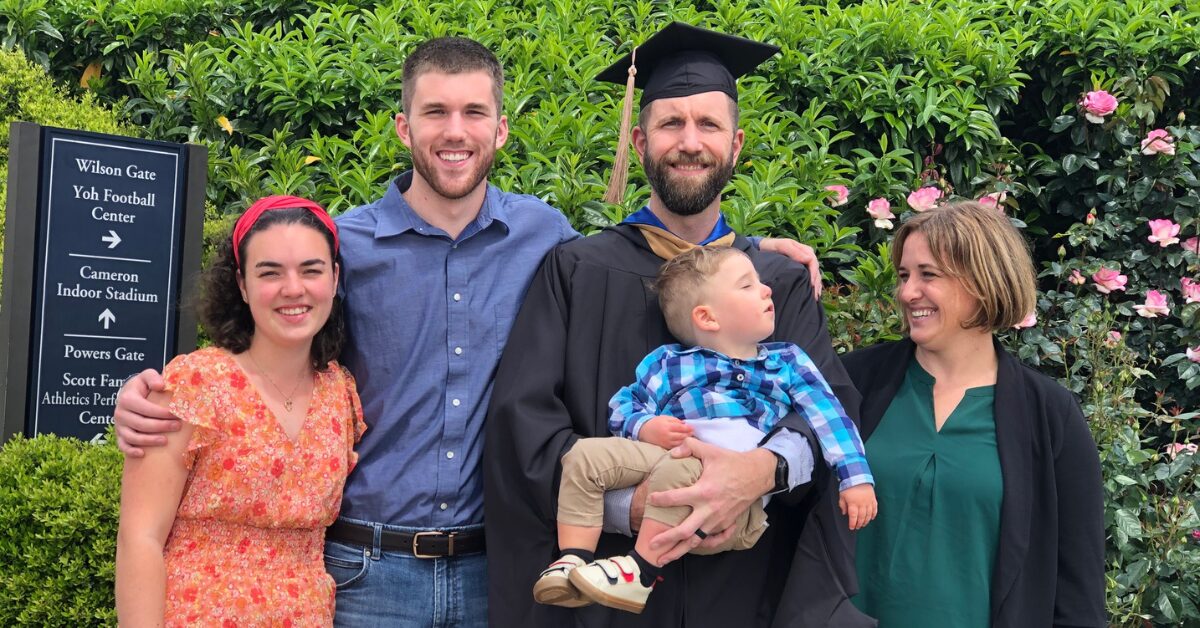
“Just because we’ve taken off the uniform doesn’t mean our time of service has come to an end,” he said. “There’s work to be done.”
He means that for veterans and for everyone else.
Michael will continue to go back to the HBOT chamber for himself and for Colin, and somewhere in the space between those two reasons lives everything that has driven him since the day he took off the uniform. He will continue to hold on, show up, and make the case for the veterans sitting on wait lists and the families trying every option available to them and the service members who deserve better than Motrin and return to duty.
There is still work to be done. For Michael Merzke, there has never needed to be a more compelling reason than that.
To learn more about HBOT4Heroes or to support their mission of providing hyperbaric oxygen therapy to veterans at no cost, visit hbot4heroes.org.
Mission Roll Call’s Veteran Resource Directory is a free, searchable database of organizations supporting veterans across the country. Visit missionrollcall.org to learn more.
If you or someone you know is struggling, the Veterans Crisis Line is available 24 hours a day, 7 days a week. Call 988 and press 1, text 838255, or chat online at veteranscrisisline.net.