What My Therapist Wished I’d Known Before I Left the Service Part One: The Handoff
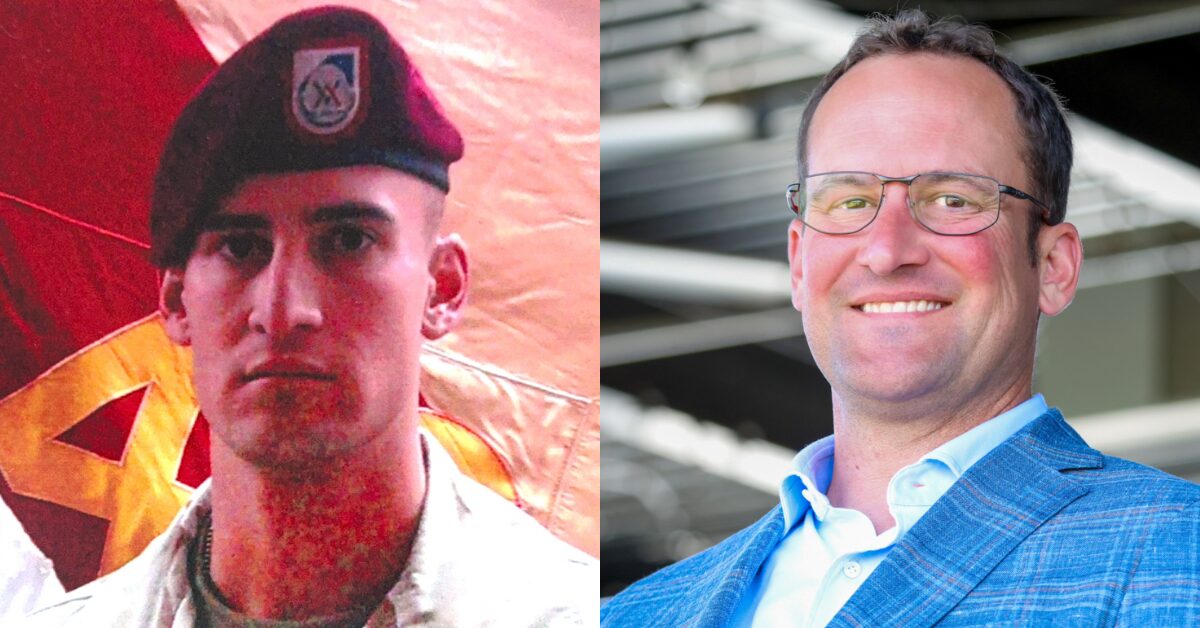
Shawn Batien Gave 25 Years to the Army. Now He Is Learning What It Means to Give to Himself.
Shawn Batien had been watching his retirement come for two years.
He dropped the paperwork early. He started working with a therapist about a year out. He researched, networked, made promises to himself about what the next chapter would and would not look like. He was not the kind of person who let things sneak up on him. Twenty-five years in the Army, most of them in the Special Operations community, had made sure of that.

And still, when the man at the finance window in the Soldier Support Center looked up and said, “all right, you’re done,” something shifted that no amount of preparation had fully reached.
“Even though I had the warnings,” Shawn said, “I really didn’t know what to do with my hands. A quarter of a century of my life had been identified with the military, and the reality didn’t set in until that moment.” He paused when he said it, the way people pause when they are saying something true for the first time out loud.
That was just a few weeks ago.
A Career That Never Left Home
Shawn grew up to be the kind of person the Army was built for. Steady. Thoughtful. The kind of leader who paid attention to the people around him and kept showing up regardless of the circumstances. He joined the Army on January 10, 2001, after a brief delay for knee surgery that pushed back a timeline he had already set for himself. He went through basic training at Fort Jackson, occupational school at Fort Lee, and Airborne School at Fort Benning. He arrived at Fort Bragg in August of 2001, just weeks before the world changed, and he never left.

For 25 years, Shawn served on the same installation. He deployed, led, grew, lost people he loved, and kept going, the way soldiers do. He accumulated 72 months of combat deployments. He earned a Master of Science in Strategic Leadership. He rose to Sergeant Major, one of the highest enlisted ranks in the Army, and spent the better part of two decades embedded in the Special Operations community, where the tempo of the work is relentless and the bonds between people are some of the strongest that exist anywhere.
He retired on March 31, 2026. And then, for the first time since he was 18 years old, his days belonged entirely to him.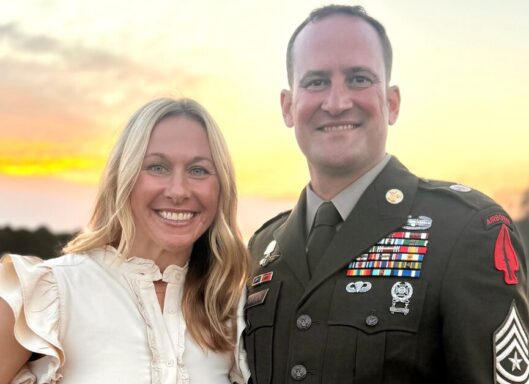
What He Knew, and What He Did Not
Shawn will be the first to tell you he was more prepared than most. He identified two things early on as non-negotiable for a healthy transition: taking care of his medical needs and taking care of what he calls his existential purpose. Both required attention. Both required honesty.
The medical side had surprises even for someone who had done his homework. The VA disability rating takes time to arrive. The VA paycheck does not start for two months after separation. Costs that had been covered by the military, things as small as vehicle taxes in North Carolina, were about to become his responsibility. None of it was insurmountable, but together it added up to a weight that caught him slightly off guard.
“As long as people are honest and give you some expectation management,” he said, “it’s manageable. But it can be overwhelming at times, because then you remember, oh man, I really am retired.”
The purpose piece he had worked on more deliberately, and with more personal history behind it. He watched his father, a CW5 who served 35 years in the Army, struggle after retirement because he never fully separated his identity from the uniform. His father went straight from the Army into a government civilian role and carried the weight of 35 years of military identity into a world that did not hold it the same way. Shawn made a decision early that he would not do the same. He set a firm boundary: no government civilian position, no contractor work. He wanted distance from the identity he had built, not because he was ashamed of it, but because he knew that building something new required real space to do it.
“I wanted to create a new identity for myself,” he said. “Outside of the United States Army. Really outside of the government entirely.”
Through a connection made during his transition, he found a leadership role with a nonprofit in its early stages. Small team. Meaningful mission. An organization focused on helping veterans. It keeps him intellectually engaged and creatively challenged without the weight of commanding hundreds of people that he had already carried for years.
The Grief That Found Him Anyway
Shawn described his transition as more relief than grief, and he meant it. But grief found him anyway. It just wore a different face than he expected.
At his retirement party, surrounded by people who love him and had come to celebrate everything he had built, there were a few moments where it all went quiet inside. He thought about the guys who were not there. “I can’t reach out and text them,” he said, simply. “They weren’t at my retirement party.” Friends he had served alongside, men who had seen the same things he had seen, who had died by suicide before they ever got the chance to retire.

He had talked through those losses in therapy over the years. But the reality of them, the permanence, settled differently at a retirement party than it had anywhere else. Some things you have to feel in the right moment to really feel them. He carried that with him quietly, the way he has learned to carry most things.
Army Shawn and Civilian Shawn
Ask Shawn who he is today, two weeks into a life without a rank or a unit or a mission handed down from above, and he will think about it before he answers.
“I’m Civilian Shawn,” he said. “Working with a nonprofit trying to help veterans. A guy who can leave more than 250 miles without telling anybody. A guy whose phone doesn’t ring off the hook with things that require critical decisions.”
He described it as a baton handoff. Army Shawn, steady and deliberate as ever, is slowly releasing the baton to Civilian Shawn who has both hands on it now. There is still some anxiety in that transfer. There is still some ambiguity in stepping into a world that does not have the same safety net the military quietly provides, but the trust is there.
“My military experience will always be part of who I am,” he said. “From 18 to 43, there are a lot of formative years in there. But I think I’m in a place where I’ve accepted closure on that chapter. And I’ve heard it kicks back around again, maybe once or twice, where you ask yourself, did I do enough? Did I make the right decisions?” He smiled a little. “I’ll anticipate those moments. And hopefully get through them.”
What He Would Tell You
Shawn Batien has spent years mentoring the soldiers and NCOs around him. Teaching them how to take care of the people in their charge, how to lead with intention, how to show up even when it is hard. Now he is on the other side of that, paying it forward to veterans navigating transition, answering the questions he once asked of others.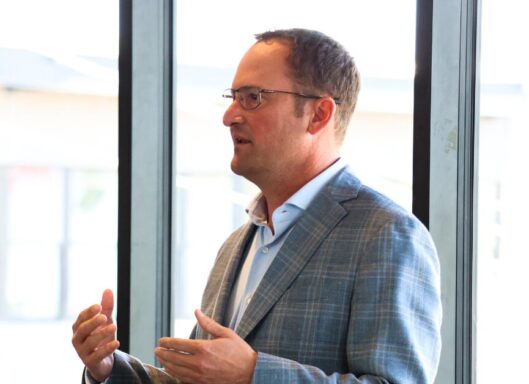
If there is one thing he wants a service member to carry from his story, it is this.
“Take care of the future version of yourself,” he said. “Because nobody else can except yourself. Whether you did four years or twenty-five, seek help if you need it. Ask if you don’t know. Find the resources before you need them.” He thought for a moment before adding the part that matters most to him. “Regardless of the status that you got out of the military, there is a future. Take care of it.”
Mission Roll Call’s Veteran Resource Directory is a free, searchable database of nonprofit organizations and veteran service organizations ready to provide support during and after military transition. Visit missionrollcall.org to find resources near you.
If you or someone you know is struggling, the Veterans Crisis Line is available 24 hours a day, 7 days a week. Call 988 and press 1, text 838255, or chat online at veteranscrisisline.net.