“Caregivers are hidden heroes.” Each November, during Warrior Care Month and National Family Caregivers Month, that truth comes into sharper focus. Millions of Americans quietly provide care for veterans and their family members each day. Their work sustains quality of life, preserves family stability, and equates to billions of dollars’ worth of unpaid labor each year. Their efforts are indispensable, yet too often invisible.
This year, there is something new to recognize alongside their sacrifices. In January 2025, after years of relentless advocacy from veterans’ organizations and families, the Senator Elizabeth Dole 21st Century Veterans Healthcare and Benefits Improvement Act – better known as the Dole Act – was signed into law. For caregivers, it represents a turning point, expanding access to resources, reducing barriers, and strengthening the systems designed to support them.
To understand why this milestone matters, and where caregivers stand today, we must look at the scale of veteran caregiving, the hurdles caregivers face, how support systems have evolved over the last decade, and what work is still needed for the future.
The Scale of Caregiving
A 2024 RAND study found that 14.3 million Americans – about 5.5% of adults – serve as military or veteran caregivers. Most provide between one and thirty hours of care per week, while 11 to 16% provide more than thirty. This labor is unpaid but has an estimated annual value between $119 and $485 billion.
The costs to caregivers themselves are significant. Families spend an average of $8,583 out of pocket each year and lose another $4,522 in household income. Among caregivers to veterans aged 60 and under, 61% assist with at least one activity of daily living (ADL), such as bathing, dressing, or feeding. Additionally, 40% of these caregivers help manage mental health conditions or substance use disorders.
But caregiving in military families goes beyond supporting former service members. Oftentimes, parents in active duty households are taking care of a child or family member with acute needs without the ability to pay for support or receive compensation for their labor. Approximately half of military spouses report having at least one child with a physical, developmental, emotional, or behavioral condition. Many of these caregivers are providing intensive support while also managing the day-to-day needs of other family members, with 44% caring for more than one dependent at the same time.
The toll on caregivers themselves is significant. Balancing the needs of children with special requirements alongside the demands of military life can lead to heightened stress, sleep disruption, and mental health challenges. Caregivers in military families tend to be younger and more likely to be female and married compared with caregivers in the general population, yet they navigate complex responsibilities without the financial support or resources often available to other families. Their contributions are vital to the well-being of the service member and family alike, yet they remain an often invisible pillar of the military community.
Behind these statistics are parents, spouses, children, and friends whose contributions are both irreplaceable and exhausting. Forty-two percent of caregivers for younger veterans meet the criteria for depression, and one in five has considered suicide, a rate four times higher than the general population. The picture is clear: caregiving is profoundly meaningful, but it comes at a steep cost.
The Burden Caregivers Carry
The challenges of caregiving go beyond medical support. Many families find themselves giving up jobs, withdrawing from social circles, or shouldering overwhelming financial stress. They face bureaucratic complexity as they try to access programs, and they struggle with the uncertainty of whether they even qualify for benefits.
These struggles are particularly stark for military families with children who have complex medical needs. In just one example, Mission Roll Call highlighted the Carrigg family on our blog last year. Military family Austin and Joshua Carrigg adopted their daughter Melanie knowing that she would need extra care. But they could not predict the additional diagnoses, medical crises, and surgeries that would follow. Over the years, Melanie’s conditions – including moyamoya disease and the effects of a catastrophic stroke – required her family to navigate countless appointments, relocations, and hospital stays.
Like so many caregivers, Austin found herself advocating for resources across multiple systems while managing the demands of military life. Her older son even stepped into the role of youth caregiver, putting his own life on hold to help.
The Carriggs’ journey reflects what millions of veteran and military caregivers know well: caregiving is often a lifelong role, shaped by love, tested by stress and sustained by resilience.
Building a System of Support
Over the past 15 years, caregiver policy has slowly evolved. The Caregivers and Veterans Omnibus Health Services Act of 2010 expanded the VA’s Caregiver Support Program, including a support line, website and two key initiatives: the Program of General Caregiver Support Services (PGCSS), which provides education and resources for caregivers of veterans from all eras; and the Program of Comprehensive Assistance for Family Caregivers (PCAFC), which provides stipends, health coverage, counseling, respite care and training to veterans, though it was initially limited to post-9/11 veterans with severe injuries.
The need was far greater than expected. By 2020, more than 40,000 caregivers were enrolled in PCAFC, five times the original projection. To address this demand, the VA Mission Act of 2018 expanded PCAFC eligibility to earlier generations. Still, implementation challenges remained: inconsistent access, confusing rules, and limitations on home- and community-based services.
Meanwhile, the Veteran-Directed Care (VDC) program—launched in 2008—allowed veterans to design their own care plans, such as hiring family or non-family caregivers, purchasing assistive technology, or funding home modifications. This veteran-led approach gave them discretion over what best supports their road to recovery and greater independence, but access was uneven across the country.
These programs laid the groundwork, but gaps persisted. The Dole Act was designed to close them.
What the Dole Act Changes
Signed in January 2025, the Dole Act strengthens caregiver support in several important ways:
- Expansion of Veteran-Directed Care: Requires every VA medical center in the U.S. and its territories to offer VDC, ensuring consistent nationwide access.
- Full coverage of home nursing care: Raises the VA’s share of home nursing costs from 65% to 100%, making non-institutional care a more viable alternative to nursing homes.
- Respite care for resident caregivers: Guarantees at least 30 days of covered respite care annually, with extensions allowed if medically necessary.
- Mental Health counseling grants: Funds providers who offer counseling services to caregivers enrolled in PCAFC.
- Streamlined application processes: Simplifies how caregivers apply, access benefits and transition between programs.
- Expanded training and resources: Extends training, financial aid and mental health services to caregivers not covered under PCAFC.
- Pilot programs in underserved communities: Funds the hiring of nursing assistants to deliver in-home care.
In addition, the Act mandates clearer eligibility criteria, requires annual Congressional reporting on application approvals and denials, and directs improved coordination of services when caregivers are denied or discharged.
While it does not establish direct salaries for caregivers like PCAFC, the Dole Act improves access, reduces bureaucratic barriers and strengthens both financial and mental health support. Its overarching mission is to expand eligibility and make existing services more accessible.
Why It Matters
The value of caregiving is both moral and fiscal. On average, PCAFC costs about $18,300 per veteran annually. Compare that to more than $56,000 in state veterans’ homes, over $100,000 in community nursing homes, and nearly $380,000 in VA community living centers. Supporting care at home saves the nation billions while delivering what veterans themselves say they want most: the dignity of living with family.
But the numbers only tell part of the story. Caregivers sustain the health and stability of veterans, preserve family bonds, and strengthen entire communities. Their voices – supported by the advocacy of organizations like the Elizabeth Dole Foundation, Exceptional Families of the Military, and Mission Roll Call – drive the policies we see today.
Looking Ahead
The Dole Act is a meaningful step, but caregivers and veterans alike have said the work must continue. According to an August 2025 poll by Mission Roll Call, our veterans believe caregivers still need support, most notably in three key areas: training and resources specific to caregiving, financial compensation, and mental and emotional wellness support. Whether these responses are due to a lack of awareness to recent benefits, lack of access or simply point to a need for even greater expansions, it’s clear that our work is far from finished.
Caregivers are America’s hidden heroes. They hold families together, sustain veterans’ quality of life, and save the nation billions. Their work is irreplaceable, and the systems designed to support them must reflect that truth.
Recognition months remind us to honor our caregivers. But truly showing our appreciation for these caregivers means more than giving thanks – it means taking action. It means listening to their voices, advocating for the policies that sustain them, and ensuring resources remain accessible for every generation of veterans and families. By doing so, we honor not only the caregivers themselves, but also the veterans whose lives they transform every day.
For caregivers in need of support:
- Call the Caregiver Support Line: (1-855-260-3274) or check out MRC’s own Resource Directory.
- Do you have your own veteran caregiver story to share? Tell us here.
Intro:
“We will never forget.” That pledge is more than just a promise to honor the lives lost on September 11, 2001; it is also a commitment to the millions of Americans whose lives were forever changed in its wake. Nearly twenty-five years later, the effects of that day still resonate with the young men and women who enlisted, in the health and well-being of an entire generation of veterans, and in the legislation their advocacy has shaped. To fully grasp 9/11’s legacy, we must look beyond the tragedy itself to the lasting ways it has transformed our military, our veterans, and our nation.
Recruitment and retention
In the year after September 11th, 2001, the U.S. military saw a historic surge in enlistment: nearly 255,000 Americans joined the active and reserve forces. Active-duty enlistment alone hit 181,510 in 2002—a level unmatched in the decades since, about 15% higher than the average between 2003-2022 and about 40% higher than enlistment in 2022 alone. Reserve enlistment also spiked dramatically, jumping 30% from just three years earlier. These strong enlistment numbers reflect a powerful wave of patriotism, driven by the loss of nearly 3,000 people in the deadliest terrorist attack in American history. While reserve numbers would later peak again during the Iraq war in 2008, no year since has approached that post-9/11 active-duty enlistment level.
History shows that it is often devastating tragedies that inspire Americans to serve, yet it is just as important to recognize the enduring impact of that instinctive call to protect our nation, its people and its freedoms. Nearly twenty-five years later, the post-9/11 generation of service members—now transitioning into civilian life as veterans—carries with them lessons of patriotism, sacrifice and unity. Those lessons will continue to shape our country’s future and honor their legacy not just today, but every day.

Health and healthcare
The post-9/11 generation also reshaped the profile of veteran healthcare. Between 2001 and 2014, enrollment in VA healthcare nearly doubled, increasing from approximately 20% to 42% of all veterans—even as the overall veteran population declined by nearly 17%. Today, roughly 41% of post-9/11 veterans—about 1.7 million men and women—live with a VA-rated disability, compared to 25% of earlier generations, a higher proportion than any other previous generation. The post-9/11 cohort includes those who served in Iraq, Afghanistan, and other conflict zones, where modern advancements in battlefield medicine and more regular screenings for invisible wounds like traumatic brain injury (TBI) and post-traumatic (PTS) have allowed more service members to survive combat but also left many facing long-term challenges, driving higher reports of disability. Veterans with service-connected disabilities also experience unemployment at a rate about 1.5 times higher than their peers without disabilities (5.2% versus 3.5%).
While these figures highlight the distinctive challenges of the post-9/11 generation, they also remind us that all veterans live with the lasting physical and psychological consequences of military service. They underscore the need to provide consistent and comprehensive support to every veteran—each of whom answered the call to serve and protect our country at different points in history—by ensuring reliable access to the resources they need.
Legislative Impact
The needs of post-9/11 veterans have driven major reforms in veterans’ policy, none more consequential than the VA Mission Act of 2018. Although it was enacted to enhance healthcare services for all veterans across generations, many of its key provisions were influenced by the unique challenges faced by the post-9/11 cohort. For example, the Program of Comprehensive Assistance for Family Caregivers (PCAFC), initially created in 2010 to support caregivers of severely injured post-9/11 veterans, was expanded under the MISSION Act to include veterans from all service periods. The law also established the Veterans Community Care Program (VCCP), giving veterans the ability to receive care from community providers when VA facilities are too far or too delayed to meet their needs. These reforms were especially relevant to post-9/11 veterans, who have relied on VA care at higher rates and often needed specialized treatment.
The MISSION Act also expanded telehealth services and urgent care options for veterans. The law granted the VA broader flexibility to provide telehealth services across state lines and directly into veterans’ homes, a necessary change for those living with PTS, TBI, or other service-related disabilities that make in-person visits difficult. It also explicitly directed the VA to deploy mobile health teams to underserved areas, which are often confronted with geographic challenges that have historically limited access to timely treatment. In addition, the Act created a new urgent care benefit, allowing veterans to walk into community clinics for non-emergency needs without first securing a VA referral. For many post-9/11 veterans and veterans from other generations, these reforms aim to address longstanding barriers by making care faster, more flexible, and closer to home to promptly address their medical issues and mental health needs.
Conclusion:
More than two decades after September 11th, the impact of that day continues to ripple through our nation, giving rise to a new generation of veterans we honor today. Keeping our nation’s promise to “never forget” requires more than just remembrance—it demands recognizing the men and women who stepped forward to serve, understanding the challenges they now face and learning how their advocacy has shaped the support veterans receive today. It means telling their stories, championing veteran-focused legislation and ensuring resources remain accessible for every generation of service members. By doing so, we uphold the promise to never forget while honoring the enduring legacy of a generation defined by both tragedy and service.
Introduction
Nearly 200,000 service members leave the military every year. That equates to about 2 million veterans experiencing this major life transition every decade. However, data shows that only 5% of veterans fully retire when they leave the military, meaning that a vast majority of transitioning veterans are looking to build fulfilling civilian careers.
Finding meaningful employment is a challenge for anyone, but it can prove especially difficult for veterans who are unfamiliar with the civilian workforce, and unsure how their military skills translate to other sectors. According to a recent Mission Roll Call poll, when asked if they found it difficult to acclimate to civilian life, 46% of respondents answered “yes.” In spite of resources available, a further 81% indicated that they had never received transition assistance such as mentorship, financial assistance, or job placement from a local business, nonprofit, or community provider. Additionally, in a study done by Syracuse University, nearly half of veterans said they felt the military transition assistance program did not prepare them well for leaving military service.
It’s clear that both awareness and utilization of potential transitional resources are much lower than they should be. Whether preparing for, in the midst of, or in the months and years following transition from active duty military to civilian life, it’s essential to our mission that service members and their families are able to leverage vital resources to improve their transition experience.
The Numbers Don’t Lie
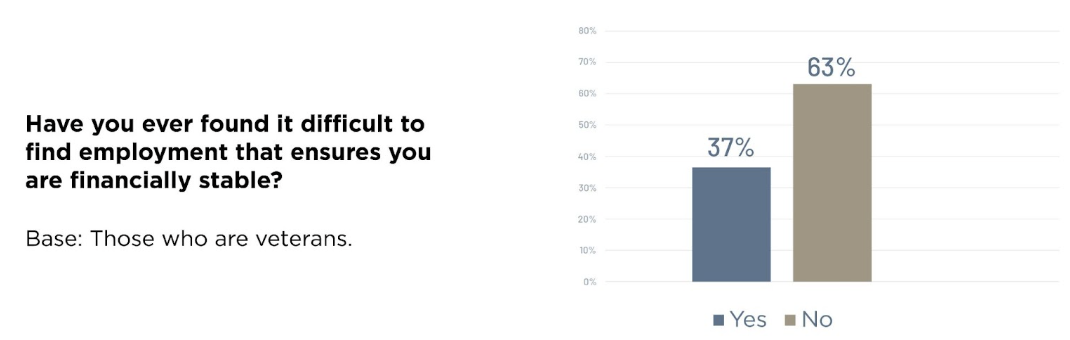
The most recent research on veteran professional development discovered that only 25% of veterans walked straight into a civilian job upon their military retirement, while 48% began the job search immediately upon leaving the military. Though 57% of veterans said they had a job in less than 6 months and only 16% reported it taking more than a year to find a job, veterans polled by Mission Roll Call reported over a third still found it difficult to attain substantial employment. A similar number said that “finding suitable employment” was the biggest challenge of military transition.
 Not having substantial savings upon leaving the military, which is the case for some, can exacerbate the issue of employment, causing veterans to take jobs that don’t suit their skills or needs. Because of this, roughly 80% of veterans leave their first post-military job within two years. If these transitioning members started the search earlier and leveraged available resources designed to support career success, they may be more likely to find meaningful, financially adequate, and satisfactory work.
It’s Never Too Late
Transitioning careers is complicated at the best of times, and it can take months to years to fully adjust. This is especially true of transitioning service members, who are not merely moving from one corporate job to another, but are also often changing geographies and losing some of the structure, stability and purpose that the military provides.
Service members need to give themselves grace as they navigate this time in their lives, but they also need to know they don’t have to do it alone. Whether a service member is just starting to consider leaving the service, or a veteran is well into their civilian life, it’s never too late to utilize the employment and transition resources available.
Resources That Can Help
From financial literacy classes to skills certifications, educational opportunities, and resume writing and job search support, any number of these resources can be helpful to veterans no matter what stage of the transition process they’re in. More than just finding job listings, community and public resources provide tangible help for veterans looking to build financial stability through a meaningful, impactful civilian career.
One of the first hurdles that veterans face when trying to get help is knowing where to look. The VA is the go-to resource for many veterans, for good reason. The VA houses services such as the Veteran and Military Transition Center, which offers information on continuing education, civilian employment and job opportunities, help navigating benefits and assistance. Programs like the Veteran Readiness and Employment (VR&E) program also provide targeted career support, helping veterans prepare for, find, and maintain meaningful employment. The VA also offers a Veterans Employment Toolkit, a one-stop page where veterans can be linked to other resources like resume and application help and upcoming career fairs. The federal government offers additional help apart from the VA as well, such as the DoD’s Office of Financial Readiness. This program offers financial tips and education specifically geared towards service members and veterans.
For the 47% of veterans who enrolled in school either part or full time after leaving the military, their new college or university can also be a valuable resource. Many higher education institutions have career centers aimed at helping students find gainful employment, and they host events such as career fairs, resume workshops, and more. Continuing education as a veteran might also look like through programs such as Skillbridge, a DOD program that offers internship, apprenticeship, and employment training opportunities.
Employment and transition resources can be found in the private sector as well as the public.
Companies such as Anheuser Busch and others market themselves to career-seeking veterans, often providing developmental training, certifications, and additional resources. Nonprofit organizations and community groups like the Honor Foundation, Hire Heroes USA, Vets in Tech, Bunker Labs, and Gallant Few also serve the veteran transition experience, alongside a broader network of organizations dedicated to supporting career transition for veterans. Some, like Gallant Few, offer individual transition support, while others like Hire Heroes USA are specifically veteran employment nonprofits. Many civilian companies and nonprofits highly value the unique skills that veterans have to offer, and they will often work alongside veterans to bridge the employment gap if it means gaining these highly motivated, hardworking individuals in the workplace.
Conclusion
Transitioning into the civilian workforce can be challenging, especially when veterans are navigating housing, mental health and other difficult issues. It can be confusing knowing how to apply military skills in different employment sectors – but veterans can take comfort in the fact that many of their comrades have gone through the same challenges, and there are organizations, programs and resources designed to help. That is why spreading awareness of the different transition and employment resources available is vital for promoting veteran success. Just like there is more than one pathway to success, there is more than one avenue to assistance for those needing help.
Informing those still serving about these resources gives them the opportunity to navigate their transition with a wealth of useful knowledge at their command, ultimately bringing greater ease to their military transition experience. And for those who have already left the service, it’s never too late to utilize these resources to build a civilian career. A well-informed transition creates stronger outcomes for veterans, their families, and the communities they go on to serve, proving once more that we’re stronger together.
At Mission Roll Call, we’ll keep working to make sure every veteran knows about — and can access — the resources they’ve earned.
Introduction
For many veterans, returning to civilian life comes with significant challenges, especially when trying to understand and access Veterans Affairs healthcare and benefits. According to a Military Family Advisory Network report and a Blue Star Families Military Lifestyle survey, veterans consistently rank navigating the military and VA healthcare systems as a top concern during the transition process.
Yet, despite the available resources, nearly 50% of veterans in the U.S. are not enrolled in VA healthcare. Rural Indigenous veterans, in particular, face greater barriers to treatment and often have the most trouble accessing VA healthcare due to a lack of facility access or extended wait times. However, general unawareness and common misconceptions exacerbate these issues, creating prominent barriers to care that prevent eligible veterans from attaining affordable, quality treatment.
To address this gap in enrollment, the VA continues to expand its policies through initiatives like the Senator Elizabeth Dole 21st Century Veterans Health Care and Benefits Improvement Act, which simplifies the application process and expands benefits for veterans and their families. The VA also recently removed a key barrier to care by eliminating the requirement for a VA doctor to review referrals to private care. These changes speed up access to community care and make it easier for veterans and their family members to apply for services online.
Veterans and their families need to know the benefits of enrolling in VA healthcare so that they can make informed decisions about what is best for their health.
Common misconceptions
Misconceptions and myths often steer veterans away from seeking the care they’ve earned. For instance, a common misconception is that only veterans who were injured in service or have service-connected disabilities are eligible for VA healthcare. In reality, most veterans who served in the military and were honorably discharged, even if they weren’t in combat, qualify for VA care. Another misconception is that already having insurance disqualifies veterans from enrolling in VA healthcare. But co-managed care is common, and community and VA providers work together to support veterans’ well-being.
Many veterans also think that they can’t enroll online, with VA research consistently highlighting gaps in awareness about eligibility and the enrollment process. Fortunately, enrolling in VA healthcare is now as easy as going online, clicking on VA.gov, and filling out the VA’s online application.
The benefits of enrolling in VA healthcare
Enrolling in VA healthcare offers numerous advantages for veterans, and access to more than 1,700 VA medical facilities. Unlike most insurance companies, veterans can apply for enrollment at any time, as VA healthcare doesn’t have an open enrollment or waiting period for coverage. Veterans also have the freedom to use other plans with their VA healthcare, including Medicare, Medicaid, or private insurance.
Here are the top five reasons to consider enrollment:
-
Comprehensive Health Coverage Tailored for Veterans
VA healthcare offers an extensive array of services specifically designed to meet the unique needs of veterans. These services aim to treat illnesses and injuries, prevent future health problems, improve functionality, and enhance quality of life.
Services include:
- Primary care: Routine checkups, management of chronic conditions, preventive screenings, and vaccinations.
- Specialty care: Access to a wide range of specialists, including cardiologists, oncologists, neurologists, gynecologists, and orthopedic surgeons.
- Geriatric and extended care: Home health services, adult day health programs, palliative and hospice care, and long-term residential support.
- Rehabilitative care: Physical, occupational, and speech therapy, along with support for recovery from injury or surgery.
- Prescription medications: Access to low or no-cost prescription medications, including mail-order delivery. Eligible veterans can also refill and manage their prescriptions online.
- Medical equipment and prosthetics: Access to medical equipment, including assistive devices, mobility aids, and custom prosthetics.
- Telehealth services: Remote appointments and health monitoring for veterans who live in rural or underserved areas.
- Women’s health services: Breast and cervical cancer screenings, pregnancy and delivery services, prenatal and maternity care, and fertility treatment.
-
Proven Better Health Outcomes in Many Areas of Care
VA Research shows that veterans utilizing VA healthcare services can expect better overall health outcomes in many critical areas compared to those receiving care elsewhere.
Key findings indicate that the VA healthcare system excels in:
- Lower hospital readmission rates: Veterans treated in VA hospitals have lower readmission rates for several serious conditions, including coronary artery bypass grafting, gastrointestinal hemorrhage, heart failure, pneumonia, and stroke.
- Higher quality in non-surgical care: A systematic review comparing VA and non-VA care analyzed 26 studies focused on non-surgical treatment. Of these studies, 15 found that VA care delivered better clinical outcomes than non-VA care, and seven showed equal or mixed results.
- Strong performance in surgical care: Among 13 studies evaluating surgical care quality and safety, 11 found VA surgical care to be either comparable to or better than care provided in non-VA settings.
-
Cost-Effective Care
The VA designed its healthcare to be affordable, and once enrolled, veterans have access to affordable care for life.
Cost-effective care includes:
- Free care for service-connected disabilities: Veterans with service-connected disabilities rated at 50% or more receive free health care and prescription medications, with additional compensation determined by disability ratings and updated annually through VA disability compensation rates.
- Reduced or no copays: Veterans with lower disability ratings or limited incomes may qualify for significantly reduced or even waived copays.
- Lower costs than private sector: Even for veterans who do pay copays, VA rates are typically much lower than those charged by private providers.
-
Access to Specialized Services
VA healthcare offers specialized services tailored to each veteran’s needs, many of whom face health needs related to their military service.
Services include:
- Mental health services: Individual and group therapy, PTS, depression and anxiety treatment, substance use disorder programs, crisis intervention, and suicide prevention resources.
- Military Sexual Trauma (MST) treatment: Confidential outpatient, inpatient, and residential care for veterans who experienced sexual trauma during their military service. The time or location of the incident or whether it occurred on or off duty doesn’t restrict access to treatment.
- Urgent care access: VA medical facilities and in-network urgent care centers offer treatment for minor illnesses, such as colds, strep throat, sprained muscles, skin and ear infections, and other non-life-threatening conditions.
-
Support for Family and Caregivers
VA healthcare recognizes the vital role that family members play in veterans’ overall well-being. By enrolling in VA healthcare, veterans can extend benefits to spouses, children, survivors, and family caregivers.
Benefits include:
- Financial assistance: Eligible family caregivers may receive monthly stipends, travel reimbursement for attending medical appointments, and access to caregiver support programs.
- Access to health insurance: Dependents and survivors of eligible veterans may qualify for VA-sponsored health insurance programs such as the Civilian Health and Medical Program of the Department of Veterans Affairs (CHAMPVA) and TRICARE.
- Mental health counseling: Family members and caregivers can also access mental health counseling to support their well-being.
- Caregiver training and respite care: The VA offers training to equip caregivers with knowledge on medical and mental health topics as well as respite care services to provide relief from day-to-day caregiving.
How to enroll
Enrolling in VA health care is now easier than ever, thanks to a streamlined online application process. And to make the process even more seamless, VA and DoD leadership recently signed a memorandum pledging to streamline VA healthcare enrollment for service members transitioning to civilian life.
For veterans who aren’t yet enrolled, they can start by first checking their eligibility status. Once veterans confirm they’re eligible, they can fill out an online application and directly submit it through the VA’s website for processing.
After applying, veterans can log in to the VA’s online portal to check their application status. The VA’s website also offers newly released information regarding updates to VA healthcare benefits and services, including medical benefits based on eligibility and priority group, copayment information, and links to other resources such as MyHealtheVet, eBenefits, and the Affordable Care Act.
Once enrolled, veterans will receive a “Welcome to the VA” phone call to answer any questions and provide support. Veterans will also receive a personalized Health Benefits Handbook in the mail detailing all benefit information, copay responsibilities, how to schedule appointments, and what to expect during their first VA appointment.

Conclusion
Providing veterans with the healthcare they need after serving their country is a national responsibility. It honors veterans’ sacrifices, addresses the lasting effects of military service, and affirms the nation’s commitment to those who have worn the uniform. Access to quality and affordable healthcare is a right and shouldn’t be a challenge, which is why, today, applying for VA healthcare is much easier.
Healthcare not only supports veterans’ physical and mental well-being but also helps facilitate the daunting transition to civilian life. Veterans can take steps toward obtaining this care from the comfort of their homes using the VA’s website.
Mission Roll Call (MRC) is dedicated to strengthening advocacy for healthcare access on behalf of veterans across the country. We aim to ensure that every veteran and their family receive the quality care, benefits, and support they’ve earned through their service.
Need help applying?
- Call: 1-877-222-VETS (8387)
- Find a VA medical facility near you.
- Chat online or access support
Mental illness touches thousands of lives in our country—both veterans and civilians, and their families and communities. Managing these issues and embarking on the mental health journey can be a difficult path, but it is a well-trodden one. While experiences vary, the core challenges—including stigma, isolation, and barriers to care—are strikingly similar across both groups. Raising awareness and bridging the gaps between all people with mental health struggles ensures that no one has to walk their path alone.
Each year, 41% of veterans seek mental health support. Among civilians, nearly 60 million adults—about 23% of the population—live with a mental illness, and too many go without treatment. In both cases, the struggle is real, and so is the silence.
That silence is often rooted in fear: fear of being seen as weak, fear of being misunderstood, or fear of being dismissed altogether. The path to healing can feel overwhelming, whether you’re a veteran navigating the aftermath of combat or a civilian facing anxiety, depression, or trauma.
In light of Mental Health Awareness Month, it’s worth recognizing that, while veterans are by no means responsible for solving our national mental health crisis, they can be a valuable support and impactful example for many. Their journeys and their willingness to speak openly can help destigmatize the issue for everyone.
While about 7% of veterans will experience post-traumatic stress (PTS) at some point in their lives, the rate for civilians is nearly as high at 6%. The barriers to care—whether you’re in uniform or not—are often the same: shame, fear of judgment, and a confusing system that can feel more overwhelming than helpful. These challenges ripple through families, workplaces, and communities alike.
Getting access to care is hard enough. But stigma looms even larger. Some people are told their mental health struggles are “just in their head.” Others worry they’ll be seen as weak for needing help. That silence keeps people suffering longer than they should. Veterans, many of whom have faced these beliefs firsthand, can help shift that narrative, not because they’re obligated to, but because they’ve been there.
Necessity often forces veterans to become experts in navigating mental health care. According to the VA, 20% of those who served in Iraq or Afghanistan developed PTS or depression. Many sought treatment because it was necessary to survive and thrive post-service. Civilians, on the other hand, may hesitate to seek help because they think their pain isn’t “serious enough.” But depression, anxiety, trauma, and despair don’t discriminate, and they don’t need a battlefield to take hold. Knowing that others have been through it and come out stronger can be a lifeline.
By sharing what has helped them, veterans can provide insight, not instruction. They can participate in mental health discussions, mentor others, or simply be visible examples of healing. They can point people toward effective programs, like Boulder Crest’s Warrior PATHH, which focus on trauma recovery and post-traumatic growth. Most of all, they can show what it looks like to ask for help, build resilience, and keep going.
By speaking from experience, veterans lend credibility to conversations that are too often dismissed or avoided.
Trying to find treatment can be exhausting and overwhelming. Not knowing where to start can even worsen feelings of isolation, stress or hopelessness. But knowing that other people have gone through the same challenges and overcome them—and how—can provide much-needed relief. Knowing that there is a path to recovery is its own kind of reassurance. It reminds people they’re not alone, and that it’s possible to feel better.
One reason people join the military and armed forces is to serve their communities and their country. Doing so demands real character and fortitude. So too does being honest about personal struggles and setbacks. By being open about mental health and advocating for better access to treatment, veterans can extend their service for the good of their communities in a different way. Veterans can help people understand that although we can’t always control what we’ve been through, we can be open about it and take steps toward managing it. In doing so, they continue to serve—not by hiding their wounds, but by showing the courage it takes to heal.
Introduction
Choosing to serve our country is a profound commitment, shaping not only the lives of those in uniform but also has the capacity to build a lasting legacy for generations of their family. Military children are known for their resilience, adaptability, and strong sense of community. They grow up experiencing new places, people, and experiences that help them develop independence from a young age. While frequent moves and deployments can present unique challenges, military families have access to a wide range of resources to support them, from food assistance programs to educational benefits and childcare support. With over 1.6 million military children in the U.S., a strong network exists to help them thrive no matter where their journey takes them. Whether a service member is active duty, a veteran, or considering enlistment, understanding the programs and benefits available is key to empowering military families and celebrating the strength they bring to every community they join.
GI Bill
Since 1944, the GI Bill has been pivotal in helping more than 25 million veterans and their dependents achieve their educational and career goals. This bill includes six chapters designed to assist service members in achieving their professional goals in the civilian sector after service; two of these benefits can be extended to their dependents.
Once a service member completes 10 years of service, they can transfer Chapter 33 of the GI Bill, known as the Post-9/11 GI Bill, to dependents under the age of 26 who hold a high school diploma or equivalent. The bill provides funding for educational programs, including undergraduate and graduate degrees, licensing, national testing programs, and tutoring assistance. The bill also covers vocational, technical, on-the-job, flight, correspondence, and entrepreneurship training. Recipients also receive a housing allowance as well as a $1,000 stipend to cover the cost of books and supplies for each academic year. If a service member is not able to transfer the Post-9/11 GI Bill due to unforeseen circumstances, dependents can still benefit from the Survivors’ and Dependents’ Educational Assistance program, Chapter 35 of the GI Bill, to receive funding for educational programs. More information on the GI Bill and its key 2025 updates can be found in our comprehensive State of the GI Bill article.
Scholarships
Currently, there are over 1.6 million military children, many of whom will move an average of six to nine times before their high school graduation. As they prepare to take on college, easing their access to higher education is critical. Fortunately, there are a wide range of scholarships and state programs available to help military dependents obtain higher education.
Most states offer educational tuition waivers to military dependents who are state residents and attend in-state schools. Eligibility varies, and in many states is reserved for children of service members who experienced a service-connected disability, died in the line of duty, are classified as missing in action, or are prisoners of war. For instance, North Dakota provides the children of deceased service members with a tuition waiver if they are under 25 and were residents of North Dakota for at least six months before their parents’ active service entry. Similarly, Arizona honors fallen service members by giving their children free college tuition under the Purple Heart Waiver if they pursue an undergraduate degree at Arizona public universities and community colleges. Texas has gone further with its state tuition benefits and is currently the only state that expands military dependents’ eligibility for free tuition. In 2009, state legislators updated the Hazlewood Act, offering children of Texas veterans up to 150 hours of free tuition at public Texas universities and colleges.
For prospective students who don’t qualify for state tuition waivers, scholarships specifically created for them are widely available. Programs like the Scholarships for Military Children, Marine Corps Scholarship Foundation, and Dolphin Scholarship Foundation offer financial aid ranging from $1,500 to $10,000. Meanwhile, programs like the AMVETS Children/Grandchildren Scholarship and Children of Warriors National Presidents’ Scholarship extend scholarships to the grandchildren—and even great-grandchildren—of U.S. veterans.
Childcare
For military families, balancing frequent moves, deployment, and parenting can prove challenging, but securing affordable childcare doesn’t have to be. Whether on base or at home, childcare assistance programs—primarily centralized under the Department of Defense and administered through Child Care Aware of America and Military OneSource—are available for military families of all branches.
One key initiative, Military Child Care in Your Neighborhood, provides child care fee assistance to DoD civilian families as well as families in the Air Force, Navy, Army, Coast Guard, Secret Service, and Marine Corps. There are also six types of Military-Operated Child Care Programs, offering full-day, part-day, school-year, summer, hourly, extended, and 24/7 care for qualified families. Military families can also take advantage of the Dependent Care Flexible Spending Account program, which allows them to set aside $5,000 in pre-tax income to cover the cost of their children’s childcare or summer camp expenses.
Food and Financial Insecurity Support
Maintaining household stability and ensuring children have the resources they need amid moving or deployment is another unique challenge that military families face. Recognizing these challenges, numerous federal, state, and community-based programs have created financial and food assistance programs specifically designed to assist service members and veterans and to ensure their children receive the resources they need to thrive.
After discovering that one in five military and veteran families are food insecure, the Military Family Advisory Network created five programs that facilitate food access, resulting in more than one million meals being distributed to military families in 2021 alone. In addition to state and federal programs like SNAP and WIC that benefit low-income families throughout the U.S., Blue Star Families and Hope for Heroes are just two other examples of the thousands of organizations with food assistance programs set up specifically for service members, veterans, and their families.
Beyond meeting service-connected families’ basic needs, many organizations invest in assistance programs that enrich the military child experience. Financial assistance programs that support military children’s enrichment include Our Military Kids, which provides $300 grants to help fund their involvement in extracurricular activities such as sports, tutoring, performing arts, STEM programs, and even driver’s education courses. The YMCA and Boys & Girls Clubs of America also partner with the U.S. Armed Services to support military families through temporary child care and reduced or free annual membership to their programs. Additionally, although most initiatives, such as Army Emergency Relief and the American Red Cross, don’t specifically assist military dependents, they do assist military families through grants covering emergency costs that may include child car seats, dental care for dependents, clothing, and child care.
Conclusion
Military children face unique challenges that many outside the community may never fully see, but behind every uniform is a family striving for stability, opportunity, and support. From education benefits like the GI Bill to childcare assistance and scholarships, there are a wealth of programs designed to ease the burden and help these families thrive. Access to these resources can make all the difference in a military child’s future. At Mission Roll Call, we believe that supporting those who serve means supporting their families, too, because when military families are cared for, our entire force is stronger. Knowing what’s available is the first step toward ensuring every military child has the chance to succeed, no matter where their parents’ service takes them.
Fuel Veteran Voices
A small gift powers the research and advocacy that brings veterans to the decision-making table.
Donate $5+